PlatePilot
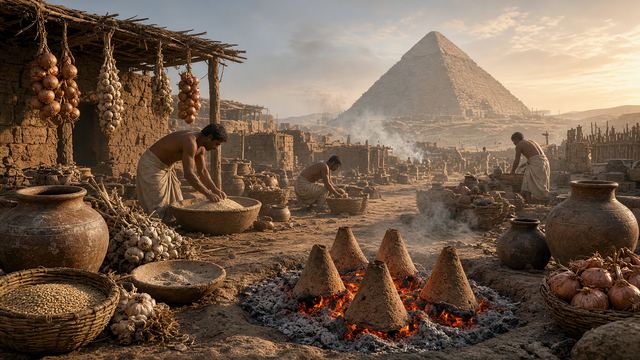
Emmer Molds Before Sunrise
Every recipe here is free to read.
HistoricalAmericanEat the PastA Bite of HistoryStory5 Ingredients or Less
Ingredients
- Narrative chapter
Instructions
- 1The bakers rose while the pyramid was still a black tooth against a paling sky. In the workers’ town the air already smelled of ash and wet grain. Long rows of bedja—the conical clay molds that shaped Old Kingdom bread—stood nested in the hearths like a field of dark cones. Emmer wheat, harder and huskier than later bread wheats, had been pounded and sieved the day before. Now it met water and a little of yesterday’s fermented starter, and the dough took on the dull sheen of river clay.
- 2Neferhotep slapped rounds into the heated molds with a rhythm older than any single reign. The trick was heat without scorch: too fierce and the loaf sealed raw inside; too shy and it never pulled free of the clay. When the molds were stacked and sealed with fresh dough or ash, the bakers turned to barley. Beer was not a tavern luxury here. It was thin, sour, nourishing, strained through baskets, and counted out beside the loaves. A man might drink it thick with chaff in the morning and call it breakfast as much as drink.
- 3By full light the crews were already on the plateau. These were not the shackled figures of later legend. Archaeology at the settlement south of the pyramids—bakeries, barracks, cattle-bone dumps, fish remains—shows a managed labor force of rotating crews and skilled permanent workers, fed on an industrial scale. Rations moved like a second architecture: baskets of mold-bread, jars of beer, ropes of onions and garlic, dried river fish hard as sandals, and, on good days, cuts of beef graded by rank. Overseers ate better. The men who hauled stone ate enough to keep hauling.
- 4In the shade of a reed windbreak, a young hauler named Iry tore his loaf while it still held hearth warmth. The crumb was dense, grey-tan, tasting of nut and smoke. He rubbed a raw onion across the broken face until the bread shone, then bit. The bite made his eyes water and cut the dust in his throat better than water alone. him men did the same—onion, garlic, leek—the sharp green wealth of Nile plots, cheap to grow, fierce enough to wake a body that had slept on packed earth. Someone passed a pottery bowl of stewed fish, bones soft from long simmering with dill-scented greens. Fat floated in pale coins. They sopped it with the emmer and did not speak much; speech cost breath the stones would demand later.
- 5Heat climbed. Limestone dust whitened every lip. The bakery never stopped. Fresh molds went onto coals; spent molds cracked and were mended or discarded. Grain came in from the estates and temple domains that underwrote royal building—the true engine behind the spectacle on the skyline. Bread was currency you could chew. Beer was calories you could carry. A shortfall in either slowed the ramps as surely as a broken sled.
- 6Toward evening, when the great blocks threw blue shadows and the river wind finally found the lanes of the town, the better tables told a different story of the same pantry. In a foreman’s house a haunch had been turned on a simple spit, the fat caught on flatbreads set below. Dates, sticky and dark, appeared with a drizzle of honey from the delta hives. Sesame was crushed for oil. The smells made even tired men pause at doorways. Hierarchy lived in the meat and the sweetness; equality lived only in the shared knowledge that tomorrow’s stone would not move on empty stomachs.
- 7Iry kept a heel of cooled mold-bread in his cloth for the night watch. He pressed it flat with his palm, added a smear of mashed garlic and a few flakes of dried fish, and ate slowly while the pyramid’s unfinished courses caught the last copper light. Hunger here was never abstract. It was counted in molds per man, jars per crew, onions per basket. The bakers already slept beside warm ash so they could rise again before the sun. On the plateau the stones waited, immense and indifferent. In the town, the only answer that ever mattered was the same one that had answered since the first emmer met the first fire: fill the molds, strain the beer, rope the onions, feed the work—then, if fortune held, sit to the fat, the fish, and the date-sweet end of the day with bread still hot enough to soften under a thumb.