 PlatePilot
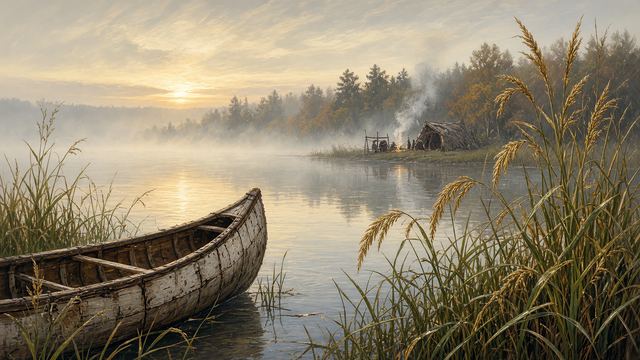
Knocked Grain on the Lakes
HistoricalAmericanEat the PastA Bite of HistoryStory5 Ingredients or Less
Ingredients
- Narrative chapter
Instructions
- 1September mist lay low enough to hide the far shore, but not the rice. In the shallows the stalks stood denser than any planted field: tall, bearded, heavy with dark grain that rattled when the wind turned. Two figures worked one birchbark canoe through a narrow channel. At the stern a poler found bottom with a long shaft and eased them forward without a splash. In the bow, a knocker held a pair of smooth cedar sticks—one to bend the seed heads inward, one to tap.
- 2The grain fell in soft bursts onto the cloth spread in the belly of the canoe. Too hard a blow and unripe seed flew with the ripe; too soft and the best of the head stayed on the stalk for the ducks. Everyone on the lake knew the same narrow window. A warm spell, a hard gust, a few nights of perfect ripeness, and the beds would empty themselves into the water. Manoomin did not wait on anyone’s convenience.
- 3By midmorning the canoe rode lower. Other craft dotted the beds—family pairs, sometimes three to a boat—working lanes by custom more than by marker. On shore, smoke already rose where earlier loads were drying. Fur-trade posts up the rivers paid well for sealed bags of the finished grain. Voyageurs wanted it because it kept, bulked out a kettle, and did not spoil the way soft bread did on a wet paddle. In lean winters, a household’s parched rice was as serious as a cache of dried fish.
- 4They beached on a low spit of sand and spruce. Children swept last year’s chaff from bark sheets. Women and men alike spread the new green-black harvest in thin layers so air could move through. Raw manoomin was moist, living grass seed; leave it heaped and it heated, molded, ruined. Someone kept a fire of steady hardwood coals under a shallow iron trade kettle—the kind that had followed the posts inland—and began the parching.
- 5Parching was the hinge between lake and winter. A few quarts at a time went into the hot kettle and had to be stirred without pause. The smell shifted from grassy to nutty, almost like coffee toasting, and the seeds darkened and tightened. Burn a batch and you tasted charcoal all season. Under-parch and the hulls would not break clean. When the grain was ready it was thrashed—danced on in a pit or worked in a bag—then tossed in birch winnowing trays so the chaff streamed off on the breeze. What remained was hard, slender, and almost black: food that would sit in woven bags or sewn hides for months if kept dry.
- 6Near dusk the poler rinsed the finished rice and set it in a small pot with lake water and a strip of smoked whitefish. No rush. Manoomin wanted a quiet simmer until the grains softened and the water turned into a thin, fragrant broth. A spoon of maple sugar, traded or boiled down in spring, went in at the end for those who favored a touch of sweet against the smoke. Fat from a roasted duck, when there was duck, glossed the surface. People ate from shared bowls, the steam smelling of lake and fire.
- 7Talk ran to the next bed east, to whether the wind would rise, to how many bags a post clerk might take before freeze-up. No one wasted the pot liquor. In country where flour was dear and green vegetables vanished with the first hard frost, the dark grain was not a garnish. It was weight in the canoe, heat in the belly, and a promise that the long ice would not find the racks empty.
- 8When full dark came, the kettle was scraped to the last softened seeds. Out on the water the rice beds whispered under a small night wind, still shedding what the knockers had missed. On shore the parching fire settled to coals. Appetite, for once, was answered—not with luxury, but with the precise taste of a season caught in time.