 PlatePilot
Starter Over Chilkoot Pass
HistoricalAmericanEat the PastA Bite of HistoryStory5 Ingredients or Less
Ingredients
- Narrative chapter
Instructions
- 1By the time the fog lifted off Dyea beach, the scales had already told the truth. One ton. That was the Canadian rule at the summit: a year’s provisions, weighed and checked, or no entry into the Yukon. Men bent double under flour sacks, sides of bacon, tins of condensed milk, dried apples, and beans by the hundredweight. What the scales could not measure was the jar tucked inside Elias Kreel’s wool shirt—warm, faintly sour, more carefully guarded than his poke of coin.
- 2Commercial yeast went sulky in the cold. Bread baked from it rose late or not at all, and a flat loaf on a three-week climb meant hunger dressed up as work. Old hands on the waterfront muttered the same advice: carry a starter. Feed it. Sleep with it. The gray batter was a living claim, a foam of wild yeasts and bacteria that had already survived saloons, steamers, and the damp of the Lynn Canal. Elias had traded two plugs of tobacco and a bent spoon for a cup of it in a Skagway tent, then stirred in flour until it smelled like wet grain and green apples.
- 3The Chilkoot did not care recipes. Stone stairs sheened with ice; ropes stiffened into cables; the air bit the soft inside of the nose. Each trip up the Golden Stairs burned the calves hollow. Elias made the climb again and again, caching flour and bacon at the Scales, then higher at the summit depot, always with the jar nestled against his breastbone so his own heat kept the culture from freezing solid. When he rested, he cracked the lid and gave it a spoon of flour and a dribble of snow-melt water warmed in his tin cup. The batter sighed and blistered. Men nearby sniffed and grinned. A living starter was trail insurance—and, in lean camps, a quiet form of wealth.
- 4Nights at Sheep Camp smelled of wet wool, pipe smoke, and fat hitting iron. Someone’s sheet-iron stove threw a circle of orange. Elias mixed a ladle of starter with flour, lake water, and salt, then set the bowl near the heat until it dome-lifted. He fried the batter in bacon drippings until the edges lace-browned and the centers stayed custard-tender. Flapjacks vanished faster than gossip. A neighbor swapped three dried apricots for two cakes; another offered a thumb of molasses. Protein was scarce between caches, sweetness scarcer still. The pancakes were not luxury. They were calories that did not require a full oven, and proof that something on the mountain still answered to care.
- 5Beyond the pass the lakes locked in ice and the rivers ran mean. Rafts broke. Outfits drowned. Elias kept the jar lashed high when they loaded the scow, the same way men lashed powder. In the barrow pits along the Yukon, stampeders boiled beans for hours with salt pork until the liquor turned brown and glossy. They drank tea black enough to stain a cup rim. They chewed dried fruit like medicine against the ache of scurvy that already haunted talk of the coming dark. Bread, when it came, was sourdough—tangy, holey, baked in reflector ovens or Dutch ovens buried in embers—because that was what the climate allowed.
- 6Dawson City in ’98 was mud, music, and arithmetic. A single egg could cost a dollar. Fresh milk was rumor. On Front Street, bakers with established starters sold loaves at prices that would have bought a week’s board in Seattle. Claim-jump talk floated over the sawdust, but so did the smell of browning flour. Elias staked a thin bench claim and a thinner tent, then built a fire pit of river stone. He fed the starter every evening like a partner. In the morning he greased a skillet with the last translucent ribbon of bacon fat and poured batter that hissed as if it recognized him.
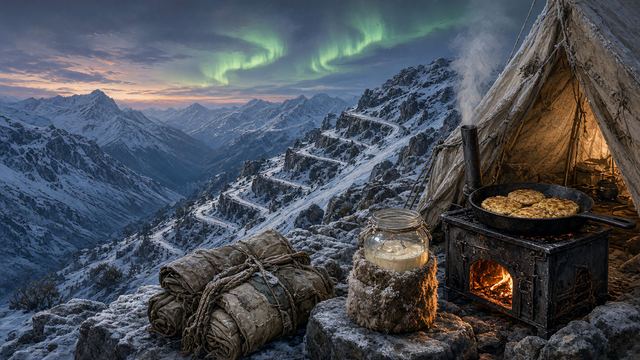
- 7Outside, the aurora ribboned green over the hills. Inside the circle of heat, the flapjack blistered, steamed, and took the molasses like a seal. He ate standing, boots still wet, listening to the river grind ice against ice. Gold was a maybe. The sour loaf rising under a clean cloth was a fact. On the Klondike, men learned what every long winter already knew: you do not merely carry food through a frontier. You keep it alive until it can carry you.