 PlatePilot
Vinegar for the Long Crossing
HistoricalEat the PastA Bite of HistoryStory5 Ingredients or LessAmerican
Ingredients
- Narrative chapter
Instructions
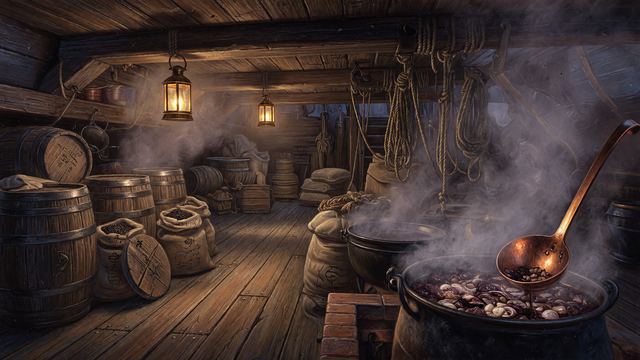
- 1Before the sails filled past Cavite, the cook had already decided what would live and what would rot. The Pacific did not forgive a soft barrel. Heat thickened under the deck planks until iron nails wept rust and biscuit weevils stirred in their crumbs. Fresh pork, glorious on the first morning, would turn by the third if left alone. So the knives came out early, and with them the sharp green smell of crushed garlic and the sting of palm vinegar poured from clay jars sealed for the voyage.
- 2They called the method many things. Spanish officers wrote adobo in their ledgers, a word that meant marinade and sauce, a colonial label stuck on older island practice. In the islands, vinegar, salt, and pepper had long been the answer to weather that spoiled meat faster than a man could walk to market. On the galleon the same logic ruled: acid bit into the flesh, garlic layered its heat, whole peppercorns sank like dark seeds, and a careful simmer drove the liquid into every seam of fat. What came off the fire was not a feast. It was insurance.
- 3Above decks, the ship was a floating warehouse of empire. Chinese silks and porcelain filled the hold for Acapulco; Mexican silver would make the return. Below, the crew was a harder cargo—Filipino seamen and shipwrights, Spanish gunners, Mexican conscripts, Cantonese craftsmen who had crossed to Manila years before. Their tongues disagreed at prayer and card play, but hunger made a common grammar. Rice boiled in seawater-stretched pots when casks ran low. Dried fish hung in stiff banners. Lard crusted on the rims of pans. When the cook lifted the lid on a vinegar pot, men from three oceans leaned toward the sour steam as if it were news from home.
- 4Cooking at sea was a quarrel with fire. Open flame was rationed; a stray spark in a silk-packed hull was a floating funeral. So the braise happened in tight windows, pots lashed against the roll, broth kept shallow so it would not slap and douse the coals. The meat went into the vinegar hot, then cooled and rested in its own sharp liquor. Each day a ladleful could be reheated with a little more garlic, a bay leaf if the store still held one, a blackening of pepper. The longer it sat, the deeper the sour worked—less spoilage, more bite. Sailors learned to judge a crossing by the state of the pot: still bright meant the cook had been generous with acid; murky and sweet-sick meant trouble and shorter rations ahead.
- 5Water was the quieter tyrant. Rain caught in sails helped, but calm weeks turned lips white and tempers thin. Vinegar-rich meat needed less fresh water to make a swallowable bite than salt-pork alone, a small mercy when the scuttlebutt was guarded like coin. Men chewed slowly, rice cup held close, letting the garlic oil gloss the grains. Officers ate from better plates yet faced the same ocean; a captain who scorned the sour pots still sent his steward to the galley when the wind died and the meat lockers stank of defeat.
- 6Storms tested the barrels more than the prayers. When green water boarded and the ship stood on her beam ends, crockery shattered and a whole week’s rice could turn to paste. The vinegar meat, sealed and acidic, often survived the chaos better than softer stores. After one such night the cook found a jar on its side, lid cracked, yet the pork inside still held a clean smell—sharp, almost floral from the garlic, pepper oil floating in beads. He righted it, topped the liquid, and fed the watch at dawn. No one spoke of gratitude. They ate with both hands and went back to the pumps.
- 7By the second month the coast of Luzon was only a story. Days blurred into sail patches and the counting of remaining onions. Someone traded a strip of dried venison for an extra spoon of the sour braise. A boy from the Visayas sang under his breath while scraping rice crust from the pot bottom—the prized brown edge, toasted and bitter-savory, fought over like prize money. The galleon’s true economy was not silk. It was who controlled the ladle when the deck smelled only of wet rope and old smoke.
- 8When the lookout finally cried land—the high dry hills behind Acapulco—the last good pot was nearly empty. What remained was dark, concentrated, garlic sweetened by time, meat ready to fall apart on the tongue. They ate it standing, bowls hot against their palms, the shore still a rumor of bells and mule dust and market chile. The vinegar had done its work: it had bought them a crossing. On the wharf, fresh tortillas and tomatoes would seem almost indecent in their softness. But the men would remember the hold—the sting in the nose, the pepper crack between teeth, the way acid and patience kept a body whole when the sea offered nothing else.