 PlatePilot
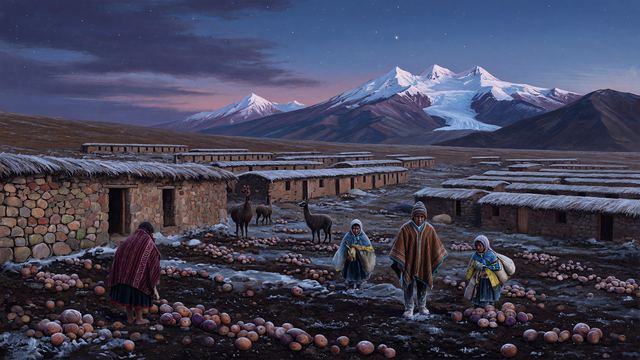
Frost Work on the Puna
HistoricalEat the PastA Bite of HistoryStory5 Ingredients or LessAmerican
Ingredients
- Narrative chapter
Instructions
- 1Before the frost settled hard enough to sing underfoot, Mamani’s household had already carried the small bitter potatoes up from the lower terraces. The tubers were not the soft yellow ones sold later in coastal markets; they were dense, dark-eyed, bred for altitude and for surviving a hunger year. On the puna the air thinned until breath smoked even at dusk. Children stamped their feet. Dogs pressed against the stone walls of the compound. Above the village the qollqa—the state storehouses—stood in ranked rows like a second settlement of stone mouths, built dry and ventilated so that what went in cold would stay good for years.
- 2The Inca state did not leave famine to chance. Along the spine of the Andes, communities planted in stacked ecological tiers: maize and aji peppers lower down where nights were kinder; quinoa and kañiwa on the shoulders of the mountains; potatoes and hardy tubers higher still. Tribute and labor mit’a filled the warehouses for armies, road runners, widows, and the lean months after hail. Chuño was the warehouse’s quiet miracle—potatoes turned nearly weightless, pale as bone, stripped of the water that would otherwise rot them on a long march to Quito or Cuzco.
- 3Tonight the work belonged to frost. Men and women spread the harvest on flat ground in thin layers, not heaped. When the cold came down from the cordillera it did not ask permission. It locked the cells of the potato, cracked them from within. At first light Mamani and her sisters would walk barefoot across the stiff rows, pressing out the dark water with their heels, a rhythm older than any single ruler’s name. The liquid ran bitter. Some potatoes, the ones destined for black chuño, would be trampled and soaked in cold pools for days, tannins and harshness leaching into the water until the flesh turned ashen and kept almost forever. White chuño, sun-bleached after freezing and pressing, looked cleaner on the tongue and fetched higher regard at redistribution.
- 4She kept a small string of tubers aside for the household pot—fresh ones, not yet sacrificed to the night. In the clay vessel over llama-dung coals, water took a long time to complain at this height. Salt was precious enough to measure. quinoa, rinsed of its soapy saponins by patient rubbing, clouded the broth. Dried chuño from last year’s frost nights went in broken, clicking against the spoon like pale gravel until it softened into something hearty and faintly earthy. If a piece of charqui—air-dried meat—could be spared, it was shaved thin; if not, the pot still fed. Fat was not abundant on the high plain the way it was in valley kitchens. Flavor came from technique, from smoke, from a careful pinch of ground chile carried up from warmer slopes, and from the knowledge that the same potato could be eaten green in March or white and hard in a soldier’s bag in September.
- 5A runner arrived near moonrise, dust on his calves, a quipu knotted at his belt. He did not sit long. The road system—the Qhapaq Ñan—ate young men’s knees and rewarded them with hospitality at way stations. Mamani’s mother poured him quinoa drink, cool and slightly sour, and wrapped a few disks of finished chuño in cloth. He would sleep two hours and go on. What he carried was not only food but the logic of empire: lightweight rations that did not spoil when a column crossed a pass where no tree grew and no fresh tuber could be dug.
- 6By the second night the spread potatoes rang under the heel. Ice glazed their skins. The family turned them, pressed again, and left them for the hard sun of the dry season to finish the theft of moisture. What remained would be rubbed clean of skins, sorted, and portioned—some for the roof beams of the house, some for the inspectors who counted for the state. A full qollqa was a kind of quiet politics. Empty ones were a failure the cold could not forgive.
- 7When the pot finally thickened, the household ate close together, bowls warmed by breath. The broth tasted of frost-work and terrace soil, of quinoa’s soft pop and the ghost of pepper. Outside, the next tray of potatoes waited under a sky so clear the stars seemed near enough to salt the ground. In the morning the pressing would begin again. In a month the storehouse doors would take in another white harvest—proof that on the puna, winter was not only a threat. It was a kitchen tool, older than iron, free to anyone willing to walk barefoot on ice and wait.