 PlatePilot
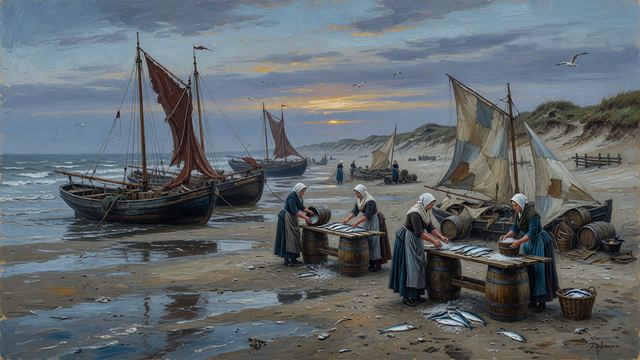
Silver in the Brine Barrels
HistoricalEat the PastA Bite of HistoryStory5 Ingredients or LessAmerican
Ingredients
- Narrative chapter
Instructions
- 1The wind came off the North Sea smelling of cold iron and last night’s catch. On the Scheveningen strand, Lotte’s fingers were already stiff when the first boat grounded in the gray surf. Men hauled baskets of herring up the wet sand—thousands of bright bodies still twitching, scales catching what little dawn there was. She was sixteen and paid by the barrel, not the hour. In Holland that autumn, speed was money, and money was salt.
- 2The Dutch had turned a fish into an engine of state. By the mid-1600s their busses—stout, broad-beamed herring ships—worked the grounds from the Dogger Bank to the Shetlands, gutting and salting at sea so the catch would last the voyage home. Ashore, the finishing work still belonged to women and girls on the beach and quay. Lotte’s tool was a short knife and a motion older hands called the gib: one practiced pull that took gills, gullet, and gut in a single sweep, leaving the fat-rich belly intact. Done right, the fish would take salt cleanly and keep for months. Done wrong, it spoiled in the barrel and a whole family’s week was lost.
- 3She worked beside her aunt under a canvas lean-to. Basket. Knife. Toss to the salters. The rhythm was brutal and exact. Coarse salt from Portuguese and French pans—much of it carried on Dutch keels—crusted their wrists and burned the cracks in their skin. Layer fish, layer salt, pack tight into oak coopered for the purpose. A well-made last of cured herring could travel to the Baltic, to the German rivers, even into the Mediterranean Lent markets where flesh of warm-blooded beasts was forbidden and the silver of the North Sea stood in for meat.
- 4Them the republic ate according to rank. Merchants in Amsterdam broke their fasts with butter, soft bread, and sometimes a fat herring lifted from a milder pickle, served with chopped onion and a gulp of beer. Ship chandlers priced barrels the way other towns priced wheat. Inland, peasants stretched rye loaves with thin soup and counted themselves lucky if a piece of cured fish appeared on a Sunday. The herring fleet’s profits helped underwrite the warehouses, the Admiralty, the painted rooms where still lifes gleamed with peeled lemons and tumbled roemers—yet the wealth began here, in cold hands and brine.
- 5By midmorning the beach stank of blood and salt in a way that meant prosperity. Gulls screamed. A cooper rolled empty barrels down from the dunes; a clerk in a wool coat chalked tallies on a board. Lotte’s aunt muttered the old warning: too little salt and the barrel turned; too much and the fish went harsh and the buyers in Danzig complained. Preservation was chemistry before anyone named it so—salt drawing water from flesh, smoke sometimes added later in town smokehouses, time and cool air doing the rest.
- 6When the horn finally sounded for the brief meal, the women did not go far. They ate what the work itself offered: a herring stripped of its heavier salt, held by the tail over a finger of fire or simply laid on black rye with onion if someone had one. Fat from the belly slicked the bread. The taste was sharp, marine, faintly sweet under the brine—the taste of a country that had learned to farm the sea because the low fields could flood and the grain could fail.
- 7Lotte licked salt from her split knuckle and looked at the filled barrels already waiting for the carts to Leiden and the barges beyond. Somewhere behind the dunes, painters were arranging banquets that would outlast them on canvas. Here the banquet was simpler and more urgent: fish, salt, bread, and the knowledge that winter could be held off one tight-packed oak stave at a time. She wiped the knife, rolled her shoulders, and reached for the next basket. The sea would not wait, and neither would the brine.