 PlatePilot
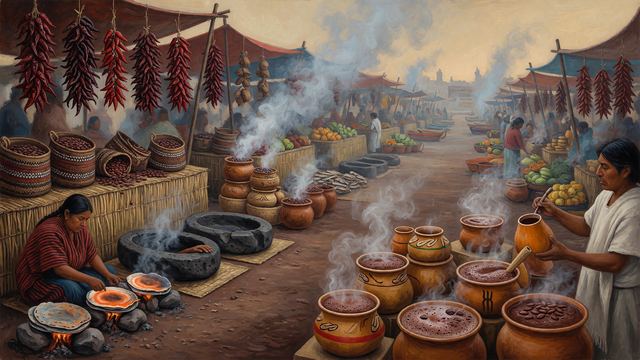
Cacao Foam on Market Stones
HistoricalEat the PastA Bite of HistoryStory5 Ingredients or LessAmerican
Ingredients
- Narrative chapter
Instructions
- 1Before the causeway sun cleared the reed beds, Tlatelolco was already loud. Porters bent under cages of squabs and live turkeys. Vendors stacked green squash, wrinkled chiles, and still-wet lake fish on mats. Smoke from charcoal and dried maize husks drifted low between the aisles, sharp with fat and toasted grain. In the food quarter, the day did not begin with sweet things. It began with stone, water, and heat.
- 2Itzli worked her mother’s metate the way other children learned to walk—knees planted, shoulders driving the mano in long wet strokes. Last night’s maize had soaked with wood ash until the skins loosened; rinsed and swollen, the nixtamal now broke into a dough that smelled clean and faintly mineral. That dough was the city’s true bread. Pat it thin, lay it on a hot clay comal, and it blistered into tortillas that could wrap beans, folded greens, or a scrap of stewed turkey if the household had been lucky at tribute time. Without nixtamal, the maize stayed harder, poorer, less alive on the tongue. Everyone in the valley knew the difference, even if they never spoke the chemistry.
- 3Two aisles over, cacao told another story. The beans arrived in woven bags from hotter lands to the south and east—tribute and merchant cargo, counted as carefully as copper axe-heads or lengths of cloth. A handful might buy a rabbit; more could settle small debts; the finest lots disappeared into palace storerooms and the gourds of people who did not sweat over metates at dawn. Cacao was food and ledger at once. Common households stretched it. Elite cups proclaimed it.
- 4The seller, an older woman with cacao dust in the creases of her palms, roasted beans until the skins cracked, then ground them on basalt with dried red chile and a little toasted maize. Sometimes she added fragrant flowers or a thread of wild honey when a customer paid for softness. More often the paste stayed stern: bitter, oily, hot. She worked it with water into a dark liquor and poured it from height—high, higher—so a pale foam climbed the rim of the gourd like a second drink floating on the first. Foam mattered. A flat cup looked poor. A crowned cup looked finished.
- 5Itzli’s brother, sent with three beans and strict orders, watched the pour as if it were a small storm. He was not buying for a lord. He was buying a taste for their uncle, home from lake work with salt crust on his calves and a hunger that tortillas alone could not flatter. The woman took the beans, weighed them with a glance, and ladled a thinner brew than the one she kept for pochteca merchants in embroidered capes. Still, chile bloomed at the back of the throat. Fat from the ground nibs left a soft film on the lips. Bitterness arrived first; warmth followed; the foam broke in soft collapses against the nose.
- 6Them the market rehearsed the empire’s appetite. Tamales steamed in husks—maize dough stuffed with beans, fish, or turkey, tied and set over boiling water until the kitchens smelled like leaf and meat. Amaranth dough shaped for ordinary snacks sat near more careful displays. Clay pots held stews glossy with tomato and chile. Duck and turkey hung where flies were smoked away. Salt from the lakeside pans flashed white in shallow baskets. Nothing was anonymous. You could read rank in who bought whole birds, who bought bones for broth, who drank cacao thick enough to coat a spoon carved from shell, and who stirred a mostly-maize atole with only a rumor of bean paste for color.
- 7Technology stayed close to the hand. Basalt for grinding. Clay for boiling and toasting. Gourds for serving. No iron skillet rang in that aisle; heat lived in ceramic walls and in the memory of how long a comal needed before the first tortilla could set without tearing. Preservation was smoke, sun, salt, chile’s bite, and speed—sell the fish before the sun stood high; drink the cacao before the foam died; carry tortillas stacked and wrapped while they still bent instead of cracked.
- 8By late morning the uncle sat in the shade of the family compound, gourd between his palms, steam from a basket of bean tamales fogging the air. He broke a tortilla with his thumb, dipped it into a sauce red enough to warn a stranger, and took the cacao in small pulls so the bitterness lasted. Across the city, palace cooks would be grinding finer pastes for rarer cups; on the roads south, porters still shifted bags of beans toward the lake capital. Here, at the ordinary mat, the meal was simpler and no less serious: maize made tender by ash and stone, chile that earned its place, turkey fat if there was any, and a dark foam that had traveled farther than most people ever would.
- 9When the gourd emptied, a ring of ground bean clung to the rim like a seal. Itzli scraped it with a tortilla edge and ate the last bitter shine. The market noise went on—counting, bargaining, the slap of dough on clay—and the afternoon’s hunger was already being planned in the next pot of soaking maize.