 PlatePilot
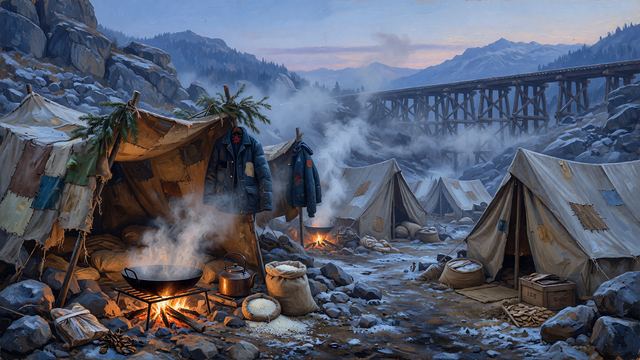
Woks Above the Timberline
HistoricalEat the PastA Bite of HistoryStory5 Ingredients or LessAmerican
Ingredients
- Narrative chapter
Instructions
- 1Before the granite took the first ring of the drill, the cook had already lost the argument with the cold. Blue shadow still pooled in the canyon. Frost stitched the tent ropes. Under a lean-to of scrap lumber and canvas, iron legs braced a blackened wok over pine knots that spat and refused to catch.
- 2He blew until his eyes watered. Smoke found the seam of his quilted jacket. him the camp of the Central Pacific’s Chinese crews stirred—men who had come from Guangdong by ship and by rumor of wages in gold country, now driving a railroad through a mountain that did not want them. Spikes, powder, and handcars waited. So did hunger. On this grade, hunger was a tool as real as a sledge.
- 3Water went on first. Always water. Creek water in the Sierra could punish a belly; the Chinese gangs learned early what many white crews learned late or not at all: boil it hard, throw in tea, drink it hot through the day. The leaves were cheap insurance. A tin kettle sang. Steam rose like a small, domestic ghost in a place built for dynamite.
- 4From a lidded oil basket he drew what the merchants’ pack trains had sold them down-slope: rice measured like coin, dried oysters hard as buttons, salt cabbage, a rope of Chinese sausage glossy with fat, ginger knobs wrinkled from the journey, a corked bottle of soy dark as axle grease. Fresh pork when the supply man got through. Turnips and onions when the frost allowed. No one here cooked “Chinese food” as a performance. They cooked survival with the grammar of home—high heat, salt, fermented depth, starch that stuck to the ribs through ten-hour shifts on cliffs where a misstep meant a long silence.
- 5The wok lived harder than most tools. Carbon steel, seasoned by months of smoke and lard, hung from a nail when the camp jumped forward. It could fry, steam under a lid of planks, or braise if he dammed the juices with care. He poured a spoon of oil. It shimmered. Garlic and ginger hit with a smell so bright the nearest sleepers cursed and then smiled. Sausage coins curled. Dried oysters, soaked overnight in a covered pail, went in next—briny, stubborn, a taste of the Pearl River delta dragged a Pacific wide. Cabbage wilted into the fat. Soy lacquered everything the color of wet ties.
- 6A younger laborer, hands already nicked from yesterday’s granite, crouched with his own bowl. “Boss says powder work after noon.” The cook only nodded and ladled rice from the big pot—grains swollen, clinging, honest. In the white camps farther down the line, men gnawed salt pork and soda bread, drank raw creek water, and paid for it in fever. Here the line of bowls moved fast: rice, the wok’s glossy tangle, tea that tasted of iron kettles and resolve. Pay was a dollar or so a day for many; food often came out of their own pockets through Chinese storekeepers who followed the iron like gulls follow a wake. That economy was its own quiet railroad—sacks, jars, letters home, a web of credit stretched from Sacramento warehouses to these timberline ashes.
- 7Midmorning, the mountain answered with cold that cut through quilted cloth. Men drilled. The cook kept a second pot low for the midday spell: a thinner soup, cabbage hearts, a few eggs if the crate had not broken on the mule, chili oil for the ones who wanted heat to match the work. He saved drippings. Fat was calendar and currency. When snow sealed the passes, dried things would matter more than speeches progress.
- 8By late light the grade looked like a wound—fresh cuts of rock, black powder scent still hanging, the roadbed inching toward a summit tunnel that would swallow years. The cook scrubbed the wok with coarse salt and snowmelt, wiped it, set it near the coals so the metal would not wake rusty. Rice crust at the bottom of the pot—the prized scrap—was scraped for the men who had taken the worst footing. Someone laughed. Someone counted tomorrow’s charges. No one needed a speech why the meal mattered.
- 9Night pulled the temperature down like a rope. Bowls were empty and stacked. Tea went again, bitter and hot enough to fog eyelashes. In the dark, beyond the canvas, America was inventing itself with rails and manifests and senators’ names. In the circle of firelight the invention was simpler: oil smoking, soy reducing, rice soft against the spoon, the body made ready for granite. The wok’s black belly held the day’s last sheen of sauce. They would sleep. Before the next drill bit kissed stone, water would have to boil again.