 PlatePilot
Broth Behind the Marble
HistoricalEat the PastA Bite of HistoryStory5 Ingredients or LessAmerican
Ingredients
- Narrative chapter
Instructions
- 1By the fourth hour after sunrise the street already smelled of hot lentils and cheap wine. Heat rose off the basalt paving like breath. A mule team rattled past with amphorae stacked like green glass soldiers, and the driver cursed in Oscan and Latin both. Under the overhang of a corner shop, a woman named Statia wiped the rim of a sunken jar with a rag that had once been a tunic hem.
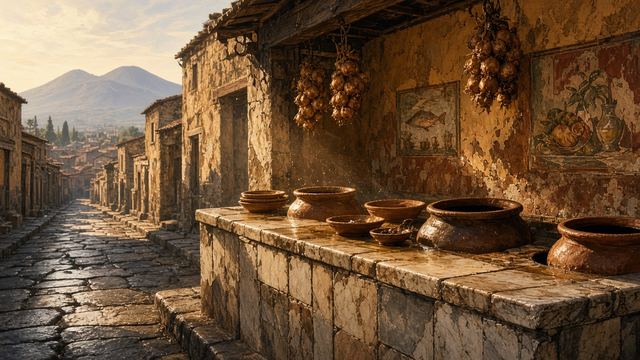
- 2Her thermopolium faced the crossing the way a net faces a school of fish. The counter was concrete faced with marble scraps and painted panels—ducks, eels, a wine jug that never emptied. Set into the top were deep dolia, earthenware bellies holding what the morning could sell before it soured: a chickpea mash slicked with oil, a stew of barley and pork scraps, a pot of cabbage and leek that had gone the color of wet rope. Above the jars, hooks held onions and a string of hard little cheeses. On a shelf behind her, a shallow dish of garum caught the light—fish guts fermented to amber salt, the city’s favorite sting.
- 3A plasterer came first, dust still white in the creases of his elbows. He did not sit. Almost no one sat. He slapped an as on the marble and jerked his chin at the chickpeas. Statia ladled into a cheap red bowl, tore a heel from the baker’s round loaf across the way—the bakery two doors down still exhaled the night’s baking, ash and wheat—and pushed both toward him with a drip of oil and a finger-swipe of garum. He ate standing, one shoulder against the wall, the way a man eats when the next scaffolding waits.
- 4Pompeii fed itself in layers. Villa kitchens inland sent dormice and peacocks toward banquets the street would never smell. In town, the poor and the busy lived on what could be kept hot without spoiling and sold by the ladle. Bread was rented as much as bought: many apartments had no oven, only a brazier if they were lucky. Water came from street fountains; wine arrived cut with water or honey, sometimes with herbs to hide a rough vintage. Garum traveled in stamped amphorae from coastal factories—Spain, North Africa, the Bay itself—and even a laborer’s lunch wanted that fermented punch. Salt was money you could taste.
- 5Midday thickened. A woman in a striped stola argued the price of the barley stew down by half an as and won, because Statia knew she would return tomorrow with her son from the fullery, both of them smelling of urine vats and soap. A sailor off a grain freighter from Alexandria wanted wine with pepper if she had it; she had a pinch, dear as gossip, and charged him for the theater of grinding it. Someone’s slave boy ran up with a metal pail to carry food home to a household that could afford the delivery but not the time. Flies worried the rim of the garum dish. Statia flicked them with a myrtle twig and swore mildly at the mountain, which sat blue and ordinary against the sky as if it had never once muttered.
- 6She kept a small pan on a charcoal bed for the afternoon trade—onions softened in oil, a scrap of fish when the market had unsold mullet, eggs cracked in if a hen had been generous. The technique was older than the painted ducks: fat, heat, grain, legume, the sharp rescue of fermented fish or vinegar. Preservation was half the craft. What could not be sold cooled into tomorrow’s stretch, bulked with more water and more cabbage. What turned went to pigs if you were thrifty, or into the gutter if you were not.
- 7A pair of young men from a drinking club lingered longer than manners allowed, arguing over a dice debt and whether the best garum still came from New Carthage. Statia let them talk. Talk kept bowls in hands. Behind them a frescoed Mercury watched the cashbox, and a little bronze lar in the niche by the storeroom door watched everything else. Religion here was not a costume; it was the quiet bargain of a shopkeeper who wanted the jars not to crack and the landlord not to raise the rent before the Kalends.
- 8When the light slanted and the street’s shadow reached the far curb, she scraped the last of the chickpeas into a single portion and ate it herself with the crust she had saved, oil pooling in the thumbprint of the bread. The marble under her palms was still warm from the day’s hands—plasterer, sailor, slave, idler—each leaving a ghost of hunger. Somewhere upslope, a richer kitchen would be laying out dormice stuffed with pine nuts and honey for guests who reclined. Down here the feast was simpler and more honest: heat held in clay, salt that had crossed water, wheat that had taken a whole season to stand upright.
- 9She covered the dolia as the first lamps pricked on. Tomorrow the baker would slide loaves from the oven before dawn, the muleteers would shout, and the broth would come back to a boil. Pompeii’s mountain kept its counsel. The city’s appetite did not.