 PlatePilot
Gold Between the Tides
HistoricalEat the PastA Bite of HistoryStory5 Ingredients or LessBritish
Ingredients
- Narrative chapter
Instructions
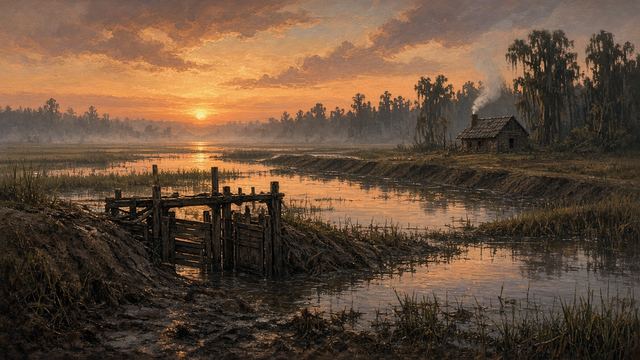
- 1The water had a color she trusted. Not the green push of the ocean reaching too far inland, nor the stale quiet of a ditch left still too long. It was the brown-silver of a creek on the rise, cool enough to make the mud smell almost sweet when the trunk was opened and the field began to take the flood.
- 2Call her Amina if a name helps the scene hold; the big-house books preferred acres, barrels, and the surnames of owners. What the fields required did not live in those books. Carolina Gold—the long grain that dried to a warm coin-color and fetched hard money through Charleston—would fatten countinghouses and dress tables an ocean away. The plant itself, though, answered to a different grammar: when to drown the weeds, when to drain so the heads could heavy, how to keep salt from kissing the shoot and killing it. That grammar had crossed the Atlantic in people taken from West Africa’s rice coasts, where wet-rice skill was generations deep before English investors learned to want the crop.
- 3Barefoot on the bank, pole in hand, she watched the rectangles of water find their level toward a dark line of cypress. Mosquitoes stitched the air. A heron pinned something small in the shallows and swallowed. Behind the bank, a mortar spoke in steady thumps—rice being freed from husk by pestle, the old percussion of supper still unfinished. Later the fanner baskets would lift and turn, wide woven disks sending chaff off on the breeze while grain fell back like rain that knew where home was. Travelers who only saw the motion called it picturesque. Anyone who had gone to bed empty knew it for what it was: precision standing between a harvest and waste.
- 4By the 1750s the Lowcountry’s wealth rode on water control as much as on forced labor. Wooden trunks and banks turned tidal creeks into tools. Open them wrong after a storm, and salt crept where fresh should be; wait too long to flood, and grass stole the field. Planters advertised for hands “accustomed to rice,” a quiet admission that the expertise was not native to the men holding title. On some places the task system measured a day’s labor in rods of bank or rows of work, and what remained of daylight might belong—narrowly, fiercely—to a garden patch: okra lifting ridged fingers, field peas, hot peppers, greens that did not fear heat.
- 5Afternoon leaned toward copper. Fish could be coaxed from the creek; a scrap of smoked pork, if it existed at all, was less a centerpiece than a seasoning with a past. In the cabin the iron pot waited, blacked by years of fire, hanging or settled where heat could be trusted. Rice here was not neglected into glue. It was rinsed, measured with knuckles and habit, set with water she believed in, covered, and left to become itself. Okra went in to silk the pot. Pepper pods followed. Greens darkened and sweetened at the edges. Yesterday’s pot liquor, saved like a password, deepened the whole. When she cracked the lid, starch-steam rose with smoke and green—the smell of a room deciding it would not be empty.
- 6Children crowded the warmth. An older man talked half in the creole rhythms taking root along these creeks, half in older music still carried in the mouth: birds that had to be chased from fields at home, rains that arrived like walls, grains that wanted patience. No clerk in Charleston transcribed it. City tables would later praise pilaus, perloos, and red rice as if the Lowcountry had invented the logic of grain and gravy alone. The hands that taught the rice to behave rarely got the credit ink reserved for merchants.
- 7Outside, frogs wound up their night arguments. The flooded fields held the last light like dull mirrors. Tomorrow the trunks would need reading again—weather was a thief with a long patience. She scraped the toasted bottom crust, prized and crackling, onto a waiting plate. A shine of fat ringed the pot. Bowls moved. Nothing edible was left to cool into regret.
- 8In a country engineered to extract, the meal was still an insistence with a fragrance: we know this plant. We know this water. We know this fire. Sit while it is hot.