 PlatePilot
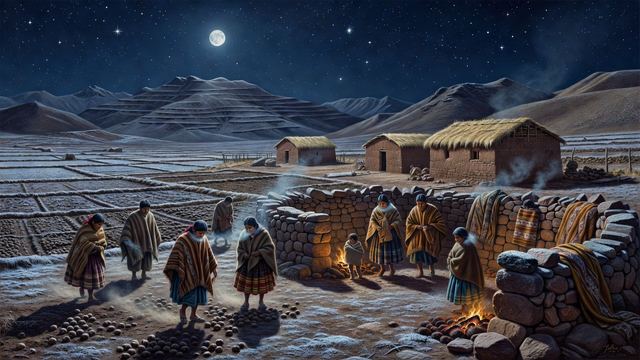
Stars Over the Chuño Fields
HistoricalEat the PastA Bite of HistoryStory5 Ingredients or LessAmerican
Ingredients
- Narrative chapter
Instructions
- 1Night came hard on the puna. The sun dropped behind the ridges as if a lid had been set on the world, and the cold that followed was not weather so much as a tool. Frost gathered on bunchgrass and on the stones that ringed the drying yards. In the thin air above four thousand meters, water left flesh and tuber alike with a clean, merciless speed.
- 2Mama Quispe walked the rows barefoot so she could feel the crust form. her, families of the ayllu moved with the same quiet urgency they brought to harvest and to the mit’a labor drafts. This was not a feast night. This was the making of chuño—black chuño, the kind that would keep through lean seasons, feed road crews on the capac ñan, and fill the state qollqas whose stone mouths dotted the hillsides like patient animals.
- 3They had chosen bitter potatoes bred for altitude, small and knobby, the ones that thrived where maize would not. For days the tubers had been spread on the ground through the freeze. By day the sun softened them; by night ice drove through cell walls. Now came the trampling. Children and elders alike stepped in rhythm, pressing out the dark juice that stained ankles and frost. The liquid ran off toward drainage channels. What remained would be squeezed again, dried again, until the potatoes shrank into light, leathery knots—almost weightless, almost immortal.
- 4Smoke from a low dung fire curled under a windbreak of hide. On heated stones, a pot of quinoa simmered with dried chuño from last year, already reconstituted in cold water until it swelled soft and gray-white at the edges. A strip of charqui—llama meat dried in the same hard air—went in for savor. Salt, hard-won from distant pans, and a crushed ají brought up from warmer tiers of the vertical world. The empire did not live on one altitude. Valleys sent maize and chili; coasts sent fish meal and seaweed; the puna answered with freeze-dried potato and meat that could march.
- 5Quispe’s nephew, still soft-cheeked, scooped a ladle and winced at the first bitter edge. “It tastes of night,” he said. She did not correct the poetry. Chuño carried the mineral of the soil and the metallic bite of frost. Softened and boiled, it became filling, portable, obedient to the state’s long arithmetic. Armies ate it. Couriers ate it. Households banked it against hail years when green fields blackened in an afternoon.
- 6Across the slope, inspectors of the local tucuy ricuy—eyes of the Inca—had counted loads earlier, not with cruelty but with the calm of men who measured storehouse niches the way other men measured prayers. Rope bridges and paved roads meant little without calories that would not spoil. Pottery and woven bags would carry the finished chuño down to valley depots; from there it would move with the mit’a gangs repairing terraces, with garrisons, with the ceremonial hospitality that bound conquered provinces into reciprocity—food given, labor returned, feasts staged when the Sapa Inca’s presence demanded abundance.
- 7Near the fire, a clay vessel of chicha warmed just enough to wake the maize’s sour perfume. Quispe poured a thin line onto the earth before drinking—an offering older than any single ruler. Then she tore a piece of flat maize bread brought up from kin in a lower ecological belt and used it to chase the stew. Fat was scarce here; flavor came from smoke, chili heat, herb, and the deep starch of things that had survived ice.
- 8By moonrise the yards looked like a second sky: pale tubers under white rime, darkening as juice left them. Workers sang to keep time with their feet. Dogs circled for scraps that would not be wasted. Somewhere below the frost line, guineas fattened in courtyards and peppers hung in strings; somewhere above, snowfields fed the rivers that made terrace agriculture possible. The whole vertical archipelago resolved, tonight, into this simple violence of cold against potato.
- 9When the trampling paused, Quispe lifted a finished piece from an older batch, cracked it between her teeth, and softened another in the pot until it yielded like wet clay. She salted the bowl once more, breathed the steam that smelled of earth and frost and distant ají, and called the children in. Empire was stone and rope and census knots—but it began again each winter night when hunger and preservation met on the open ground, and a field of potatoes learned how to outlast the sun.