 PlatePilot
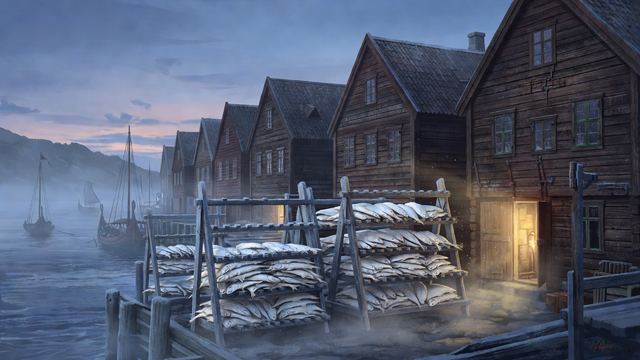
Cod Hung Above Bryggen
HistoricalEat the PastA Bite of HistoryStory5 Ingredients or LessAmerican
Ingredients
- Narrative chapter
Instructions
- 1The wind never asked permission. It came off the fjord in long gray pulls, knifed between the wooden gables of Bryggen, and went to work on the racks—row upon row of split cod hung in pairs, pale as stripped birch, heads gone, bones stiffening in the cold. No salt glittered on those flanks. In this climate the air itself was the cure. What left Lofoten as heavy flesh arrived in the counting mind of a merchant as freight that would not rot, coin that could be stacked like timber.
- 2Klaus of Lübeck had been two seasons under the kontor’s roof and still woke to the smell before he woke to the bells. Stockfish. Always stockfish. It rode the beams of the warehouses, filled the ledgers, and—after enough violence and patience—filled the bowls. The ordinances were plain enough even for a junior clerk: no marriage, no private trade, no nights spent outside the German wharf. Wealth was collective, measured in våg-weights and the dryness of the fish, and supper was the one hour the rules softened into grease and heat.
- 3In the kitchen passage a cook’s boy swung a wooden mallet as if he were driving pegs. The fish had soaked through two changes of cold water already; without the beating it stayed a board, stubborn as ship’s planking. Blow by blow the fibers loosened. Peas from the previous harvest rattled into an iron pot with onion and a locked-away knob of butter—butter that lived under a steward’s eye because fat was portable wealth, and the North remembered lean springs. Thin beer from a Hamburg cask hissed when a drop hit the hearth stones.
- 4At the long table the talk ran to cargo and calendar. Catholic Europe still ordered the week fleshless days—Fridays, holy seasons, the long deprivation of Lent—and dried cod answered that demand wherever rivers froze and coasts lay weeks away. A rack cured hard enough could travel to Flanders, to the Rhine towns, even south toward Iberian kitchens that knew bacalhau by other names. Norwegian boats and island farms caught and hung the fish; Hanseatic ledgers turned it into cloth, grindstones, silver, and Rhine wine. Klaus had copied enough bills of lading to know the truth: the fortune was not in the feast. The fortune was in the wind.
- 5He watched the cook flake the soaked cod into the pea pot. What had been nearly immortal in the hold turned silky in the broth, tasting of clean cold sea and almost nothing of decay—the whole point of the cure. Rye bread, dense enough to survive a winter storehouse, went the board. Men dragged crusts through the butter that floated in gold eyes on the surface. Somewhere beyond the shutters, lanterns swayed along the wharf and a night watch called the hour in Low German.
- 6Tomorrow the weighing would start again. Arguments over moisture. Fingers pressed into cut faces of fish to judge whether a seller had hurried the racks. A clerk’s pen would scratch, and another cog would take on cargo light enough to fill a hold and valuable enough to underwrite a year. But tonight the work had already been done—mallet, water, fire, fat—and the room smelled only of supper.
- 7Klaus ate while the heat lasted. Outside, thousands of ghost-white bodies kept turning in the dark, curing into money. Inside, the spoon hit the bottom of the bowl, and for a little while the North tasted like something a man could want.