 PlatePilot
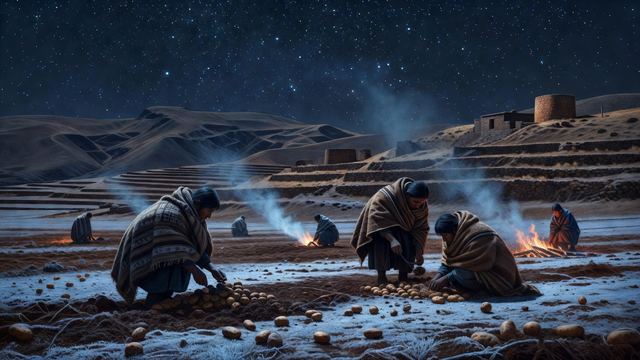
Frost Fields of the Storehouse
HistoricalEat the PastA Bite of HistoryStory5 Ingredients or LessAmerican
Ingredients
- Narrative chapter
Instructions
- 1The cold came down from the Cordillera like a blade. On the pampa above the village, the ground was already pale with rime, and the potatoes—small, knobby, bitter-fleshed varieties bred for altitude—lay in a thin scatter across the frost-hardened earth. Mama Qori’s breath smoked as she turned them with a wooden paddle. her, other women and older children did the same, bare hands tucked into wool sleeves between passes. The work had to be done at night. Daytime sun would soften the tubers; only the dry, brutal dark of the altiplano could drive the water out and leave something that would keep.
- 2This was how chuño began: not in a kitchen, but under a sky dense with stars. The potatoes froze hard. By morning they would thaw just enough to be trodden—feet pressing, skins wrinkling, juice running dark into the soil—then left again for another freeze, another stomp, another day of high thin air. After several cycles the flesh went light and hollow. Some lots were washed in cold stream water until they bleached nearly white; others stayed black and intense, the kind that traveled farthest in the empire’s packs. What remained was almost weightless, a stone that could be stored for years without rot.
- 3The Inca state understood scarcity the way a mountain understands snow. From the coast’s fish and cotton up through maize terraces to the camelid pastures and bitter-potato zones, each ecological stair contributed something the others lacked. Runners and llama trains moved goods along the roads; stone qollqas—ventilated storehouses—held maize, freeze-dried meat called charqui, and mountains of chuño against lean seasons, troop movements, and the obligations of feast and reciprocity. A full storehouse was policy as much as food. Hunger was a political failure.
- 4Mama Qori’s household was not noble, but the labor tied them to that larger machine. Her husband had gone days earlier with a mit’a work party to repair a section of road where a washout had cut the way toward the provincial center. He carried a small bag of black chuño and toasted maize for the march: food that did not spoil when the sun hammered the valleys and the nights bit again at elevation. At home she kept quinoa in clay jars, a little dried aji, and the last of a fermented maize drink for the coldest evenings. Meat was rare—guinea pig on marked days, or strips of llama if a beast was culled—but the potatoes were constant, shape-shifting from fresh boil to freeze-dried reserve.
- 5By the third night the field smelled of wet starch and wool and smoke from a low dung fire where an old man watched the piles. Children learned the rhythm early: freeze, tread, dry, sort. A spoiled tuber left in the heap could spoil a family’s winter math. When the chuño was ready it rattled like light gravel in the hand. Rehydrated in boiling water or stews, it swelled into something filling and faintly earthy, a backbone for soups thickened with ground maize or brightened with herbs gathered lower on the slopes. In the great centers, cooks for administrators and priests plated richer versions—more meat, more chile heat, more ceremony—but the technique itself belonged to the high cold and to people who had perfected preservation long before bronze-clad strangers arrived on the coast.
- 6Toward dawn Mama Qori gathered a finished sack, the weave rough against her palm. Below, the village roofs were still blue with shadow. She thought of the storehouse clerks with their knotted cords, counting what came in and what went out, and of the road her husband walked, lined with way stations where a traveler might be given a ration and sent on. Empire tasted like logistics: dried potato, dried meat, maize beer in its season, the discipline of not eating everything when the harvest looked generous.
- 7She set a pot on the stones anyway. Fresh tubers for today—split and set near the fire with salt traded up from lower valleys—and the new chuño dropped into simmering water to prove the batch. The steam smelled clean and mineral, like rain on dust. When the family squatted to eat, dipping fingers, blowing on the heat, the meal was plain and absolute. Outside, the frost fields waited for the next clear night. Inside the bowl, the Andes kept.
- 8Appetite here was never only personal. It was a storehouse door, a road under frost, a potato taught to outlive the season—and the reason a cook at any hearth still reaches for something starchy, lasting, and honest when the wind turns cold.