 PlatePilot
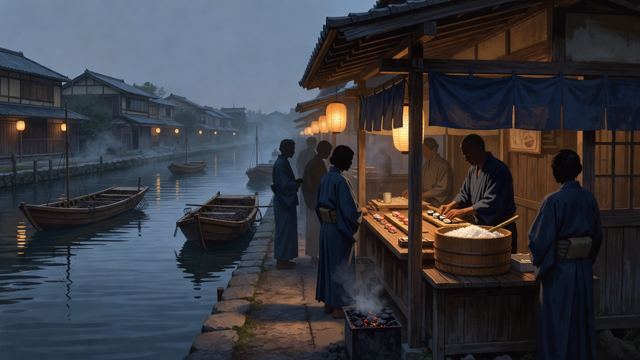
Hand-Pressed by the Canal
HistoricalEat the PastA Bite of HistoryStory5 Ingredients or LessAmerican
Ingredients
- Narrative chapter
Instructions
- 1By late afternoon the heat still clung to the planks of the canal walk. Barges nudged the pilings with low thuds, and the air tasted of brine, charcoal, and the sharp green bite of grated wasabi from a dozen open stalls. Edo was then the largest city on earth—crowded with craftsmen, porters, clerks, and firewatchers—and most of them ate away from any family hearth. Cooking fires indoors were watched like enemies after the great blazes; better to buy a bowl already hot, a skewer already glazed, a bite already pressed.
- 2Kenzo wiped ink from his fingers and followed the smell of rice vinegar toward the water. He was a block-carver’s assistant, paid in copper when the shop was busy and in leftover rice when it was not. Rice was never only food here. It was tax, wage, and status, measured out from the countryside into the shogun’s granaries and down again into the mouths of the city. What the farmers sent as nengu, the stalls sold back as supper.
- 3At a low wooden counter under a paper lantern, a man worked with both hands and almost no wasted motion. He wet his palms in vinegared water, scooped a warm oval of short-grain rice, and pressed it—not hard, not soft—against the heel of his hand until it held shape without crumbling. Across the top he laid a thin slice of kohada, gizzard shad from the bay, its flesh already touched with salt and a whisper of vinegar so it would keep through the evening’s rush. A smear of wasabi went between fish and rice like a green seal. He set the piece on a cypress plank and began the next.
- 4This was haya-zushi, “fast sushi”—not the months-long fermented narezushi of older provinces, but something meant to be eaten before the lanterns burned low. Vinegar seasoned the rice and slowed the day’s spoil. Soy from the brewing houses of nearby Noda and Choshi waited in a shallow dish for those who wanted a dip. No one lingered. You stood. You paid. You ate with your fingers while the wood still smelled of the press.
- 5Kenzo ordered four pieces and a small side of pickled daikon. The vendor’s boy fanned the rice barrel to cool it just enough; too hot and the fish would wilt, too cold and the grains would seize. Behind them, a tempura stall hissed as batter hit oil—another taste the city had borrowed and remade after Portuguese ships brought the idea of frying in deep fat generations earlier. Edo took what arrived and turned it into something you could finish before your shift drum sounded.
- 6A porter jostled past with a yoke of soy casks. Two firemen in quilted coats laughed over grilled eel, the sweet tare sauce sticky on their thumbs. Out on the darkening water, fishing skiffs worked the last light; tomorrow’s tuna, sea bream, and shellfish would come up the channels before dawn, sold at the markets near Nihonbashi while the city still yawned. Ice was rare and precious. Freshness was a race measured in hours, not days. That was why the best stalls opened when the catch was nearest, and why a man ate standing up with the canal wind on his neck.
- 7Kenzo bit through fish into rice. The vinegar brightened the fat; the wasabi rose sharp into his sinuses and cleared the day’s dust. He thought of the mountains inland where the buckwheat for soba grew, of the miso vats sweating in courtyard shade, of umeboshi plums packed in salt against lean months. Preservation was a kind of faith in Edo—salt, smoke, ferment, pickle, dry—because the city was a mouth that never closed, and the hinterland could not always keep pace.
- 8He finished the last piece and licked a grain from his thumb. him lanterns multiplied along the bridges. Somewhere a noodle hawker called out steaming bowls of soba for men walking home too tired to boil water. Kenzo left two mon coins on the plank, nodded to the presser, and stepped back into the flow of bodies. Behind him the vendor’s hands never stopped: wet, scoop, press, lay, pass. Rice and fish, again and again, feeding a capital that measured its nights in small, perfect bites.