PlatePilot
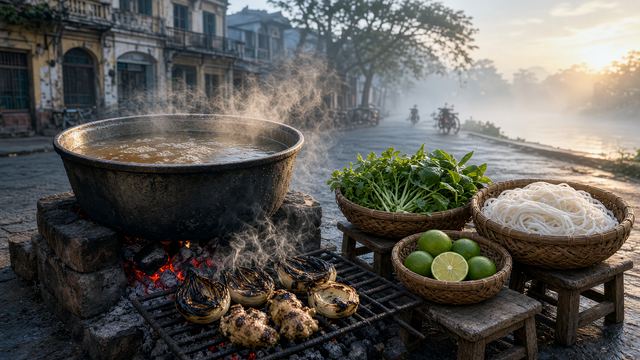
Star Anise Over Dawn Broth
Every recipe here is free to read.
HistoricalAmericanEat the PastA Bite of HistoryStory5 Ingredients or Less
Ingredients
- Narrative chapter
Instructions
- 1The charcoal found its voice before the sky did. On a side lane off the Red River, a woman coaxed last night’s banked heat back into a hard orange and set a blackened pot where the steam would drift into the faces of whoever came first. She did not call the dish anything fancy. She called it what the neighborhood already knew: noodles in clear broth, ready when the light was still blue.
- 2Northern kitchens had long trusted rice noodles and slow pots. What changed in these decades was the meat. Under French colonial rule, cattle moved through Hanoi in numbers older market habits had not required, and bones—knuckles, shins, the joint scraps that did not dress a European table—found their way into Vietnamese hands at prices a sidewalk cook could bear. Nothing was wasted. A cracked femur meant collagen. A length of tendon meant body. She rinsed the bones, blanched them hard to drive off the gray foam, then started them again in clean water that would not muddy.
- 3Beside the pot she kept her other fire: a shallow braise of onions and ginger laid directly on the coals until their skins blistered black and sweet. The char was not decoration. It laid a roasted depth under the broth that raw aromatics could not give. Into a cloth knot went the dry wealth of the cupboard—star anise like little rusted flowers, a stick of cinnamon, a clove or two, black cardamom if she had it—spices that had moved for centuries through Chinese and Indian Ocean trade before they ever met a Hanoi dawn. She dropped the knot into the simmer and tied it off so no one would bite a pod by accident.
- 4Salt alone did not finish the pot. A splash of nước mắm, the amber fish sauce pressed from anchovies and salt along the coast, brought the ocean inland. Sugar, only a pinch, rounded the edge. The broth had to run clear enough to show the white of a raw beef slice when she fanned it over the top at service; cloudiness meant a rushed blanch or a boil pushed too hard. She kept the surface barely trembling for hours, skimming, tasting from a ceramic spoon that never left the rim.
- 5By the time the first rickshaw wheels hissed past, her husband had the bánh phở cut—fresh rice sheets snipped into slick ribbons—and herbs piled in shallow baskets: sawtooth coriander, Thai basil when the market held it, lime wedges, a dish of sliced chili. Customers did not sit long. They stood or crouched on low stools, bowls hot enough to fog spectacles, chopping sticks working noodles up from the bottom so the rare beef finished in the heat. A student on his way to the lycée. A clerk who still smelled of ink. A soldier off-shift who paid without talking. Each left a small moon of broth and a scatter of green stems.
- 6Scarcity taught the recipe its manners. Chicken versions appeared when beef ran dear. Some mornings the garnish thinned to only onion and a hard lime. The spice knot was reused until its perfume went flat, then refreshed one star at a time—anise was money in the jar, not a free wind. Children learned not to waste the last slick of liquid; bread, when they had the colonial baguette ends, went in to mop what chopsticks missed.
- 7Word traveled the way steam does. Other pots lit on other corners. The name settled as phở, a sound as short as the pause between ladle and bowl. No single kitchen invented it in a flash of genius; it thickened out of habit, trade, bone, and the need to feed people who rose before kitchens inside houses were warm. By the time the sun cleared the tiled roofs and the lane smelled of bicycle oil and wet stone, her pot had already given away its best hours.
- 8She banked the charcoal again toward noon, bones still yielding, and thought of the evening pass—the second life of the same liquor, noodles stretched, herbs renewed. Appetite in Hanoi did not wait on ceremony. It waited on clarity in the spoon, on the anise lifting off the surface like a promise, on beef so thinly shaved it turned the color of rosewood in a breath of broth. When the bowl came right, no one asked for the empire’s story. They only bent their heads and ate while the steam still rose.