PlatePilot
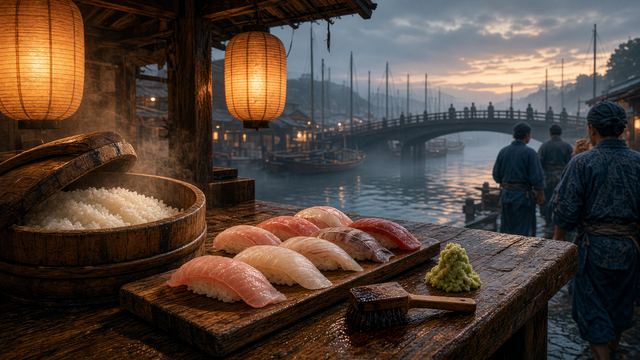
Vinegar Rice Before Dusk
Every recipe here is free to read.
HistoricalAmericanEat the PastA Bite of HistoryStory5 Ingredients or Less
Ingredients
- Narrative chapter
Instructions
- 1By late afternoon the tide smell rode the Sumida all the way to the bridge. Men in indigo jackets threaded the planks with ledgers under their arms, and the stall boards were already wet with melt from the morning catch. A boy named Kenta wiped the cypress counter in hard circles. His uncle’s rule was simple: rice first, fish second, hands never idle. In a city of a million, cold storage was a fantasy. Vinegar and haste did the preserving that ice could not.
- 2Edo had not always eaten fish this way. For centuries the older narezushi had meant fish packed with salt and rice and left to sour for months, the grain discarded like packing straw. That was country time, temple time. The capital ran on different hours. Merchants needed something that could be pressed into a palm between bargains. Cooks answered with haya-zushi—vinegared rice that tasted bright and kept a few careful hours longer than plain steamed grain. A splash of rice vinegar, salt, a little sugar when a household could spare it, and the rice cooled glossy under a wooden lid while the kettle still sighed.
- 3Kenta’s uncle shaped the first pieces while the light was still gold. He wet his fingers in vinegared water so the grains would not glue to his skin, cupped a bite-sized bolster, and laid a thin strip of kohada—gizzard shad from the bay—across the top, a smear of grated wasabi root tucked like a secret. Two bites, maybe three. No ceremony of knives at a formal tray. This was food that stood up with you.
- 4A clerk from a dry-goods house stopped without sitting. He paid in small copper and ate facing the water, soy brushed light so the fish would not drown. Soy itself was wealth measured in casks: simmered from soybeans and wheat, aged, shipped, taxed. Wasabi’s heat rose clean into the nose and cut the oil of fish that had left the boat at dawn. Nori, toasted until it snapped, wrapped certain cuts when the sheet money allowed; laver from the bay flats was another harvest the city could not live without.
- 5Fire law hung over every stall. After the great blazes that had rewritten whole wards, open flames were watched, charcoal measured, shutters ready. Street cooks learned to work in bursts—rice steamed in the safer hours, toppings finished fast, embers banked. The smell of wood and fish skin crisping was appetite and hazard together. Kenta listened for the watchman’s clappers and kept a wet rag within reach.
- 6What the counter taught was class without a lecture. Laborers took the cheaper oily fish, vinegared hard, sometimes pressed in a box and sliced—oshi shapes that traveled in cloth. Officials and flush traders pointed at red flesh when tuna runs came in, a luxury that still felt almost improper to some older tongues. Women from back-street tenements bought leftover rice softened into a supper porridge with scallion and a drip of soy when the shaped pieces were gone. Nothing edible stayed on the board after full dark if the uncle could help it. Spoilage was a ledger loss and a shame.
- 7Technology here was hand and barrel. No machine portioned the rice; palm pressure did. Pickled ginger—thin, pink-pale, sharp—cleansed the mouth between kinds of fish so flavors would not quarrel. The ginger’s vinegar bath was cousin to the rice’s own dressing, a small chemistry of acid against the humid lowland air. In summer the stall opened earlier and closed when the light went copper. In winter breath smoked and the soy thickened at the brush’s edge.
- 8A potter’s apprentice, flour still in his hair, laughed when Kenta’s ball of rice came out lopsided. The uncle flicked the boy’s wrist into a better curve. “The rice is the pillow,” he said. “The fish is only the guest.” It was not poetry for its own sake. Undercooked grain soured wrong; over-seasoned vinegar shouted down the bay. Get the pillow right and even a humble cut tasted like money.
- 9Night market lanterns bloomed. Someone carried grilled eel from another stall, sauce lacquered sweet-salty, a richer rival. Someone else sold steaming sweet potatoes. Edo ate standing, walking, bargaining. The old slow ferments still existed in farm storehouses far from the bridge, but the city’s pulse had chosen the quick bright sour of vinegar rice—food timed to the hour, not the season of waiting.
- 10Kenta’s last shape of the day used a scrape of egg, cooked thin and folded, for a customer who would not touch raw fish after sunset. The rice beneath still shone. He felt the warm weight of it, the clean sting of vinegar in the steam, and understood why men hurried here before the dark took the canals. Hunger in Edo did not wait on a formal tray. It stopped at a wet board, paid its coppers, and ate two bites of sea and grain while the bridge lamps caught the water. The appetite left with them—salt, acid, heat—already planning tomorrow’s return.