 PlatePilot
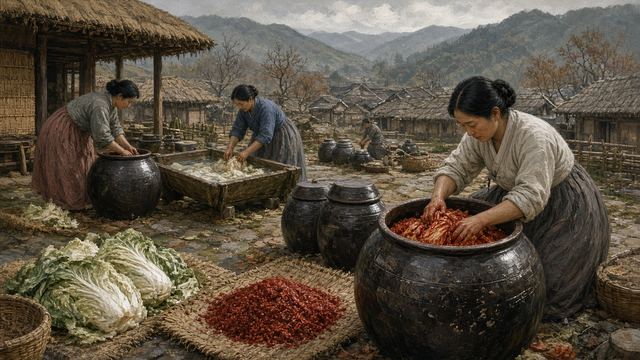
Red Hands Before Winter
HistoricalEat the PastA Bite of HistoryStory5 Ingredients or LessAmerican
Ingredients
- Narrative chapter
Instructions
- 1Frost had not yet whitened the ridges above the village, but the wind already smelled of it. In the courtyard the napa cabbages stood in pale ranks, outer leaves stripped, hearts still tight as fists. Salt lay in woven sacks against the kitchen wall—sea salt carried inland at a price that made Grandmother count every scoop twice. Without salt, winter meant only millet gruel and whatever roots the earth still offered. With it, the household could turn cabbage into something that lived through the dark months.
- 2The chili had changed everything within living memory. Older women still spoke of the pale pickles of their girlhood: cabbage, radish, garlic, a little fermented anchovy, nothing red. Then the pepper pods had come—by way of trade and war and the long routes that stitched the New World to the ports of East Asia—and the paste had turned the color of lacquer and fire. Gochugaru was no longer a curiosity. It was wealth you could smell: dried, flaked, and poured into bowls until the air bit the back of the throat.
- 3Hyeonok knelt with her sleeves bound, wrists deep in brine. The cabbages had spent the night under salt, weeping their water into wooden troughs. Now each head had to be rinsed, squeezed, and tasted. Too little salt and rot would bloom in the jar. Too much and the leaves would stiffen like leather. She worked by feel more than by any written measure—the way her mother-in-law had taught her, the way the village had taught every bride since the peppers first stained the autumn mats.
- 4Beside her, three neighbors mixed the season’s paste. Garlic and ginger were pounded until the stones of the mortar shone wet. Fermented shrimp—jeotgal bought dear from a coastal peddler—went in by the spoon, then the gochugaru in cascading red. A little cooked rice porridge bound it; a thread of raw fish sauce deepened it. When Hyeonok lifted a leaf and smeared the paste between its folds, her hands came away the color of kiln fire. She laughed once, short, and kept packing: leaf after leaf, core to tip, until each cabbage was a heavy, sealed fist of spice and salt.
- 5The men had already hauled the onggi from the shade of the eaves—tall, round-shouldered jars of breathable clay, dark and pitted from years of use. Onggi did not smother a ferment; it let it breathe just enough. Some households still buried the largest jars to the shoulder in the earth, where the temperature held steady when the blizzards came. Others set them on the raised stone platform of the jangdokdae, lids weighted against stray cats and curious children. Either way, the work was the same: pack tight, press out air, leave a clean weight on top, and trust time.
- 6By late afternoon the courtyard smelled of garlic, chili oil, and cold water. Children stole shreds of seasoned cabbage and were scolded without heat. A pot of scorched-rice tea steamed on the kitchen hearth. Grandmother cut a ribbon from last year’s jar—the one opened sparingly since spring—and laid it beside bowls of hot white rice. The old kimchi was softer now, deeper, almost wine-dark at the edges. It cut the blandness of the grain the way a knife cuts silk.
- 7No feast marked the packing. Kimjang was not celebration so much as insurance. When snow sealed the paths and the market stalls stood empty of greens, these jars would open: for stews thinned with water and tofu, for pancakes sizzled in a little fat, for a single crimson leaf folded into a traveler’s rice ball. The labor of two hard days became the quiet abundance of six lean months.
- 8As dusk settled, Hyeonok wiped her red hands on a rough cloth and looked at the filled jars. Tomorrow the lids would be sealed for good. Tonight, though, the paste still clung under her nails, sharp and alive. She took a mouthful of rice with a strip of the bright new cabbage—still crunchy, still fierce—and felt winter lose a little of its threat. The cold would come. The jars would wait. And the table, when it was needed most, would not be empty.