 PlatePilot
Garum on the Noonday Breeze
HistoricalEat the PastA Bite of HistoryStory5 Ingredients or LessMediterranean
Ingredients
- Narrative chapter
Instructions
- 1By the fourth hour after dawn the street already smelled of boiled lentils and warm oil. Heat climbed the plaster walls in narrow lanes off the Via dell’Abbondanza, and the mountain to the north sat pale and ordinary against a hard blue sky. No one in the shop looked at it. They looked at the counter.
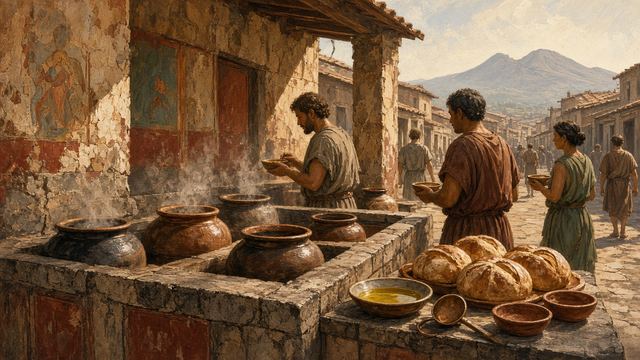
- 2Livia wiped her palms on a coarse apron and leaned her weight against the marble-topped bar as if it were a second spine. Four great earthenware jars—dolia—sat sunk to their shoulders in the masonry, mouths dark as wells. One held a thick chickpea mash thinned with stock and green oil. One held lentils dark as wet earth, studded with scraps of salt pork the household could spare. One held mulled wine kept just short of a boil, spiced enough to hide a rough vintage. The last, smaller, was for the garum: amber, sharp, alive with the sea.
- 3She did not make the garum herself. Nobody of her station did. It came up from the coast in stacked amphorae, the best of it from workshops that fermented small fish and salt under the sun until the flesh surrendered into a liquid Romans treasured the way other ages would treasure vinegar or soy. A ladle of it could turn plain legumes into something people would pay copper for. A careless spill stained wood forever. Livia treated the jar like a strongbox.
- 4A baker’s boy shoved through with a board of round loaves still breathing heat. The bread carried a stamp on its crust—workshop mark, quality claim, sometimes the name of the man who owned the oven more than the hands that fed it. Bread was politics as much as food: grain moved through imperial channels, was ground in donkey mills, baked in commercial ovens that rarely went cold. Most city folk did not keep a full kitchen. They bought fire already spent by someone else.
- 5“Two with oil. One with the pork lentils,” called a fuller from the laundry down the block, knuckles raw from urine vats and fuller’s earth. He ate standing, elbow on stone, the way nearly everyone did. Thermopolia were not banquet rooms. They were hinges in the day—places where porters, cloth-workers, enslaved errand-runners, and small traders took heat into the body without surrendering an afternoon.
- 6Livia knew the grammar of her counter the way a sailor knew rope. A freedwoman with a thin gold ring and careful Latin got a cleaner bowl and a smile that cost nothing. A dusty muleteer got speed and a thrifty pour. Children were handed crusts dipped once—only once—in the chickpea pot if their mothers were watching. Elite villas up the slope had triclinia, painted walls, slaves to carry courses. Down here the city’s appetite was public, vertical, and fast.
- 7She stirred the lentils with a wooden paddle darkened by years of fat. Salt pork was not daily mercy; it was a small luxury stretched thin, more perfume than meat. Herbs from a courtyard pot—oregano, rue in cautious pinches, a bay leaf cracked between thumb and knife—went in because green sharpness made thrift taste deliberate. Olive oil she measured as if it were coin, which it nearly was: pressed from groves inland and on the hills, graded by freeness of flow and cleanness of flavor, carried in skins and jars that left grease maps on every cart.
- 8A sailor on shore leave slapped down a few coins and asked for wine cut with water and a streak of garum in his chickpeas. “Tastes like the harbor,” he said, not unkindly. Fish sauce was the Mediterranean in a spoon—trade winds, salt pans, the long patience of fermentation. Pepper, when she had any, stayed hidden for customers who could pay; it had walked from Indian coasts through Egyptian ports and Roman ledgers before it ever touched a cookshop ladle. Most days her heat came from garlic, onion, and the dark cheer of legumes.
- 9Behind the shop, in a dim back room no wider than a pantry, a charcoal brazier did the quiet work. Romans cooked with flame they could control in small spaces: bronze pans, earthen pots, iron grids for the rare bit of sausage. Preservation was a constant argument with the climate—salt, smoke, oil, honey, hard cheese, wine turned toward vinegar. Fresh fish had to move quickly from quay to pot. Meat was a festival for many, a weekly hope for some, a background scent for the rest.
- 10Noon thickened. A pair of young women in good wool argued softly over whether to spend on stuffed vine leaves from a neighboring stall or stay loyal to Livia’s lentils. A clerk from a cloth warehouse ate bread wiped through oil and complained, without heat, the price of grain this month. Somewhere a dog waited with professional patience for dropped crusts. The mountain did not move. The jars steamed. Copper coins clicked on stone like small polite insects.
- 11When the rush eased, Livia finally fed herself: a heel of stamped bread, a scoop of chickpeas loosened with oil, three drops of garum that made the whole bowl lift its head. She ate the way her customers ate—upright, alert, already half listening for the next voice at the bar. Food here was not a performance laid on couches. It was fuel, gossip, hierarchy, and comfort braided into one hot mouthful between errands.
- 12By late afternoon the wine jar would run low and the lentil pot would show its bottom. Someone would want honey cakes if the pastry seller came by; someone else would want only salt and bread. The city would keep chewing through its hours. And on the counter, dark and gleaming, the garum would wait—sea-wealth for people who might never own a ship—ready to make the next humble bowl taste as if the wide Roman world had, for a moment, sat down beside them.