 PlatePilot
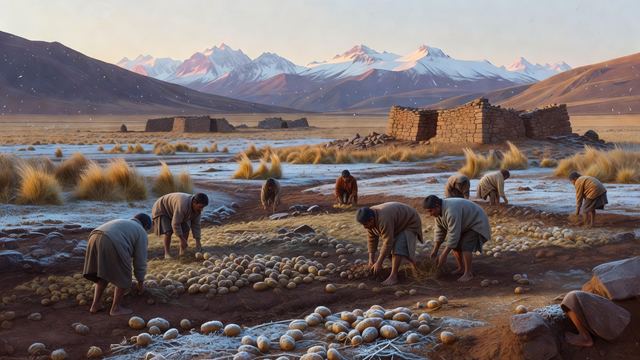
Barefoot on the Frozen Harvest
HistoricalEat the PastA Bite of HistoryStory5 Ingredients or LessAmerican
Ingredients
- Narrative chapter
Instructions
- 1The frost arrived the way the old ones promised it would—clean, sudden, and without pity. By the time the last ember in the courtyard had collapsed to ash, the small bitter potatoes already glittered on the packed earth like a field of dull stars. They had been spread in a single layer before sunset: not the large sweet tubers kept for boiling, but the tough highland kinds that could survive thin air and a hard freeze. Those were the ones that became chuño. Those were the ones the empire wanted.
- 2Suma’s bare feet found the cold before her eyes fully woke. She stepped onto the scatter of tubers with the other women of the ayllu, heels and toes working in a slow rhythm that was half dance and half work-song. Night ice had ruptured the cells inside each potato; morning sun would soften them; bare feet would press the water out in gray little slicks that darkened the dirt. Trample, turn, trample again. Children ran the edges, shooing dogs. Men mended carrying cloths and watched the ridge for the inspector’s litter. Everyone knew the count would come.
- 3This was how surplus became permanence in a land that could starve a valley between one hailstorm and the next. Freeze by night, thaw by day, crush, peel away the skins once the moisture was gone, and dry the pale or blackened cores until they rang like river stones in a basket. Done well, chuño kept for years in the high cold—lighter than fresh roots, proof against rot, ready to be soaked and stewed whenever a road crew, an army, or a hungry month demanded it. The Inca state understood this the way it understood rope bridges and terrace walls. Along the ridges stood the qollqas, stone storehouses with ventilated floors, waiting to swallow a measured share of every ayllu’s labor.
- 4Suma’s mother had said the mit’a was a debt paid in bodies and in food: days on the roads, days on the terraces, and a portion of what the frost made possible. Vertical life taught the lesson early. Maize and aji peppers climbed up from warmer slopes through kin networks; salt and dried meat moved; the puna gave bitter potatoes and the tough quinoa heads that rattled in the wind. No single ecological shelf fed a family forever. Storage and exchange did.
- 5By midday the potatoes had the dull give of wet clay. The women shifted their weight, laughing when someone slipped, then falling quiet when a boy shouted from the lookout. Dust on the trail. Officials. Suma’s younger brother tightened the cords on a filled sack until his knuckles whitened. Tribute first—always—then the household pits. Too light a sack invited questions; too heavy a complaint invited worse. The inspector did not taste the raw mash. He only watched the weighing cloths and marked a knotted cord. When he left, the air seemed thicker, as if the mountain had been holding its breath.
- 6What remained was still work. Skins had to be rubbed free in cold water. The whitest lots, washed again and again, would become moraya—cleaner, milder, prized. The darker ones, left with their night-born bitterness, were ordinary chuño, the everyday stone-bread of the heights. Racks and rooftops filled. The smell was of damp earth and iron-cold starch, not yet food, only promise.
- 7Near dusk Suma took a small handful from the family’s hidden reserve—never the tribute pile—and set it to soak in a clay pot. Water clouded. The hard disks softened by degrees, surrendering the months they had been built to outlast. Her mother fed the cookfire with ichu grass and dung, then added what the lower kinsmen had sent last moon: strips of freeze-dried meat, a few wrinkled aji, chirimoya leaf for scent, salt like crushed crystal. The stew thickened slowly. Quinoa, toasted earlier on a flat stone until it popped faintly, went in at the end for weight and nuttiness.
- 8When bowls were finally passed, the first taste was pure altitude—clean, dense, slightly mineral—then heat from the pepper and the deep savor of meat that had itself once been cured by wind. Men ate standing, still listening for road-news. Children licked the rims. Suma held the warmth against her palms and felt the day in her arches: ice, sun, stone, and the thin bright air that made an empire possible only if people kept turning harvest into something that could wait.
- 9Tomorrow more tubers would go down under bare feet. The qollqas would take their share. But tonight the pot sat heavy at the center of the courtyard, and the frozen harvest had become supper—proof that on the puna, survival was a craft you could smell simmering.