 PlatePilot
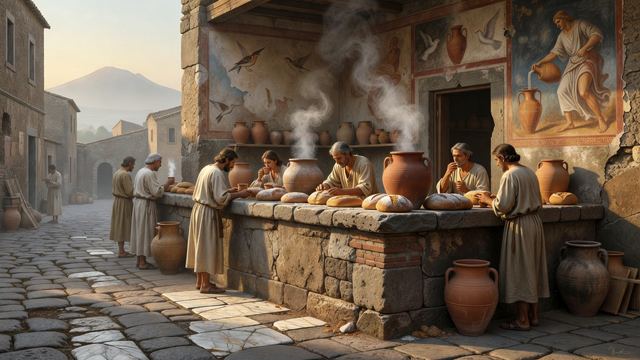
A Bowl at the Thermopolium
HistoricalEat the PastA Bite of HistoryStory5 Ingredients or LessMediterranean
Ingredients
- Narrative chapter
Instructions
- 1Marcus wiped the rim of a dolium before the street fully woke. Charcoal glowed under the masonry counter, and heat climbed into four great earthenware jars set snug in round openings like eggs in a stone nest. Lentils with cumin and oil. A farro porridge thick enough to stand a spoon. Fish stew darkened with garum. Wine kept from turning with honey and a scatter of expensive pepper. The frescoes above—ducks, a rooster, a nymph pouring—still held last night’s soot in their cracks.
- 2Pompeii did not feed its laborers on couches. The rich reclined at home, courses paced by slaves, but masons, fullers, sailors off the Sarno, and rented cooks for hire ate standing in the street with one elbow on warm marble. Thermopolia were the city’s fast heat: hot food sold by the ladle into a customer’s own bowl or a cheap earthen cup left as deposit. No forks. Fingers, bread, and a spoon if the stew ran thin.
- 3A boy from the bakery two doors down shouldered in a stack of round loaves still smelling of the oven’s ash. Pompeii’s bakers stamped their bread; some loaves found centuries later still bore the maker’s mark and the split of the rising. Marcus traded a ladle of lentils for two heels of panis and tore one open while it steamed. Oil first—always oil—then a drip of garum that hit the soft crumb like weather from the sea.
- 4Garum was the town’s other bloodstream. Fermented fish guts and salt, left in the sun until the liquor ran clear and fierce, packed in amphorae from local works and from Spain. Pliny wrote of grades: the delicate for tables that cared reputation, the sharp common stuff for stews and for men who worked with their hands. It was not “fishy” so much as deep—salt, yes, but also a brown umami that made beans taste like they had been near a hearth all day. When a shipment delayed, prices jumped and tempers shortened. When it arrived, the whole block smelled briefly of money.
- 5By the second hour a fuller in a stained tunic slapped an as on the counter and pointed at the fish. “From yesterday?”
- 6“From this morning’s reboil,” Marcus said. “Anchovy under the oil. Cumin. A little wine.” He skimmed fat, filled the man’s bowl, and watched him soak the crust until it sagged. Across the way a slave in a better tunic waited with a stacked carrier—metal tiers for a household that wanted thermopolium heat without thermopolium company. Even the prosperous borrowed the street’s fire when kitchens were busy or the cook was sick. Food moved across class; the manner of eating marked the line.
- 7A woman selling herbs from a tray argued mildly over pepper. Pepper came from far east of the empire’s ease, grain by grain through Alexandria and the Red Sea routes, and even a pinch announced that someone had coin or friends. Marcus kept his in a small box, not for show but because theft was easier than honesty when spice equaled weeks of wages. He used it the way a careful man used compliments—sparingly, where it would be noticed.
- 8Midday thickened. Mules brayed. Someone cursed a cracked amphora of oil. Flies found the fish jar and were waved off with a fig branch. Marcus refilled the farro with water and a bone he had saved, letting collagen silk the grain. Preservation here was not ice; it was salt, smoke, oil seals, vinegar, fermentation, and the simple brutal math of cooking what would not last another night. Summer in Campania turned meat fast. Beans, lentils, chickpeas, and hard wheat outlived pride.
- 9A sailor off a coastal freighter asked for wine cut with warm water and honey, then told a half-true story a storm near Puteoli while he licked stew from his thumb. Two teenage apprentices counted copper and split a bowl, bread between them like a truce. Someone’s child was lifted to see the painted duck and laughed when steam fogged the marble. The volcano on the horizon was only a familiar shape that day—a ridge people pointed at for weather, not fate.
- 10When the light slanted and the charcoal sank, Marcus scraped the last lentils, folded oil through them, and ate with the bakery heel he had saved. The counter still radiated. His fingers shone. Outside, the street smelled of urine from the fullers, of bread, of fish sauce, of hot dust—the honest breath of a working town that bought its dinner by the ladle and carried it off into whatever the evening still owed.
- 11He wiped the dolium rims once more. Tomorrow the jars would fill again: grain, pulse, sea, and spice in small brave amounts. In Pompeii, appetite did not wait for a triclinium. It arrived on foot, paid in copper, and left a warm ring on the stone where a bowl had stood.