PlatePilot
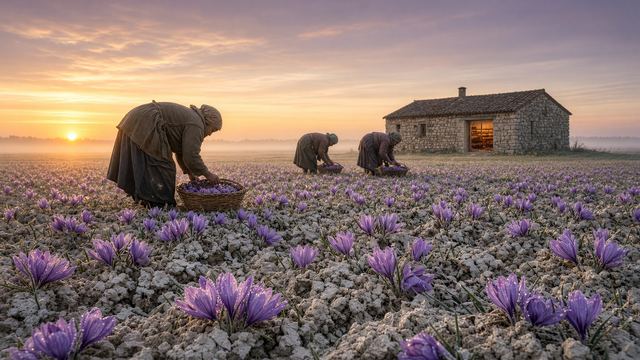
Red Threads at First Light
Every recipe here is free to read.
HistoricalAmericanEat the PastA Bite of HistoryStory5 Ingredients or Less
Ingredients
- Narrative chapter
Instructions
- 1Long before the church bell thought of ringing, the plain was already moving. Purple crocuses opened low against the chalky soil of La Mancha like a spilled inkpot, thousands upon thousands, and the pickers bent to them with cloths tied over their hair and baskets hooked on their arms. October had turned the air sharp. By midmorning the flowers would flop and the red-gold threads inside them would lose their force, so the work belonged to first light and nowhere else.
- 2Catalina’s fingertips knew the rhythm before her mind did. Pluck the whole bloom. Drop it soft. Do not crush. A few rows over, her younger brother complained that his back was a hinge gone wrong, and their uncle answered without looking up that a hinge still had to open if the household meant to eat through Lent and the lean weeks after. Saffron was not a garnish here. It was rent, dowry dust, medicine cabinet, and bargaining chip. Merchants in the market towns paid by the ounce for threads that had been properly dried—never scorched, never left damp to mold—and a single acre, tended honestly, could outweigh a season of ordinary grain in silver.
- 3By the time the sun cleared the low hills, the baskets went inside the coolest room of the farmhouse. Women and older children sat on low stools and opened each lilac cup as if it might bite. Three stigmas per flower: thin, crimson, fragrant when bruised. Everything else—petals, pale styles—was waste or sheep bedding. Talk ran low and practical. Whose oven had cracked. Which well was turning bitter. How the previous year’s threads had fetched less because a careless cousin had dried them on a sheet in full sun and baked the perfume out.
- 4Drying was the knife-edge. Screens or fine sieves held the red threads over gentle heat—coals banked low, sometimes a special box that breathed more than it roasted. Too hot and you owned expensive straw. Too cool and moisture clung, and moisture meant ruin in the jar. Catalina watched the color deepen from blood-bright to a darker, almost copper red, and when her aunt nodded, they decanted the threads into small tin-lined boxes and earthen pots, layered with paper, sealed against dust and thieves. A household might keep a private pinch for the kitchen and send the rest to the buyer who came from town with scales that themselves felt like a kind of courtroom.
- 5In the kitchen the same spice behaved like stored sunlight. A few threads, steeped in a ladle of warm broth or white wine, bled orange-gold into chickpeas, into a stewed hen, into rice toasted first in olive oil with onion until the grains sounded dry and nutty in the pan. The point was never to bully the pot. Saffron was wealth you could taste; you let it announce itself and then you stopped. Paprika from the brick-dried peppers of the region could add smoke and body. Garlic and bay did the rest. On feast days a thin cake or a custard might carry a whisper of the threads, sugar making the aroma lift higher, but sugar still cost, and most days the spice earned its keep in the savory pot that fed field workers and children from the same earthenware bowl.
- 6Travelers who wrote Spain in those decades noticed the color before they understood the labor: soups stained like sunset, rice that looked expensive even when the meat in it was scarce. They rarely saw the dawn shift on the plain, the purple field vanishing into green nothing by noon, the stained fingers, the quiet arithmetic of stigmas. Catalina knew the arithmetic in her sleep. Three threads to a flower. Flowers by the tens of thousands. A winter measured in jars no larger than a fist.
- 7When the last screen came off the heat that evening, the house smelled briefly of hay, honey, and metal. Someone set a clay pot at the edge of the fire for tomorrow’s midday meal—onion softened in oil, a spoon of soaked chickpeas, water, and the new harvest bloomed in a cup until the liquid went the color of a held coin. Bread waited under a cloth. Outside, the crocus fields were bare green again, as if the purple had been a rumor. Inside, winter had been argued into the pantry one red filament at a time, and the pot on the fire began, slowly, to smell like survival you could look forward to.