PlatePilot
Brine Before the Mountain Frost
Every recipe here is free to read.
HistoricalAmericanEat the PastA Bite of HistoryStory5 Ingredients or Less
Ingredients
- Narrative chapter
Instructions
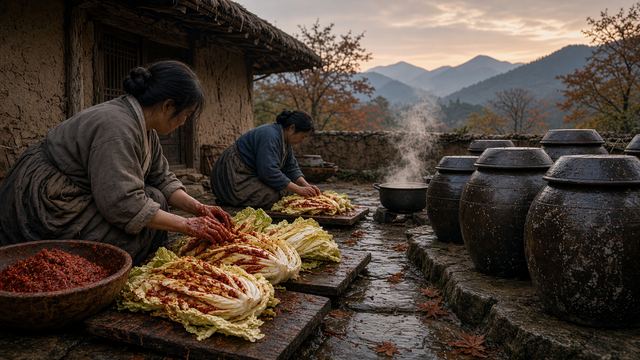
- 1Before the sun cleared the ridge, the courtyard already smelled of wet earth and sharp salt. Cabbage heads rose in pale stacks against the mud wall—napa from the last good cutting, outer leaves freckled with field grit. It was kimjang week, the narrow autumn window when households across the peninsula stopped ordinary work and put up the side dish that would outlast the freeze.
- 2Three neighboring families had pooled their labor, as they did every year. The men hauled water and rolled the heavy onggi, the lidded earthenware jars whose porous clay would breathe just enough through winter. The women and older girls stripped, quartered, and lowered the cabbage into brine so dense a radish could float. Salt was money in crystal form, boiled down from coastal pans and measured without waste. Too little, and slime would claim the jars by the first hard freeze. Too much, and every meal until spring would taste of punishment.
- 3By the second day the leaves had gone pliant. Hands wrung them until the water ran clear, then the real work began on low boards set in the yard. Bowls of gochugaru—crushed dried chili, the color of banked coals—waited beside minced garlic, ginger, and scallion. The red powder was no ancient native. Chili plants had crossed oceans after the Columbian exchange and reached Korea by way of maritime contacts in the late sixteenth and seventeenth centuries, transforming older pale ferments of vegetables, soy, and mustard greens into the scarlet kimchi that defined later tables. What had once been a winter necessity became, with heat and color, a kind of wealth you could pack into clay.
- 4Beside the chili stood smaller pots of jeotgal: salted and fermented anchovy or shrimp, funky and amber, stretched carefully because fish paste cost more than cabbage. A household of means might fold in raw oyster or bits of pork skin; a poorer one leaned harder on radish, dropwort, and the cheapest brine fish. Class showed in the seasoning long before anyone sat down to eat. Children were set to pounding sticky rice porridge that would bind the paste, their wrists aching while steam lifted from the iron pot and mixed with the yard’s cold air.
- 5An older woman worked the paste under the cabbage leaves with bare forearms, coating every fold until the white ribs blushed. The stain climbed to elbows. No one wasted talk; kimjang was a clock, and mountain nights were already biting. When a jar was layered full—cabbage, paste, more cabbage, a final scatter of salt—it was tamped, lidded, and set in a shaded trench or on the jangdokdae, the platform where sauces and ferments lived outdoors. The clay would keep a steadier temper than any kitchen shelf. In the cold months a ladle drawn from that darkness would cut through plain rice like a bright knife.
- 6By late afternoon the courtyard looked battlefield-red. Neighbors rinsed boards, returned borrowed basins, and kept back a portion of the freshest mix—still crunchy, barely begun to sour—for the workers’ supper. Rice had been cooking since the jars were sealed. If the year had been kind, a thin pork bone broth or pan-seared tofu joined the table; if not, the kimchi and rice stood alone, with toasted sesame and a drizzle of oil from the household’s pressed jar.
- 7They ate in the cooling dusk, fingers shining, the first sharp sweetness of garlic and chili waking appetites worn down by stacking and hauling. Someone joked that the jars already outnumbered the people. Someone else answered that by the second snow, no one would complain. The mountains took the last light. Behind the house the onggi squatted in their row, dark mouths sealed on green heat and salt, waiting for the months when gardens slept and the table’s color would come only from what hands had put away while the frost still held off.