PlatePilot
Foam Beaten from Bitter Beans
Every recipe here is free to read.
HistoricalAmericanEat the PastA Bite of HistoryStory5 Ingredients or Less
Ingredients
- Narrative chapter
Instructions
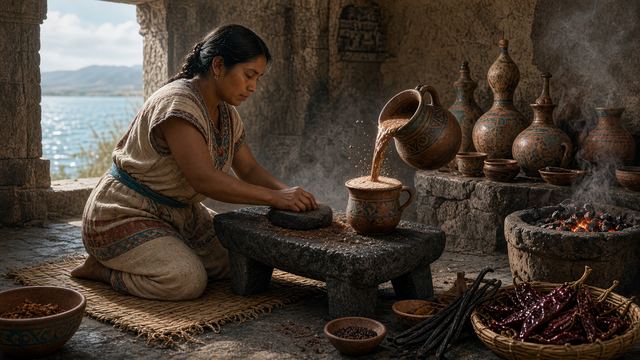
- 1Before the causeways woke fully, the palace kitchens already smelled of wet stone and toasted seed. A woman named Xochitl—composite of the countless grinders who kept the court alive—knelt at a basalt metate still warm from yesterday’s work. She tipped roasted cacao beans into the trough. They were small, wrinkled, and dear: counted out as tribute from hot lowland provinces, used like coin in the great market of Tlatelolco, hoarded in storerooms where a broken seal could mean disgrace.
- 2The beans cracked under the mano. She worked them with maize ash water in patient passes until the mass turned from grit to paste, glossy and bitter enough to make a child wince. This was not the sweet block later centuries would invent. In the Mexica world, cacao was a drink for rank and occasion—warriors after campaign, nobles at feast, offerings poured with care. Sugar from distant cane fields had not yet rewritten the palate. Heat came from dried red chiles. Perfume came from vanilla orchid, ear-flower, and sometimes honey from stingless bees. A little ground maize could stretch and thicken the cup when stores ran careful.
- 3Outside, canoes slid along the lake avenues with tomatoes, turkeys, salt, and still more beans. Inside, Xochitl scraped the paste into a tall, painted gourd and thinned it with water heated on a charcoal brazier. The first pour was dull. The second, from shoulder height into a second vessel, woke a pale collar of foam. She poured again and again—arms steady, wrists sure—until the surface rose like a soft crown. Froth was the point. A flat, lifeless drink announced a careless hand; a high foam announced skill, status, and the expensive bean itself.
- 4A steward tasted with a sip so small it barely wet his lip. Too thin, and the court would notice. Too fierce with chile, and the spice would bully the cacao’s deep, earthy bitterness. He nodded once. Calabashes and ceramic cups moved toward the inner rooms where mats were already unrolled and the day’s petitions waited. Elsewhere in the city, ordinary households might go weeks without a full cacao drink, making do with atole—maize gruels flavored with chile or fruit—while the beans themselves changed hands for cloth, labor, or small debts. Cacao marked a boundary: who could afford the froth, and who only smelled it on a feast day when a generous house opened its doors.
- 5Preservation was simple and strict. Beans dried hard traveled better than fresh pulp. Roasted and shelled, they kept if locked from damp and thieves. The prepared drink did not keep; it was made close to the moment of serving, like a sauce that dies if left. Stone tools, gourd dippers, and the knowledge of how high to pour were the technology—no copper mill, no pressed cocoa butter cakes, no milk from European herds. Fat stayed in the bean. Mouthfeel came from grinding fine enough that the tongue found silk instead of sand.
- 6By midmorning the first cups were empty and the metate was charged again. Foam collapsed into dark rings along the rims. Someone laughed in a corridor; someone argued over tribute tallies measured in loads of beans. Xochitl wiped her hands on a cotton cloth and reached for the chile pot, pinching another measure into the next batch. Outside, the lake wind carried smoke and the sour-sweet of market stalls. Inside, the next pour rose—bitter, hot, fragrant—lifting a skin of bubbles that said, before a single word was spoken, that this household still commanded the lowland gold of the cacao tree. Appetite followed the cup: tortillas fresh from the comal, turkey stewed with tomatoes and seed sauces, and always the dark drink waiting at the end of the hand, foam first.