PlatePilot
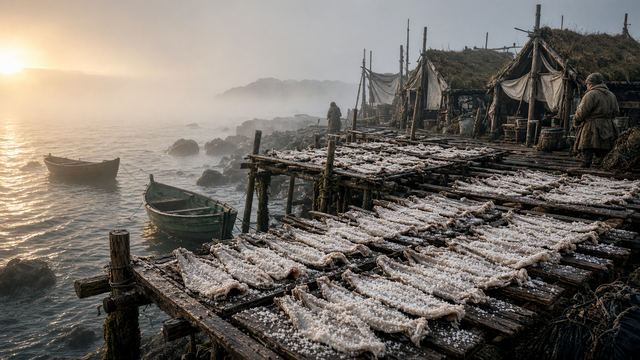
Split Cod on the Stages
Every recipe here is free to read.
HistoricalAmericanEat the PastA Bite of HistoryStory5 Ingredients or Less
Ingredients
- Narrative chapter
Instructions
- 1Before the fog lifts, the knives are already wet. On the wooden stages that jut over the harbor like half-built docks, men work in a line older than any one crew: throat, split, spine out, flat on the board. Cod come up silver and thrashing from the dories; minutes later they are pale open books of flesh, washed in seawater and buried under coarse salt that came out of Iberian pans and ship holds by the barrel.
- 2Salt is the true cargo. Without it the catch turns green and stinks before the first fair wind home. Too little, and flies find the meat; too much, and the fish leaches itself into leather no stew can redeem. Boys haul baskets of the white crystals up the stage ladders while older hands judge the grain by feel—Portuguese and Basque habits mixed with English thrift—pressing each layer until brine rises like sweat. By noon the racks on shore look snowed under in July: thousands of split cod drying in the thin northern sun, edges curled, skins toughening toward the dry cure Europe will call stockfish’s softer cousin.
- 3They are not here for fresh dinners. The migratory fishery runs on a colder arithmetic. Catholic fast days across France, Spain, and Portugal ban meat but not fish; merchants in Lisbon and Bilbao will pay for boards of salt cod that keep through winter without ice. So the shore crews eat what the market will not miss. Cheeks and tongues, rich and tender, go into the kettle when a boat is lucky. The rest of a working day is pease porridge thickened with a scrap of salt pork, ship biscuit hammered soft in broth, and molasses stirred into scalding tea if the West India barrel has not run dry. On lean evenings the same salt cod that will feed foreign Fridays is soaked, boiled, and flaked into the pot—breakfast’s leftovers becoming supper’s stretch.
- 4Weather is the other master. A warm wet spell blooms the cure with red spoil; a sudden cold can leave fish half-done and glassy. Men sleep in tilts of turf and sailcloth, boots still damp, the reek of fish oil ground into wool. They trade tobacco, mend nets by tallow light, and argue in three languages over whether tomorrow’s flake needs turning. Nobody romanticizes the work. Hands crack open from salt. The stage boards drink blood and brine until they shine dark as oak.
- 5Yet when the drying racks finally stiffen into export cargo—fish light enough to stack like lumber, white as laundry—the whole station smells of victory and mineral sting. Barrels are headed. A last shore meal is coaxed from the stores: soaked salt cod simmered with onions if any remain, peas gone soft, biscuit crumbled thick to catch the liquor, a spoon of molasses for whoever earned the favor. Fat from a precious bit of pork irises the surface. Men eat standing, bowls hot against their palms, eyes already on the loaded shallops.
- 6Out beyond the headland the Grand Banks keep sending cod into the gear. Behind them, across a month of ocean, kitchens from Brittany to the Tagus will take these same stiff boards, soak the salt away, and turn Friday into something almost lavish. Here, on the stages, the feast is simpler and harder won: brine, pea, pork scrap, and the sweet heat of a cup after cold work. Appetite, not ceremony, writes the menu—and the next kettle is already waiting on the fire.