PlatePilot
Pepper Weighed Against Silver
Every recipe here is free to read.
HistoricalAmericanEat the PastA Bite of HistoryStory5 Ingredients or Less
Ingredients
- Narrative chapter
Instructions
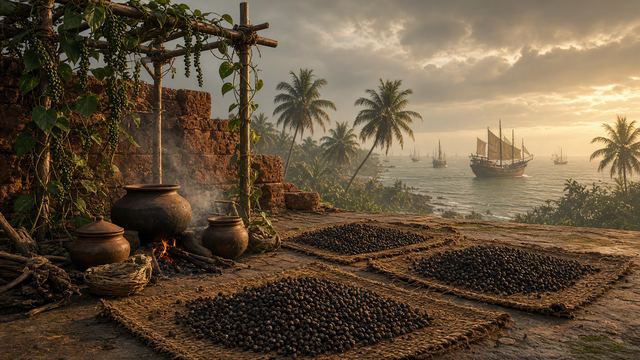
- 1Before the surf turned white, the vines were already working. On trellises of rough pole and living support trees behind Calicut’s crowded shore, Piper nigrum climbed in green ropes. By late fruiting the clusters hung like tight green fists; workers picked them under a heat that smelled of crushed leaf and wet laterite. Spread on woven mats, the berries blackened as they dried, shrinking into the hard corns that distant ships would fight monsoons to carry.
- 2In a merchant courtyard near the bazaar, Meenakshi kept the kitchen’s rhythm while men argued weights. Coconut oil smoked lightly in a wide-mouthed clay pot. She crushed peppercorns on stone—not into powder so fine it vanished, but into a coarse heat that still glittered—and worked them with fresh ginger, a thumb of turmeric root, and salt into a paste that stung the air. Seer fish, bought that morning from boats that had hugged the Arabian Sea’s green edge, took the paste in the scored flesh. When the oil was ready the pieces went in with a fierce spit. Fat, spice, and marine sweetness rose together.
- 3Pepper here was not a rare sprinkle reserved for feast days. It was daily medicine against heavy air, a rub for fish and flesh, a finish for lentils, a thing measured into almost every serious pot. Yet the same berry, sacked and sealed, could be valued abroad as if it were metal. Foreign factors—first the Portuguese after 1498, pressing for privileges under the Zamorin’s uneasy eye—spoke of silver and of freight. Local Mappila traders and Hindu houses who had long moved pepper inland and across the water already knew its price in rice, cloth, and horses. What changed was the hunger of Atlantic holds and the politics that followed each monsoon arrival.
- 4Monsoon ruled the calendar more firmly than any decree. Ships timed their runs to the winds that filled the Arabian Sea; warehouses filled before the rains locked coasts in gray sheets. In the drying yards, women turned the mats so mold would not bloom through a careless night. Green pepper, pickled in brine, kept another kind of bite for home tables. Black pepper, fully dried, packed dense and traveled hard. A cracked sack meant loss that could be tasted in a household’s winter stores.
- 5By afternoon the courtyard’s front rooms smelled of ink and damp coir as a clerk tallied corns against coin. Meenakshi did not need the ledger. She knew scarcity by the way her mother-in-law guarded the best-grade corns in a glazed jar, and abundance by the cheaper broken spice that still woke a pot of red rice. Coconut milk loosened a second gravy; curry leaves—if the tree by the wall had spared a sprig—went in at the end for a green flash of scent. Tamarind from earlier harvests cut the richness. Nothing was plated for show. Food arrived in metal and leaf, meant to be eaten close, rice packed by hand into the pepper-slick fish.
- 6Rumors walked the lanes with the factors: fortified houses on the water, customs disputed, a new appetite that treated Malabar’s vines as a mine. In the kitchen the lesson stayed older. Heat preserved as well as pleased. Spice masked the turn of fish on a hot day when ice was a fantasy of other latitudes. Fat from coconut carried flavor farther than water alone. A family that could put pepper, rice, and coconut on the same mat in the same week was holding against weather and politics both.
- 7Evening brought the meal into the center of the house. Oil lamps licked clay walls. The fish had rested long enough for the crust of crushed pepper to settle into the flesh. Gravy darkened to a bronze that clung to every grain. Outside, masts crowded the roadstead like a second forest; inside, the first bite still decided the night—whether the berry had been dried clean, whether the oil had been true, whether tomorrow’s bargaining would leave enough spice for the pot and not only for the scale. Appetite, in Calicut, began where the vine met the sea wind, and ended only when the last peppered spoonful made the voyage feel, for a moment, like it belonged at home.