PlatePilot
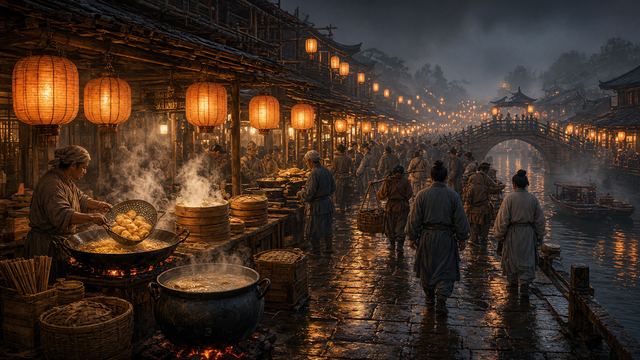
Broth Along Imperial Way
Every recipe here is free to read.
HistoricalAmericanEat the PastA Bite of HistoryStory5 Ingredients or Less
Ingredients
- Narrative chapter
Instructions
- 1By the third watch the curfew drums had already argued with the city and lost. Along Imperial Way the lanterns stayed lit because hunger outranked the ward gates. Coal smoke braided with sesame oil. A porter set down his carrying pole, wiped brick dust from his mouth, and followed the smell of bone broth the way a compass needle follows north.
- 2Kaifeng—Bianliang to those who loved it—was a city that ate in public. Northern Song ledgers and memoirs counted restaurants by the hundred, sorted not only by price but by regional taste: spicy Sichuanese pots, delicate southern fish, Muslim butchers’ lamb along certain lanes, plain millet for clerks who counted coins all day. Food was no longer only what a household cauldron decided. It was commerce, theater, and class made edible.
- 3At a stall no wider than a horse’s rump, a woman lifted the lid of a great iron pot. Steam slammed the night air. Inside swam cabbage hearts, thin sheets of dough, and marrow bones the color of old ivory. She skimmed the surface with a bamboo dipper, salted from a jar, and nodded at the porter without asking his trade. In this capital you paid copper cash into a bowl’s rim and drank standing, sleeve guarded against splashes, while sedan chairs rocked past like closed boxes of privilege.
- 4Next door a man worked dough as if wrestling a soft animal. He rolled, folded, smeared a paste of minced pork, ginger, and chives, then sealed the bun with a twist that left a tiny belly button on top. The buns went into a stacked bamboo steamer; when the lid rose, the smell was pure fat and wheat—comfort for anyone who had walked the canal dikes since dawn. Street steamers like his were not novelties. Song writers noted stuffed buns, oil cakes, and noodle soups sold from first light until the lamps guttered, proof that a money economy had pulled cooking halfway out of the home.
- 5A pair of students argued over a low table examination essays and whether last year’s chili-less “heat” in a dish could match a real punch of pepper and prickly ash. Black pepper arrived overland and by sea at murderous markup; brown peppercorns and ginger did more everyday work. Soy paste and fermented sauces—already old technologies by the twelfth century—darkened stews the way lacquer darkened wood. Vinegar brightened fish. Sugar, still precious relative to later centuries, glazed festival cakes more often than it sweetened a laborer’s cup.
- 6Preservation shaped the menu as much as fashion did. Salted fish hung in stiff banners. Jerked meats traveled in oilpaper. Winter cabbages, pickled in crocks, cut through the greasiness of fried cakes. Ice cut from the rivers in deep cold was stored in pits for the rich; everyone else trusted fermentation, smoke, and the fast turnover of a market that never truly slept. Grain was the quiet tyrant underneath the spectacle: taxes taken in millet and wheat, military granaries watching the northern frontier, housewives judging a year’s luck by the feel of flour between finger and thumb.
- 7Near the river a fried-food man lowered rings of dough into oil that sounded like rain on tile. The cakes emerged blistered and gold; he dusted them with salt and crushed sesame. A child burned her tongue and laughed anyway. Two wards over, a wealthier tavern advertised “padded” seating and clear wine, with waiters shouting orders toward kitchens that specialized—as Song restaurants often did—in a single triumph: knife-cut noodles, or sheep stomach in broth, or soft-shell crab when the carts came in. Status lived in the ability to sit, to choose, to send a dish back.
- 8The porter finished his soup, tipped the bowl to catch the last noodle, and felt warmth rewrite the ache in his shoulders. Behind him a butcher scraped a cleaver across a steel rod; ahead, a sweet-seller spun malt threads thin as hair. Imperial Way did not feed people equality. It fed them options—an urban miracle built on canals, coin, kiln-fired pots, and the long Chinese craft of coaxing flavor from salt, grain, and time.
- 9When he finally bought a steamer bun for the walk home, the paper was translucent with broth. He bit through the skin into ginger heat and pork sweetness, and for a dozen paces the capital narrowed to that small, perfect mouthful—the night market’s whole argument held in one hand.