PlatePilot
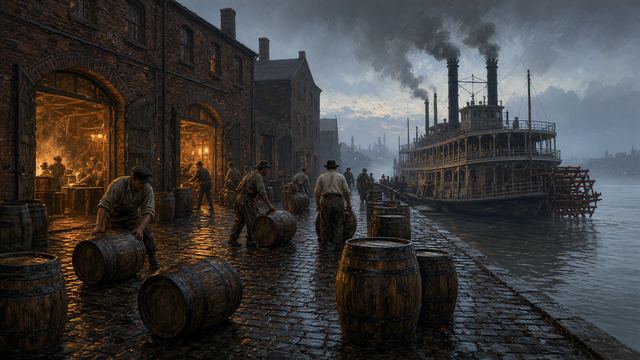
Hogs at the Public Landing
Every recipe here is free to read.
HistoricalAmericanEat the PastA Bite of HistoryStory5 Ingredients or Less
Ingredients
- Narrative chapter
Instructions
- 1Long before the packet bells rang, the public landing was already alive with hogs. They came down from the hill farms in squealing droves, herded toward brick packing houses that lined the Ohio like a second shoreline. Steam had not yet made Chicago king; in these decades Cincinnati still claimed the title the newspapers loved—Porkopolis—and the river carried the proof in tight oak barrels bound for steamboats, plantations, and navy yards.
- 2Lena Voigt tied her apron in the dark kitchen behind her father’s small butcher stall and listened to the city wake. German voices mixed with Irish and English on the wet cobbles. Her father, once a journeyman in Hesse, now rented a single bay near the canal and sold what the big houses did not want for export: fresh chops for boardinghouses, leaf lard for bakers, and the coarse trimmings that went into the family’s iron pot. Nothing of the animal was meant to idle. That was the rule of the landing and the rule of thrift.
- 3By first light the rendering kettles were breathing. Fat hissed toward clarity; cracklings rose and were salted while still hot. In the larger establishments men worked in gangs—sticking, scalding, scraping, splitting—under a pace set by the cold months, when meat kept longer without the later luxury of commercial ice in every bin. Salt was the true preservative of the trade. Barrels were packed in layers: meat, salt, meat, salt, the cure drawing moisture so the pork could travel weeks on a steamer’s lower deck without turning. A good cooper’s hoop was worth as much as a sharp knife.
- 4Lena’s task before school was the breakfast that kept the stall going. She stirred pinhead oats into a pot already rich with pork broth and minced shoulder, the mixture seasoned with black pepper, onion, and a careful hand of dried sage. The mass would set in loaf pans, chill on the stone step, and slice into slabs that fried crisp at the edges—goetta, the immigrant answer to making grain and scrap taste like plenty. When the first slice hit the skillet, fat bloomed and the oats toasted; neighbors who spoke different languages still understood that smell.
- 5Outside, drovers argued prices. A dressed hog in a strong season might move for a few cents a pound on the hoof, but value multiplied once it became mess pork, smoked sides, or kegged lard. Lard greased wagon axles, pie crusts, and the lamps of poorer rooms when whale oil and candles ran dear. Bones went to broth or to the soap boilers. Bristles were sold. Even the snouts found a market. Visitors wrote home that Cincinnati seemed built of brick, church spires, and the architecture of the whole hog.
- 6Class marked the table as clearly as it marked the payroll. Packing-house owners dined on hams glazed for Sunday and wheat bread from the city’s rising flour mills. Day laborers carried cold goetta or corn dodgers wrapped in cloth, eaten standing between loads. On the steamboats, cabin passengers might see fresh chops at the first sitting, while the deck cargo held the salted barrels that underwrote the whole voyage—protein for distant tables, profit for the Queen City.
- 7By midmorning Lena’s father had sold his soft cuts and reserved a small shoulder for their own supper. She would score the skin, rub it with salt and pepper, and set it in a Dutch oven with apples from the autumn stores and roots that wintered in the cellar. The oats left from breakfast would thicken a gravy. Nothing fancy: no distant spices beyond what a river town could afford, no waste. The city’s fame was industrial, but its hunger was intimate—measured in the crackle of skin, the snap of a cured barrel stave, the way fried grain-and-pork could quiet a stomach before another long shift.
- 8When the packet finally whistled and nosed into the landing, coopers rolled their freight aboard. Salt pork vanished into the hold; fresh rumor said New Orleans prices were firm. Lena wrapped two extra goetta slices for her father and watched the river take the city’s labor south. Behind her the skillet still held a sheen of lard, waiting for the next loaf to cool and the next dawn to demand it. In Porkopolis the day did not truly begin until something from the hog met heat and salt—and the table, however plain, answered.