PlatePilot
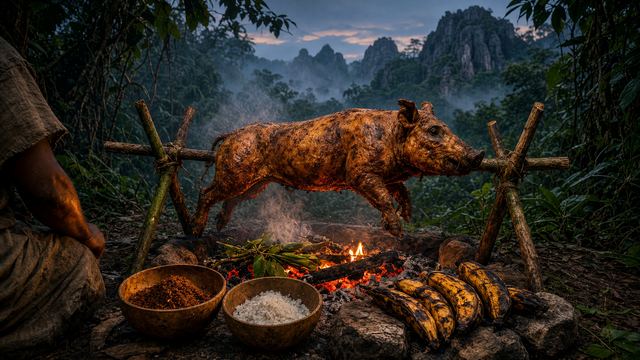
Pimento Smoke in the Hills
Every recipe here is free to read.
HistoricalAmericanEat the PastA Bite of HistoryStory5 Ingredients or Less
Ingredients
- Narrative chapter
Instructions
- 1By late afternoon the Cockpit hills held their heat like a covered pot. Under the canopy the air was wet and green, thick with leaf mold and the sharp scent of crushed pimento berries underfoot. Two hunters eased a wild hog down the last limestone slope on a frame of fresh-cut sticks. They did not cheer. Sound carried oddly in these sinkholes and ridges, and habit was older than the treaties that had, for now, drawn a line between their towns and the coastal estates.
- 2Below the ridge, the cooking ground was already chosen: a shallow trench scraped to pale earth, stones set where the fire would live, green pimento branches stacked in a low shelter of fronds. The wood was not an accident. Allspice grew wild through these hills—its dried berries precious enough in European trade to travel the Atlantic in barrels—but here the tree meant more than spice. Its smoke flavored meat the way salt flavored the sea. The hunters knew that meat left plain spoiled fast in the damp. Meat rubbed, rested, and smoked low could travel, could wait, could feed a yard when the next hunt failed.
- 3An older woman from the town had come with a calabash of coarse salt, bird peppers pounded with a little water, and thyme stripped from a provision-ground hedge. She worked without hurry. The hog was scalded and scraped, opened, the cavity cleaned with care that was both respect and practicality. Nothing useful was wasted: fat would baste, bones would go to a pot with yellow yam and a knuckle of dried salt fish if any remained from the last coastal trade. She scored the flesh and pushed the rub deep—salt, pepper heat, the resinous green of thyme—then left it while the wood caught.
- 4Fire discipline was part of the recipe. A column of smoke on a clear day could still invite the wrong kind of attention even decades after the peace papers, and old caution died slower than old wars. So the blaze was built down, not up: coals first, then green pimento limbs laid to smolder, the meat raised on a frame of sticks so heat and smoke moved under and through rather than charring the outside in a rush. Fat dripped and hissed. The smell that rose was sweet-sharp, clove-like, threaded with chile—rich enough to make a child stop at the edge of the clearing and breathe with their mouth open.
- 5While the hog took the smoke, others tended what the hills and the planted grounds would give that night. Green plantains went onto hot stones until their skins blackened and the flesh turned soft and sweet. A pot of red peas, soaked since morning, shuddered over a smaller fire with coconut milk scraped from a grated nut and a few grains of guinea pepper. Rice, when they had it from trade or lowland contact, stretched the pot; when they did not, mashed yam and cocoyam did the same work of filling a belly for hard walking. Hunger here was not an abstract guest. It walked the paths with every party that left town before dawn.
- 6Talk over the trench was practical: which trail had held hog sign, whether the rains would sour meat left too thick on the bone, who would carry strips to the next settlement. Children turned plantains with sticks and were warned back when the fat popped. Someone laughed once, short and low, when a dog got too interested in the drip. The woman’s hands stayed busy, basting with a palm-frond brush dipped in the bowl where pepper, salt, and a little of the hog’s own fat had met.
- 7By full dark the meat had gone from raw pink to deep lacquered brown, edges darkened, the interior still moist where the smoke and patience had done their work. They pulled the frame aside and let the hog rest the way living things deserve rest even after death. Knives came out—not fancy steel from a Kingston shop, but blades kept honest on stone. Portions moved onto clean leaves. The first bites needed no speech: heat, salt, the clove-sweet ghost of pimento wood, the chew of meat that had run free in the karst until that morning.
- 8Them the provision pots emptied in turn—peas and coconut thickened to a spoon-coating gravy, plantain soft as butter under the thumb, a relish of chopped pepper and onion sharp enough to clear the head. Fat shone on fingers. Smoke clung to hair and cloth so thoroughly that it would still be there at tomorrow’s washing. In the towns of the Cockpit Country, this was not feast for spectacle. It was technology and memory braided together: how to make a kill last, how to turn a wild tree into a kitchen, how to feed a free community on land that looked empty to anyone who did not know how to read it.
- 9When the last bones went into the morning soup pot and the coals were buried to a safe dark, the clearing smelled only of wet leaves again. But the meat, wrapped and portioned, carried the hills with it—the pepper, the thyme, the slow allspice smoke—ready for the path, the watch, the next table set under a thatch roof where appetite was the simplest kind of certainty.