PlatePilot
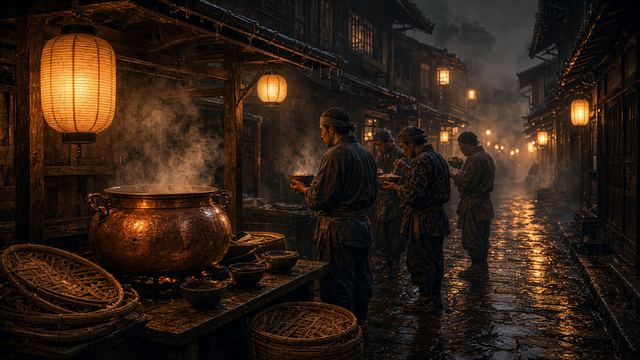
Soba Steam After Curfew
Every recipe here is free to read.
HistoricalAmericanEat the PastA Bite of HistoryStory5 Ingredients or Less
Ingredients
- Narrative chapter
Instructions
- 1The ward still smelled of wet ash when Genzo set his pole down. Roof tiles lay cracked in the gutter; a charred noren flapped once and went still. In Edo, fire was not an accident so much as a season. Houses of wood and paper stood shoulder to shoulder, and the shogunate’s rules braziers, candles, and kitchen flames were less etiquette than survival. Men like Genzo—tobi, the agile firemen who climbed and tore and soaked—ate when the buckets finally hung quiet.
- 2Past the checkpoint lantern, an alley opened on steam. A yatai had rolled out on two wheels: a low roof, a copper boiler, a board sticky with soy. The vendor’s hands never stopped. Buckwheat flour, poorer than white rice flour and honest for it, had been worked with water into a stiff dough, rolled thin, and cut into soba that could stand a rolling boil without surrendering to mush. In the Kinai provinces rice might still mean status; in the crowded east, soba had become the city’s own grain—fast to cook, cheap enough for craftsmen, filling enough for a night on the beams.
- 3Genzo’s companion, a plasterer with soot in the creases of his neck, slid two coins across the board. Copper bit into wood. No chairs. You stood. You ate before the noodles remembered they were soft. The vendor lifted a bamboo strainer; pale strands rose streaming, then plunged into a second pot only long enough to wake them. Into deep bowls went a dark dip—tsuyu built from shiokara-sweet soy, mirin if the house could spare it, and dashi: water that had taken the breath of dried bonito flakes and a strip of kelp. Katsuobushi was pounded and shaved until it looked like wood curls; kombu came down the coasts from the north. Umami was not a word anyone used. It was simply the taste that made a laborer’s mouth believe the bowl was larger than it was.
- 4Alongside the soba pot, oil shimmered. Tempura—borrowed long ago from Iberian frying and remade under Edo rules—crackled in small batches: shrimp, shiso leaf, a wedge of sweet potato. The bakufu had sometimes frowned on luxury and on private extravagance; street stalls answered with portion and speed. Fat hissed. Salt stuck to lips. A pickled radish, takuan the color of old ivory, cut the grease so a man could taste the next bite.
- 5Genzo wrapped his bowl as if it might flee. Green onion floated like thin flags. He blew once, then slurped—noise was manners here, proof the noodles were hot and the eater grateful. them the city resumed its night grammar: watchmen’s clappers, a dog arguing with a shadow, the distant thud of a rice pestle from a shop still working under license. Commoner kitchens at home often ran on shared wells, limited fuel, and the knowledge that one careless spark could erase a block. So flavor traveled into the street. Vendors carried the fire the wards would not trust indoors after dark.
- 6He thought of morning rice and miso—fermented soybean paste loosened into a plain soup, tofu if the purse allowed, a scrape of seaweed. That was steadiness. This bowl was wages made edible. Soy sauce itself had become an Edo luxury of the everyday: brewed in places like Noda and Choshi, barreled in, darkened by age, sold in grades a clerk could smell blind. A merchant might dress sashimi with the better stuff. Genzo’s tsuyu was rougher, louder, perfect.
- 7Someone laughed down the alley—another crew paid off, another small fire written into the ledger of a city that rebuilt as habit. The vendor topped a third bowl without being asked, a splash more dashi, spice that bit the nose. Genzo’s plasterer friend lifted his chopsticks and paused, watching the steam braid upward into the paper lantern light.
- 8Tomorrow there would be cold soba in the noon heat, or eel grilled over binchotan if a festival purse opened, or nothing but tea and pickles if the job fell through. Tonight the copper sang, the buckwheat held, and the soy left a clean salt on the tongue. Genzo tipped the bowl and drank what the noodles had left behind—the dashi, the onion, the faint oil ghost of the fryer next door—and the wooden city, for a few breaths, felt fed rather than flammable.