PlatePilot
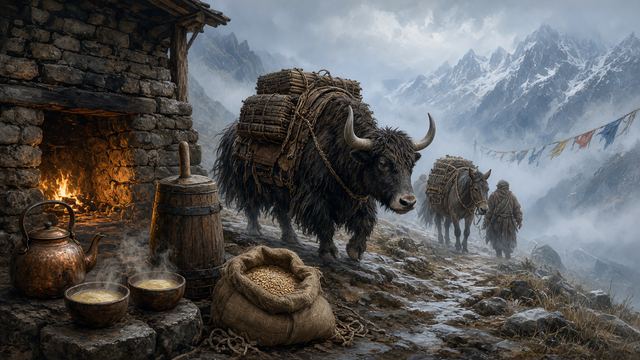
Bricks Bound for the Pass
Every recipe here is free to read.
HistoricalAmericanEat the PastA Bite of HistoryStory5 Ingredients or Less
Ingredients
- Narrative chapter
Instructions
- 1Before the fog lifted off the river town, the bricks were already stacked like dark ledgers. Each one was leaf from the warm hills—withered, kneaded, steamed, and pressed until a wooden mold left a merchant’s chop sunk into the face. Porters checked the rawhide straps. A cracked brick meant argument at the first toll stone; a sound one could travel weeks, shrug off rain, and still brew hard enough to wake a man at altitude.
- 2Lian had grown up on the smell of the drying sheds: smoke, tannin, the sweet rot of wet leaf turning durable. Her uncle’s house packed for the northern trails, not for porcelain cups in soft rooms. Fresh greens spoiled in a valley day. Soft loose tea drank itself into dust on a saddle. Brick tea was different—food that kept its temper. Bound in bamboo sheathing, it rode like coin.
- 3The mules knew the rhythm before the men did. Down from the leaf country the path climbed through pine and scree, past staged inns where copper kettles never cooled. Chinese garrisons and Tibetan traders had bargained this corridor for centuries: leaf moving up, horses moving down toward the interior markets that needed mountain stock. Under the Qing, the old logic still held in the high passes. Tea was warmth, medicine against the thin air’s flat hunger, and a unit of account when silver was awkward and grain too heavy. A brick could settle a debt, grease a guide, or quiet a cold camp.
- 4On the sixth morning the caravan met a string of yaks coming the other way, bells dull in the wind. Their drivers wore wool the color of stone. Trade was brief and practical—leaf for beasts, beasts for the long ledger of border need—then both lines coiled past each other without ceremony. Lian watched a boy break a corner from a sample brick with the heel of a knife, drop the shard into a blackened pot, and wait for the water to take the color of river mud after rain. No one sweetened it. Sweetness was a lowland luxury. Here the point was strength: bitter backbone for the climb.
- 5By the time they reached a stone rest-house above the tree line, the air had teeth. A woman named Drolma rented hearth space the way others rented beds. She kept a churn—tall wood, narrow mouth—and a skin of yak butter that smelled of pasture and long storage. Butter on the plateau was not a dainty. It was fat against cold, calories you could see. She poured fierce black tea into the cylinder, added a lump of butter and salt, then worked the plunger until the liquid turned cloudy gold and a foam rose like the head on a workman’s ale.
- 6Travelers held out wooden bowls. Drolma tore roasted barley flour from a sack—tsampa, the other half of survival—and let each person knead a warm lump with a splash of the tea-butter, thumb pressing until the dough took shape. No feast plate. No parade of sauces. Just heat, salt, fat, and grain that had already survived frost and smoke. Lian’s first swallow coated her mouth. The tea tasted of leather and leaf and the animal that had given the butter; the barley tasted of the hearth. Together they shut the wind out of the belly.
- 7The fire, talk ran to spoilage and seasons. Summer caravans feared wet that bloomed mold in a sheath. Winter caravans feared ice that split hooves and men who drank snowmelt without fat and woke hollow. Brick tea answered both fears: compressed, aged, sometimes better after a year on a shelf, boiled hard enough to kill doubt. In valleys far below, scholars might sip pale infusions and argue fragrance. On the pass, tea was a tool—counted, chopped, churned, and swallowed for the next ridge.
- 8That night the loads were stacked inside the wall, chops inward, as if the bricks themselves needed sleep. Someone set a small pot back on the coals for morning. When the lid trembled, the smell that rose was not perfume. It was tannin and salt and the promise of butter waiting to be beaten pale again. Lian fell asleep counting straps and woke already hungry for the bowl that would make the altitude bearable—dark tea, yellow fat, barley under the thumb—food engineered by trade routes and thin air, as ordinary and as vital as the path under the mule’s hoof.