PlatePilot
Foam Thick as Porridge
Every recipe here is free to read.
HistoricalEat the PastA Bite of HistoryStory5 Ingredients or LessAmerican
Ingredients
- Narrative chapter
Instructions
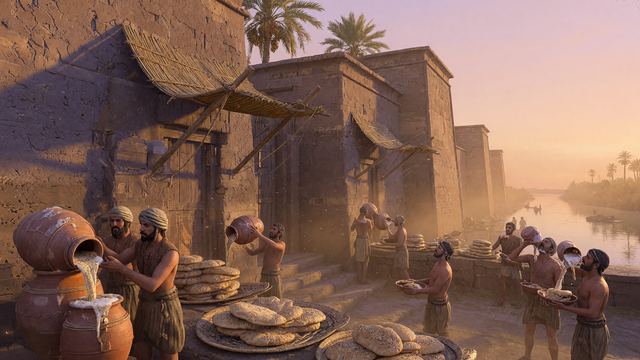
- 1Before the sun cleared the reed beds, the line had already formed at the temple gate. Dust stuck to wet ankles. Men and women from the brick gangs held out their hands for clay tokens and watched the stewards dip deep into jars that smelled of warm grain and a faint, clean sourness.
- 2In this country the river made the rules. Wheat was rarer and prouder; barley was the staple that filled bellies, filled ledgers, and filled the heavy beer that doubled as food. On the tablets—rows of wedge marks pressed while the clay was soft—barley was counted in sila measures for men, women, children, and dependents. A male laborer’s monthly allotment might run to dozens of liters’ worth of grain, part of it baked, part of it brewed. Meat was festival talk. Onion, turnip, chickpea, and lentil were the everyday truth beside the canal.
- 3Ninsun, a porter’s wife who hauled baskets of broken brick for the outer wall repairs, knew the rhythm by heart. Morning bread was dense and slightly sour, baked against the hot wall of a domed clay oven or on a griddle stone until the crust spoke. She tore it with her teeth and washed it with beer so thick a reed straw left a tunnel that slowly closed. This was not the clear drink of later ages. It was liquid bread—cloudy, nourishing, low in strength by modern tavern standards, alive with the taste of malted barley and the sweetness of dates dropped into the mash. People chewed the residue. They called the work of it drinking and meant feeding.
- 4Inside the institutional kitchens, the order was severe and practical. Grain was parched, ground on saddle querns until shoulders burned, mixed with bappir—twice-baked beer-bread that carried yeast and flavor like a starter. Water from the canal, careful waiting, jars sealed with clay. Sesame was pressed for oil that smoked fragrantly on hot clay and turned a simple stew into something that clung to the ribs. Coriander, cumin, and leek went into pots when the steward allowed. Garlic and onion were not garnish; they were the architecture of flavor when meat was a rumor.
- 5A junior scribe named Erra-gamil kept the day’s tallies under a reed awning. He did not invent hunger or generosity; he copied them. A widow’s reduced ration. A child’s measure. An extra pour when a gang finished a course of mudbrick before the heat broke the clay. He had seen sealed jars travel from brew-houses to gate, marked and guarded, because beer spoiled and thin beer meant thin work. Preservation was speed, shade, and the authority of the storehouse. Salted and dried fish came up from the marshes when the temple could spare it. Dates were wealth you could pocket—sticky packets of harvest sugar that sweetened porridge and paid small favors.
- 6By midday the brick face shimmered. Ninsun crouched with her share: stewed lentils glossy with sesame, a slab of barley loaf, and the jar whose foam left a lace on her lip. her, talk ran to canal cuts, overdue silver shekels for hired specialists, and whether the next festival would loosen the meat stores. Class was edible here. Palace and temple tables saw fowl, lamb, and elaborate broths recorded in cooking texts on clay—seared meats, thickened sauces, careful sequences of water and fat. The gangs tasted the same landscape demoted: grain, pulse, oil, allium, the mercy of fruit.
- 7Technology was hand and fire. Querns. Reed strainers. Wide-mouthed vats. Domed ovens that held heat like a secret. No hops, no glass pints—only the logic of a surplus cereal civilization that turned spoilage risk into controlled fermentation and wrote the result into accounts that outlasted the drinkers.
- 8When the shadows finally stretched toward the ziggurat’s stair, the gate stewards tapped the last jars. Someone laughed that the beer had stood too long and gone honest. Ninsun drank anyway, slow, feeling barley settle under her breastbone. She wrapped the heel of the loaf in cloth for the child waiting under the tamarisk. Behind her the storehouse seals waited for tomorrow’s wet clay. Ahead of her the evening pot would take whatever onion remained and the last shine of oil.
- 9At dusk the city smelled of baking crust, date syrup, and sour grain foam. Rations had names on tablets, but in the mouth they were simpler: hot bread, thick beer, a stew that remembered the river. Appetite was the one ledger everyone kept without a stylus.