PlatePilot
Vinegar Rice at the Wharf
Estimate for one serving
- 280 cal
- 12g protein
- 24g carbs
- 8g fat
- 3g fiber
Every recipe here is free to read.
HistoricalEat the PastA Bite of HistoryStory5 Ingredients or LessAmerican
Ingredients
- Narrative chapter
Instructions
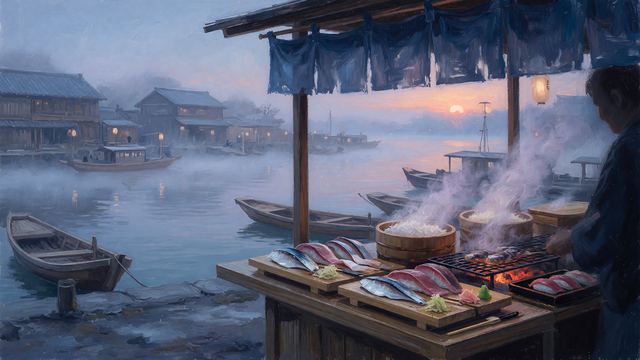
- 1The bay wind reached the stall before the sun did. It carried wet rope, charcoal smoke, and the clean mineral smell of fish packed on straw. Genzo wet his hands in a wooden pail, shook them once, and portioned rice that still held the faint shine of vinegar.
- 2By the 1820s and 1830s, Edo was a city rebuilt so many times after fire that speed had become a kind of manners. Clerks, carpenters, and firemen’s runners did not sit for morning ceremonies. They ate standing, coins ready, eyes on the work ahead. What they wanted from a yatai cart was not ancestral patience. They wanted something that tasted finished in the time it took to cross a bridge.
- 3Older sushi had been a different bargain with time. In the narezushi tradition, cleaned fish and rice were packed to ferment for weeks or months; the rice was often discarded, a sacrificial bed that kept the fish edible through souring and salt. Useful in inland provinces. Useless for a harbor city that could pull gizzard shad, sea eel, and shellfish out of the water before dawn and sell them before the heat thickened.
- 4So the method changed, as city methods do. Cooked short-grain rice was seasoned while warm with rice vinegar, salt, sometimes a little sugar—acid and sweetness standing in for the long sour of fermentation. The rice became food again, not only packing. A thin smear of grated wasabi went between grain and fillet, sharp enough to brighten oil and, people said, to keep the more delicate slices honest. A brush of soy finished the top. Hands, not knives alone, did the pressing: a compact oblong that could be lifted in two bites and gone.
- 5Genzo worked on cypress boards because the wood took water without turning sour and because customers liked the pale grain under dark fish skin. He kept his soy in a small ceramic flask stoppered against dust. The sauce itself was no longer a luxury of temple kitchens; by late Edo, brewers in places like Noda and Choshi sent casks into the capital in volume, and even street stalls could afford the deep, salty-sweet gloss that made vinegar rice taste deliberate.
- 6A runner in a short coat stopped without greeting. Genzo pressed two pieces—kohada, small and glittering, vinegar-cured just enough to tame the richness—and set them on a leaf. The man ate with his head tipped, as if drinking smoke, then held out a few mon. No idle talk. The next customer wanted anago, eel grilled over binchotan until the edges lacquered, belly soft as custard. Fat hissed on the iron grate. That sound, more than any bell, meant the quarter was awake.
- 7Behind the stall, a covered tub held rice for the rush. Vinegar had to be mixed while the grains were hot enough to drink it in; cool rice stayed stiff and refused seasoning. Genzo’s apprentice fanned steam away so the surface would not turn gluey. A crock of pickled ginger waited to cut the oil between orders. Nothing here was plated for display. Everything was timed to appetite and the short life of raw or barely cooked fish in a humid city.
- 8Merchants still spoke of older country packs—fish buried until it smelled like a sealed jar opened after winter—but those flavors belonged to scarcity and distance. Edo’s privilege was nearness: boats working the bay and rivers overnight, fish mongers shouting under the eaves near Nihonbashi, ice where it could be had and shade where it could not. The stall was a hinge between that wet commerce and the dry schedules of shops and wards.
- 9A woman buying for a sick husband asked for tamago instead—sweet folded egg, cooked slow in a rectangular pan, sliced to ride the same vinegar rice. Egg kept longer than silver-skinned fish. Genzo understood the request without pitying it. Food in a wooden city was always a calculation of hours.
- 10By mid-morning the charcoal had settled to a quiet red. Rice needed remixing; soy needed thinning with a drop of sweet mirin-style liquor when the brew tasted too hard. Genzo wiped the board, rinsed his hands again, and felt the faint stick of starch at his wrists. He was not feeding a banquet. He was feeding a capital that moved on foot and lived by the clock of tide and fire watch.
- 11When the last early customers thinned, he set aside a single piece for himself: rice still warm, fish cool, wasabi lifting the back of the throat like clean snow. The city noise rose—cart wheels, vendors, a distant hammer. He ate standing, the same as everyone else, and the taste was not nostalgia. It was the present tense of Edo: acid, salt, smoke, and the sea made small enough to hold in one hand.