PlatePilot
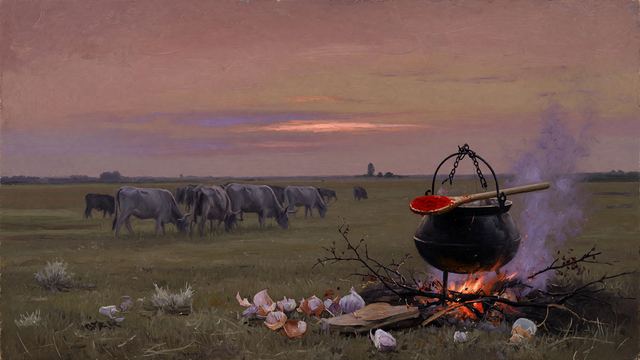
Cauldron on the Cattle Road
Estimate for one serving
- 280 cal
- 12g protein
- 24g carbs
- 8g fat
- 0.6g fiber
Every recipe here is free to read.
HistoricalEat the PastA Bite of HistoryStory5 Ingredients or LessBritish
Ingredients
- Narrative chapter
Instructions
- 1By late afternoon the plain had gone copper. Dust lifted from the hooves of the grey cattle in long pale sheets, and the boy walking rear-guard tasted it between his teeth—the same grit that would settle into the stew if anyone were careless with the lid. Ahead, old Márton raised two fingers without turning. Halt for water. Halt for the pot.
- 2They were days out from the Hortobágy grasslands, aiming the herd toward the western roads that fed Vienna’s markets. Hungarian cattle still walked to foreign butcher blocks in those decades; beef on the hoof kept longer than beef in a cart, and the empire’s appetite was endless. A drover’s wealth was muscle, weather sense, and a bogrács—an iron cauldron black as a kettle crow, meant to hang from a simple cross-pole over sheep-dung and thorn fire.
- 3Márton dropped the chain with a clank the boy felt in his shins. First the fat: a spoon of lard from the wooden kit, melting slow, smelling clean and animal. Then onions, more onions than meat at the start, sliced on a board worn concave by years of the same motion. “You rush the onion, you shame the pot,” Márton said, not unkindly. In the herders’ rule, onion had to go soft, almost sweet, nearly collapsing before any spice touched the metal. That base was the difference between a ration and a reason to keep living under open sky.
- 4Only when the onion shone did paprika enter—not the mild garden dust of later kitchens, but the brick-red powder that had remade Hungarian taste since capsicum peppers moved up from the Balkans in the centuries after the Columbian exchange. Paprika was wealth you could measure in color. Too hot a pan and it scorched bitter; Márton pulled the bogrács a hand’s width off the flame, stirred the spice into the fat until the air went sweet-smoky, then nodded once. Now the beef—shin and shoulder from a beast lost to a broken leg two mornings back, cut small enough to soften without waste. Salt. Caraway. Water from the skin, not too much. The puszta taught thrift: liquid evaporated; judgment did not.
- 5While the cauldron found its first murmur, the boy scraped dried dough between thumb and finger into rough csipetke—pinched bits that would stiffen in the broth like dumplings born of necessity. Potatoes, when they had them from a village trade, went in later; earlier generations of gulyás had done without, relying on meat, onion, and pepper alone. Tomatoes were still a suspicion in many rural pots. What mattered was the long marry of fat and spice, the way a herdsman’s supper had to warm a body that had steered horned animals through wind since before dawn.
- 6Them the plain cooled. Cattle lowed into a loose night circle. Another crew’s fire winked far off—competition and company both, for the drove roads were arteries, and gossip traveled faster than oxen. Someone would sell a hide in the next market town. Someone would drink too much wine and regret the morning. Márton tasted from a wooden spoon, eyes half shut, and adjusted salt with a pinch that looked like nothing and changed everything.
- 7The boy got the first bowl because he was still growing, or so the old man claimed. Steam fogged his face. Broth the color of roof tile. Beef that surrendered without argument. Onion melted into the liquid until it was less vegetable than memory. Paprika’s warmth rose behind the sternum—not a fashionable heat, but the practical kind that let a sleeper ignore the ground’s chill. They ate without ceremony, bread torn by hand, fat gleaming at the rim of the tin. In towns, gulyás would climb into tavern menus and national myth; out here it remained what it had been for the men who gave it their name: the herdsman’s answer to distance, weather, and the stubborn fact of hunger after a twenty-mile push.
- 8When the bowl emptied, Márton tipped a last spoon of sauce over the boy’s crust. “Tomorrow the road again,” he said. “The pot remembers if you fed it well tonight.” Beyond the firelight the cattle breathed like a single dark lung, and the plain smelled of dust, dung smoke, and red pepper blooming in iron—the appetite of an empire, reduced to what one cauldron could hold.