PlatePilot
Cumin on the Palace Hearth
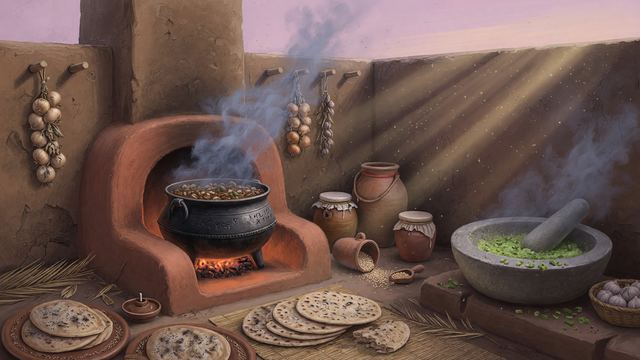
Estimate for one serving
- 280 cal
- 12g protein
- 24g carbs
- 8g fat
- 0.6g fiber
Every recipe here is free to read.
HistoricalEat the PastA Bite of HistoryStory5 Ingredients or LessMiddle Eastern
Ingredients
- Narrative chapter
Instructions
- 1Before the heat found the courtyards, the cook smelled fat. It had been rendered the day before from a young goat, strained through cloth until it shone pale as new plaster, then sealed in a jar against dust and flies. In Babylon, fat was not a luxury of taste alone; it was a way of holding fire in the meat when wood was counted and dung cakes had to last the week.
- 2She knelt by the hearth platform, a raised clay bench blackened by years of smoke, and set a heavy pot where the embers still held a soft red. Water went in first—the tablets said so, in the clipped grammar of lists—then the fat, then the flesh cut into pieces the size of a thumb joint. No scrap was romantic. Scraps were dinner tomorrow.
- 3Her, the house woke in layers. A junior girl pounded peeled garlic and the white hearts of leeks on a stone, the paste turning wet and sharp. Another stripped onions until her eyes streamed and the skins made a little amber heap for the fire. Cumin seed waited in a small bowl, dark and oily when crushed. Coriander, too, if the market had been kind. These were not exotic imports to a palace kitchen; they were the grammar of stew, as ordinary and as carefully weighed as barley in the granary.
- 4The senior cook did not own the tablets that listed such things. Those lived with scribes and scholars, baked hard so a recipe could outlast a dynasty. But the knowledge moved without clay. It moved in hands: when to skim the gray foam that rose like regret; when to add the mashed leek so it melted instead of stringing; how long to keep the pot at a murmur so the meat surrendered without shredding into poverty. A broth cooked too hard tasted of haste. A broth cooked right tasted of patience and rank—someone important would dip bread tonight.
- 5Outside the kitchen wall, the city was already a throat of sound. Donkeys. Barley sellers. The slap of wet clay somewhere a house was being mended. Beer arrived in a sealed jar, thick and sour-sweet, more porridge than drink if you were poor, clearer if you could pay. The cook poured a little into the pot near the end, not for drunkenness but for depth, the way a singer adds a low note under the melody. Bread would be baked flat on the hot walls of the oven later—barley mixed with a little wheat if the household accounts allowed—then torn and used as spoon, plate, and mop.
- 6A steward appeared in the doorway and did not enter fully, as if smoke were a servant’s medium. Guests after sundown. A merchant from the river trade. Possibly a man who kept accounts for temple sheep. The cook nodded once. Feast politics began hours before the first cup: denser meat nearer the host, brighter onion in the bowl that traveled farthest down the mat, bones reserved for those who still had to prove hunger was not a shame.
- 7She tasted from a wooden stick, blew, tasted again. Salt. More cumin—just enough to announce itself without turning the mouth to dust. what greens the season offered, wilted at the last so they stayed the color of living fields. In a land that wrote laws on stone and debts on clay, a stew was its own small contract: heat, time, fat, and the promise that no one at the upper end of the mat would go home complaining of thin juice.
- 8When the sun finally shouldered over the courtyard wall, the pot had changed. What had been separate—water, animal, garden—had become one dark gloss, flecked with seed, smelling of onion turned sweet and meat made soft enough for teeth that had worked too many years on coarse bread. The junior girls leaned in despite themselves. Even discipline had an appetite.
- 9By late day the bowls would be set out, the bread stacked like warm tiles, the beer opened. Men would talk of boats and barley prices while their hands found the same comfort found in kitchens a thousand years before them and a thousand after: that the world might be written in ledgers and omens, but evening still came down to fat on the lip, cumin in the steam, and the clean insistence of hunger answered in a clay pot.