PlatePilot
Noodles After the Evening Bell
Estimate for one serving
- 280 cal
- 12g protein
- 24g carbs
- 8g fat
- 0.6g fiber
Every recipe here is free to read.
HistoricalEat the PastA Bite of HistoryStory5 Ingredients or LessChinese
Ingredients
- Narrative chapter
Instructions
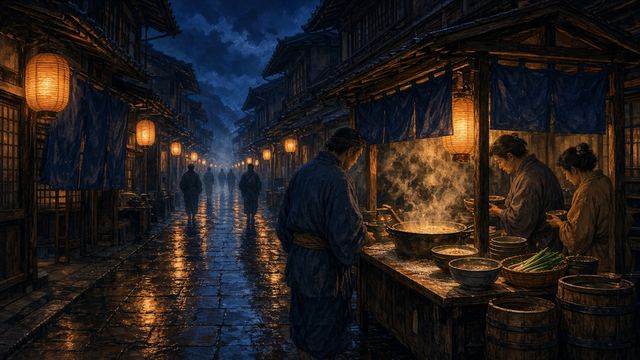
- 1By the time the evening bell rolled down from the temple roofs, the alleys of Edo were already breathing steam. Paper lanterns bobbed over indigo curtains. Charcoal hissed under shallow iron pots. A laborer named Jirō—shoulders still dusted with plaster from a day on a merchant’s warehouse—followed the smell the way a tide follows the moon: soy, simmered dried fish, and the clean, faintly grassy note of buckwheat hitting hot water.
- 2Edo was then one of the largest cities on earth, a million mouths under the Tokugawa peace. Rice was prestige and tax. Whole domains measured wealth in koku of polished grain. Commoners ate it when they could, but the city’s true daily bread was often something thriftier and quicker. Buckwheat thrived on poorer soils and shorter seasons. Ground and cut into soba, it became the working capital’s answer to hunger that would not wait for a full hearth meal.
- 3At a yatai no wider than a doorway, the vendor worked with both hands and no wasted motion. Noodles—cut that afternoon so they would not sour in the summer damp—went into rolling water for less time than it took to count to thirty. He lifted them with long chopsticks, shook them once, and slid them into a cheap lacquered bowl. Over the top went a dark dip or a light broth built from katsuobushi shavings and kombu, stretched with the soy that now poured out of breweries in Noda and Choshi by the barrel. A few rings of green onion. A strip of toasted nori if the customer had an extra coin. Wasabi grated fresh when the fish stalls still had root to spare.
- 4Jirō ate standing, elbows tucked, the way firemen and porters and night watchmen ate. Chairs were for inns; the street sold speed. The first mouthful was heat and salt and the soft resistance of buckwheat—nutty, almost mineral, never as soft as wheat udon. In winter the same stall might crowning the bowl with a slice of fried tofu or a spoon of tempura scraps still crackling from the oil. In high summer, customers took the noodles cold on a bamboo tray and dunked them, drop by drop, into a concentrated tsuyu so the heat of the day would not turn broth sour before it sold.
- 5Nothing here was accidental. Soy sauce had become an industrial product of the Kantō plain, shipped along canals into the stomach of the city. Mirin sweetened without the cost of white sugar. Vendors reused charcoal with a miser‘s care; fuel was money. Officials worried fire in a wooden metropolis and sometimes restricted open stalls, yet the stalls returned because a city this dense could not cook every supper from a single household pot. Food moved into the street the way water moved into aqueducts—because the population demanded it.
- 6Jirō remembered leaner years, when a bad harvest sent buckwheat prices climbing and men stretched noodles with more wheat flour than pride allowed. He remembered richer nights, too: a festival when the vendor dropped a soft egg into the bowl and the yolk ribboned gold through the soy. Class lived in the toppings. A samurai retainer might demand duck or carefully fried prawn. A plasterer finished with onion and broth and called it enough.
- 7When the bowl was empty, Jirō set it back on the counter with a nod. The vendor swirled the next portion without looking up. Behind them, Edo kept roaring—palanquins, dogs, the clack of geta on wet stone, the distant drum of a fire tower. Hunger, for a moment, had been bargained down to something hot, fast, and honest.
- 8Somewhere farther inland, a brewery vat of soy deepened another day toward blackness. In a farmhouse outside the city, buckwheat straw leaned dry against a wall. On this alley stone, though, history reduced itself to a simpler ledger: charcoal, water, noodle, salt-sweet sea. The evening bell faded. The lanterns held. And the next empty stomach stepped into the steam as if the bowl had been waiting since the shogun first filled this plain with people.