PlatePilot
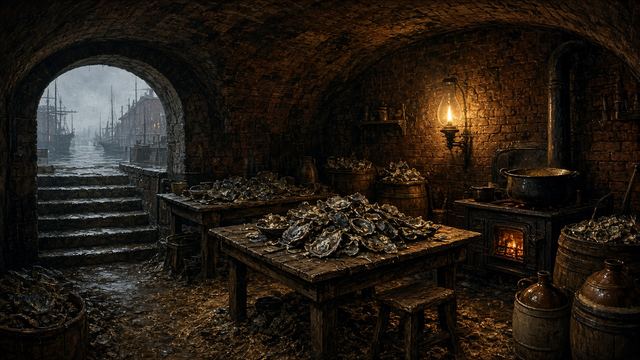
Shells on the Sawdust Floor
Estimate for one serving
- 280 cal
- 12g protein
- 24g carbs
- 8g fat
- 0.6g fiber
Every recipe here is free to read.
HistoricalEat the PastA Bite of HistoryStory5 Ingredients or LessAmerican
Ingredients
- Narrative chapter
Instructions
- 1Before the gas jets fully took, the slip already smelled of tide and rope. Boats from the Narrows and the East River flats nudged the pilings with holds full of Blue Points and Rockaways, shells still wet, beards of weed clinging. On the wharf, boys with barrows shouted weights to clerks who chalked tallies on slate. Oysters were not a garnish then. They were freight, wage, and supper—cheap enough that a dockhand could fill a belly for a few cents, plentiful enough that the city ran on their brine.
- 2Down a short flight of greasy steps, under the street noise, the cellar kept its own weather. Sawdust drank the drip from ice and shell. Tables were bare plank. A single lamp threw a yellow oval over a mound of unopened oysters and the short, thick knives that lived for one job: find the hinge, twist, prize. The opener’s left palm learned the cold geometry of each shell; his right wrist learned not to slip. A good man could open faster than the hungry could swallow.
- 3Maggie ran the vinegar crock and the pepper mill. Not a cook with a copper battery upstairs—just the cellar’s steady hand, sleeves rolled, apron stiff with old spray. She set out crackers in a cracked bowl, a bottle of hot sauce darkened by years of cayenne and vinegar, and small dishes of chopped raw onion for the ones who wanted bite with their salt. Butter, when they had it, sat near the lamp so it would soften. In winter the stew pot went on: oysters slipped into milk just long enough to plump, never boiled hard enough to rubber. A ladle of that, a heel of bread, and a man off a night shift could stand up straight again.
- 4Above them, the same harbor fed different rooms. In hotel dining halls on Broadway, oysters arrived on silver, paired with champagne and the kind of talk that never mentioned mudflats. Down here the currency was different: a dozen on the half shell for laborers, sailors, and newly arrived families who found in the oyster a protein that did not need a full kitchen. Immigrants learned the city’s taste first through shellfish—cheap, fast, no questions asked. Children fetched pails for home; women carried paper cones of fried oysters wrapped hot against the wind.
- 5The beds had once seemed endless. Lenape harvest and colonial tonging had already shaped the shallows, but by mid-century the market’s appetite was industrial. Skiffs raked and tonged from dawn. Oystermen argued leases and seed oysters, the slow arithmetic of resting a bed so it might bear again. In the cellar no one spoke of depletion yet; they spoke of price per hundred, of a barrel gone off in August heat, of the sharp clean smell that meant live and the dull one that meant throw it to the alley cats.
- 6Technology was humble and exacting. Ice, cut from upriver ponds in winter and packed in sawdust, stretched the cold season. Without it, summer oysters were a gamble of spoilage and rumor. Knives were whetted on a stone under the bar. Shells piled in baskets for lime kilns or street fill—New York, in places, quite literally paved with what it had eaten. The foodways were simple because the ingredient was not: saltwater filtered through a living hinge, eaten raw with only acid and heat to wake it, or cooked just enough to take butter and black pepper.
- 7Near closing, a freighter’s mate put down coins for stew and a last half-dozen. Maggie slid the plate across. The oysters gleamed under the lamp—cold, opalescent, smelling of the channel at low tide. He tipped pepper until the surface freckled, then vinegar until it shone. The first one went down like the harbor itself: mineral, sweet at the edges, a little wild.
- 8Outside, carts still rattled toward the markets. Somewhere a barrel lid slammed. In the cellar the sawdust held the day’s brine, and the pot on the back of the stove kept a quiet simmer—milk, butter, the last soft meats of the shift—waiting for whoever came down the steps still hungry enough to taste the city at its source.