PlatePilot
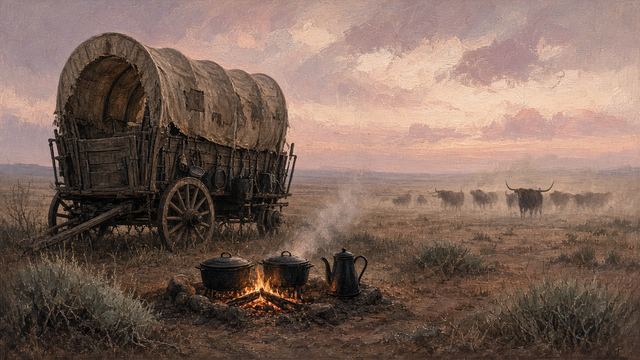
Cast Iron on the Chisholm
Estimate for one serving
- 280 cal
- 12g protein
- 24g carbs
- 8g fat
- 0.6g fiber
Every recipe here is free to read.
HistoricalEat the PastA Bite of HistoryStory5 Ingredients or LessAmerican
Ingredients
- Narrative chapter
Instructions
- 1An hour before false dawn, the prairie still held yesterday’s heat in the dust. Eli Ward kicked the banked mesquite coals alive with a boot heel and set the big coffee pot where the first tongues of flame could find it. Arbuckle’s Ariosa—beans roasted with a peppermint stick in the crate so a man could tell genuine from counterfeit—went into cold water, no polite measure, and began its slow dark climb toward something thick enough to float a horseshoe.
- 2The chuckwagon bulked behind him like a rolling pantry. Charles Goodnight’s idea, not twenty years old and already law on every serious drive: a surplus Army wagon rebuilt with a rear chuck box whose hinged lid dropped into a worktable. Inside, labeled drawers held salt, soda, dried apples, sourdough starter in a crock wrapped against the jolt of the trail, tin plates, and the cook’s private tyranny of tools. Under the bed rolled the Dutch ovens—heavy cast iron with legs and tight lids so coals could sit on top as well as under, baking bread in a country without ovens.
- 3Eli was cookie, and cookie was second only to the trail boss. He hired and fired his own wrangler helper, slept nearest the wagon, and answered to no cowboy’s complaint unless the boss backed it. Men who argued with the man who held the ladle found their plates light and their coffee late. Hunger on a three-month push from South Texas toward the railheads in Kansas made etiquette simple.
- 4He worked by habit older than the Chisholm’s rutted fame. Sourdough sponge, fed the night before, went into biscuit dough with lard cut cold and a hard hand—soft dough meant sad biscuits that collapsed in a saddlebag. He greased the ovens, portioned dough, nested lids, and shoveled coals with a practiced economy. Beside them, a pot of pinto beans that had soaked through the previous day’s roll took on a slab of salt pork and a few crushed chiles if the supply crate still held any from the border country. Fresh beef was feast food, taken when a steer went lame or the boss authorized a kill; most mornings the protein was pork cured hard enough to travel, or the leftover roast chopped into gravy.
- 5The night guard rode in smelling of horse and dew. They did not speak until cups were filled. Coffee first—always—black, bitter, and reheated until the grounds had given up everything they owned. Trail coffee was less a beverage than a ration: it masked alkaline water, steadied empty stomachs, and marked the difference between a camp and a wreck.
- 6Them the herd made its low weather of breath and hoof. Two thousand longhorns, more bone than fat after a dry stretch, would lift at first light and walk dust into the sun. The boys needed bulk that would sit still in a gut for six hours of saddle. Biscuits, beans, a slick of gravy if the drippings allowed, dried fruit stewed soft when Eli felt generous. Sugar was treasure; molasses traveled better. Spices beyond pepper and salt were rumors from town.
- 7Preservation was the quiet engine of the whole enterprise. Without ice, without daily markets, the drive lived on what salt, smoke, dryness, and fermentation would protect. Flour in barrels. Coffee in crates. Starter kept alive like a stubborn animal. Meat fried down into grease or jerked thin. Apples sliced and string-dried until they rattled. When rain spoiled flour or a river crossing wet the salt, tempers shortened faster than belts.
- 8Eli flipped a lid with a hook. The biscuits had lifted—brown shoulders, steam smelling of wheat and fat. He banged a ladle against the pot rim, the only bell the camp required. Men rose from tarps and bedrolls in a soft clatter of spurs and curses, forming the unspoken line that always left the cook a path to his own plate.
- 9No one reached across the chuck box. No one complained if the beans ran hot with chile one morning and blunt the next. They ate standing or hunkered, plates warm against their palms, watching the east whiten. In an hour the wagon would be packed to the last spoon, the Dutch ovens nested in their own ash, and Eli would climb the seat to drive the kitchen after the dust of the herd—already planning the noon halt, the next soak of beans, the careful feeding of the starter so tomorrow’s bread would rise under an open sky.
- 10Appetite on the trail was not romance. It was arithmetic: miles, weather, the weight a man could carry in his belly until the sun slid west and the iron lids came down again.