PlatePilot
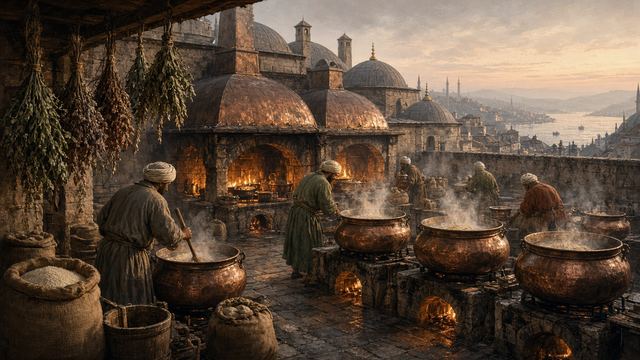
Copper Steam Over Topkapı
Estimate for one serving
- 280 cal
- 12g protein
- 24g carbs
- 8g fat
- 0.6g fiber
Every recipe here is free to read.
HistoricalEat the PastA Bite of HistoryStory5 Ingredients or LessMiddle Eastern
Ingredients
- Narrative chapter
Instructions
- 1Before dawn the Bosphorus wind pushed coal smoke inland and the copper hoods above the palace hearths began to sweat. In the Matbah-ı Âmire—the imperial kitchens of Topkapı—fires were never truly out. Ash was banked, then coaxed back into life with olive-wood chips and charcoal while the first call to labor moved through courtyards still wet with dew. A junior scullion named Yusuf, sleeves rolled past elbows scarred by splash burns, dragged a sack of polished rice toward the great cauldrons. The grain clicked like dry rain. Somewhere beyond the walls the city still slept; here, hunger was already an order of business.
- 2The kitchens were a city inside the palace. Dozens of domed chambers, rows of copper cauldrons broad enough for a man to bathe in, and a workforce that, in peak years, numbered in the hundreds: bread bakers, pastry cooks, grill men, stewards of yogurt and pickles, water-carriers, wood-splitters, and the specialists who clarified butter until it shone like pale amber. Sheep and poultry arrived on the hoof from imperial pastures and from contracts with Balkan and Anatolian suppliers. Rice came up the sea lanes; spices—pepper, cinnamon, cloves, precious threads of saffron—passed through customs and storehouses before a locked chest opened under a steward’s eye. Nothing casual entered the pot. Food here was logistics, diplomacy, and theology of hierarchy all at once.
- 3Yusuf’s task was humble and exacting. Rice for the lower tables had to be rinsed until the water ran almost clear; rice destined nearer the sultan’s apartments was sorted grain by grain for broken kernels. Clarified butter—sade yağ—was measured as carefully as coin. A cook who scorched a batch did not merely waste fat; he insulted the chain of command that ran from hearth to throne. The head cook moved through steam like a captain on a wet deck, tasting with a long-handled spoon, barking for more salt, less onion, a slower simmer. Above him, food tasters and stewards watched for poison and for pride. A dish could be perfect in flavor and still fail if it arrived late, cold, or on the wrong tray.
- 4By midmorning the smells layered themselves into a single architecture: onions collapsing in butter, lamb stock thickening with chickpeas, the green bite of fresh herbs crushed under a knife, bread blistering on the sides of clay ovens. Loaves were not democratic. Fine white bread marked status; darker, coarser loaves fed soldiers, servants, and the endless petitioners who thronged outer courts. Pilaf was the court’s great grammar. Plain buttered rice might suit a clerk. Rice jeweled with currants, pine nuts, and a dust of spice announced favor. On feast days, sugar paste and molded sweets—helva fragrant with sesame or semolina—moved in procession as edible theater. The table did not merely feed bodies; it sorted them.
- 5Outside the palace walls, Istanbul’s own stomach woke. Guild bakers pulled simit and flatbreads from street ovens. Yogurt sellers strained thick sets into clay pots. In the markets of Eminönü, fishermen stacked bluefish and mackerel on ice-cold stone while pickle vendors offered turnips and cabbage bright with brine—the ordinary city’s answer to the palace’s locked spice chests. Evliya Çelebi, writing of the capital’s trades in the seventeenth century, catalogued cooks and confectioners with the same appetite he brought to mosques and barracks. The empire ran on grain routes, sheep walks, and the knowledge of how to keep milk from spoiling in summer heat: strain it, culture it, hang it, salt it, turn abundance into something that could wait.
- 6Near noon a tray left the kitchen under a domed lid. Yusuf did not follow it past the threshold where his rank ended. He only heard the rumor that returned with empty copper: the pilaf had been accepted, the lamb tender enough, the sherbet cold. Relief tasted, for a moment, like fat on the tongue. Then the next cauldron demanded stirring. Afternoon meant stocks reduced for evening soups, vegetables confited in oil for the larder, and bones roasted down until the kitchen air itself seemed edible. Preservation was continuous labor—no iceboxes, only cool stone rooms, vinegar, salt, smoke, strained yogurt, and the discipline of using what would not keep.
- 7When dusk finally thinned the smoke, the lower cooks ate. Their meal was plain beside the courtly spectacle, yet it carried the same grammar in miniature: rice loosened with broth, a spoon of chickpeas, a slick of butter if the steward was generous, bread to chase the last grains, and a shared bowl of yogurt sharpened with garlic. Yusuf sat on a worn step, bowl warm against his palms, and listened to copper lids settling as they cooled. Tomorrow the fires would wake again. Empires, he had learned, were not only commanded by firmans and fleets. They were stirred, skimmed, portioned, and tasted—one careful ladle at a time—until power itself smelled of rice and roasted lamb.