PlatePilot
Bay Fish, Bare Hands
Estimate for one serving
- 280 cal
- 12g protein
- 24g carbs
- 8g fat
- 0.6g fiber
Every recipe here is free to read.
HistoricalEat the PastA Bite of HistoryStory5 Ingredients or LessAmerican
Ingredients
- Narrative chapter
Instructions
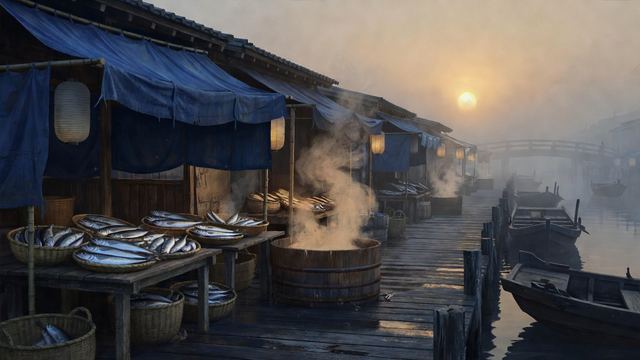
- 1Before the sky over Edo went pearl-gray, the boats were already in. Men with rope-scarred palms heaved baskets onto the planks near Nihonbashi, where the canal smell mixed salt, tar, and the sweet rot of yesterday’s offal. The city’s breakfast did not wait for kitchens with hearths. It waited for hands fast enough to turn a living bay into a meal that would not poison a carpenter by noon.
- 2Kenzo kept his stall under a patched awning a short walk from the fish landings. He was not a famous chef. Fame belonged to a few names whispered near the theaters—Hanaya Yohei among them, the sort of fellow later stories would credit with shaping nigiri into something a man could eat standing up. Kenzo only knew the arithmetic of spoilage. Tokyo Bay’s catch—kohada, anago, pure-white squid, sometimes a flash of lean tuna if the nets were lucky—had no icehouse waiting. What it had was rice, rice vinegar, a smear of grated wasabi root, and the hungry press of porters, clerks, and night-watch men coming off shift.
- 3He cooked the rice before first light in a heavy pot over charcoal, the grains short and sticky, polished white because polished rice was what Edo preferred when it could afford the miller’s fee. While the steam still rose, he folded in vinegar cut with a little sugar and salt—not to make a sauce, but to brighten the grain and discourage the soft edge of decay. Vinegar was chemistry the city understood without naming it: acid bought time. Time was measured in hours, not days.
- 4A boatman slapped a tray of small gizzard shad on the board. Kenzo’s apprentice, sleeves tied back, rinsed and wiped with a cloth wrung almost dry. They did not soak fish to death; they cleaned, lightly cured some pieces in salt or a brief vinegar wash, and worked. Kenzo wet his palms, pinched a bolster of warm rice, and pressed a slice of fish over it with a motion so practiced it looked like nothing. Two bites for a laborer. Three if the man had copper to spare and wanted tea-stained egg folded soft on top.
- 5Customers did not sit for courses. They stood in the lane dust, one shoulder turned to the traffic of handcarts and geta clack, and ate with their fingers. Soy was a dip, not a bath—too much and the rice fell apart, a waste that would have shamed any stallkeeper counting coins at dusk. Wasabi’s heat cut the oil of the fish and, people said, kept the stomach steadier. Whether that was folk wisdom or luck, Kenzo still grated the green root fresh; dried powder was for poorer days.
- 6Them the city stacked its hungers in layers. Commoners lived on millet and barley when rice prices climbed after a bad harvest, but the capital’s pride was white rice when the shogunate’s peace held and the warehouses along the canals were full. Street food filled the gap between those poles: grilled eel over sweet soy, buckwheat soba in broth for a man who had only minutes, sweet beans for children outside the Kabuki houses when the drums started. Nigiri belonged to that same hurried democracy. It was not court cuisine. It was bay wealth made portable.
- 7By midmorning the best of the delicate fish was gone. What remained went onto skewers over hotter coals, or into simmering pots where soy, mirin, and time could hide what freshness no longer claimed. Kenzo scrubbed his board with salt and ash-water, wiped his knife, and counted the day’s copper. A woman from a nearby tenement bought the last two pieces for her husband on the docks—rice still faintly warm, fish cool from the morning air. She wrapped them in a broad leaf and walked fast.
- 8That was the whole trick of edomae eating. No deep larder. No distant spice fleet on the tongue. Just the morning’s water, the vinegar’s bite, the press of a thumb, and the knowledge that a city of a million souls could be fed if someone rose earlier than hunger did. When the lanterns came on again near the bridge, another shift would want the same thing: something that smelled of the tide and stuck politely to the fingers—proof that the bay had opened its hand, and Edo had answered with rice.