PlatePilot
Folded Hot for Harbor Hands
Estimate for one serving
- 280 cal
- 12g protein
- 24g carbs
- 8g fat
- 0.6g fiber
Every recipe here is free to read.
HistoricalEat the PastA Bite of HistoryStory5 Ingredients or LessBritish
Ingredients
- Narrative chapter
Instructions
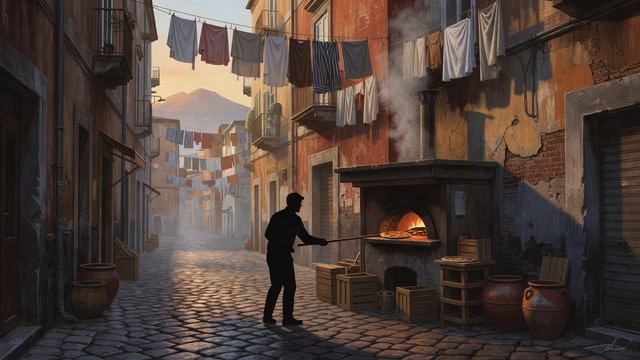
- 1Before the sun cleared Vesuvius, the vicolo already smelled of wet stone and smoke. Gennaro raked the oven mouth with a long iron, coaxing last night’s embers back into a white heat that would blister dough by first light. The wood was scavenged—broken crates from the harbor, prunings from the hills, whatever the charcoal men had left unsold. In the bassi, those ground-floor rooms that opened straight onto the alley, heat was money and money was thin.
- 2He worked barefoot on the cool tile. The dough had risen under damp cloth: soft wheat from the Campanian plain, water, salt, a scrap of starter kept alive like a household saint. No lard if he could help it; oil when the purse allowed. He stretched each ball with the heels of his hands until it was thin at the center and a little proud at the rim, the way his uncle had taught him when pizza was still a food the well-born pretended not to see.
- 3Tomato changed everything. A generation earlier the red fruit from the Americas had been a garden curiosity, sometimes feared, often left to the poor who would eat what grew. By the 1840s the dense, sun-cooked sauce of Campania tomatoes—simmered down with a thread of oil, a crushed clove of garlic, a dusting of wild oregano from the slopes—had become the cheapest glory in the city. Gennaro ladled it thin so it would not drown the crust. On feast days, or when a sailor flashed a coin, he tore mozzarella di bufala from the marsh herds of the Sele plain and scattered it so it melted into pale lakes. Anchovies from the gulf. A few basil leaves if a neighbor’s pot had been kind. That was abundance.
- 4The first customers did not sit. Sitting was for taverns with wine lists. These men came from the arsenale and the wharves, from the tanneries and the weaving sheds, folding the hot round into a libretto—a little book—so grease and sauce stayed inside while they walked. They ate standing in the alley steam, shoulders hunched, the crust crackling, the soft interior pulling. A whole pizza cost little more than a laborer’s small change; half was enough to quiet a belly until noon. Women bought for children. Night watchmen bought at the end of a shift, when the oven still held heat and the city had not yet decided whether to sleep.
- 5Inside the better quarters, above the smell of the street, polite Naples wrote of other tables—timballi, refined ragùs, sugar sculptures. Guidebooks for foreigners mentioned macaroni. Pizza belonged to the vociferous poor, to the lazzaroni whose appetite embarrassed reformers. Yet the craft was exacting. The oven had to hold a fierce, even heat, stone floor glowing. Too cool and the dough dried; too fierce and the rim blackened before the center set. A pizzaiolo read the fire the way a sailor read wind. He turned the peel with a wrist that remembered hundreds of mornings. He knew which wood spat and which burned clean.
- 6By midcentury the city counted dedicated pizzerie—small rooms with marble slabs, benches, and ovens that never quite went cold. Some sold by the cut; some by the whole. A few kept wine. The work remained close to hunger. Cholera years emptied alleys and filled them again. When the harbor slowed, tomato stretched further and cheese vanished. When a feast or a royal visit flooded the streets with temporary wages, buffalo milk returned and the sauce went thicker. Food remembered the politics of scarcity even when songs did not.
- 7Near noon Gennaro slid the last morning batch onto the peel. The rim blistered into leopard spots. Oil shimmered. He folded one for himself—the craftsman’s tax—and bit through crackle into wet heat, oregano sharp as a pinched green stem, tomato bright with the late-summer fields beyond the walls. Outside, a boy waited with a coin warm from his palm. The volcano watched, indifferent. In Naples the day’s true altar was a stone mouth full of fire, and the sacrament was bread the poor could carry, still hissing, into the light.