PlatePilot
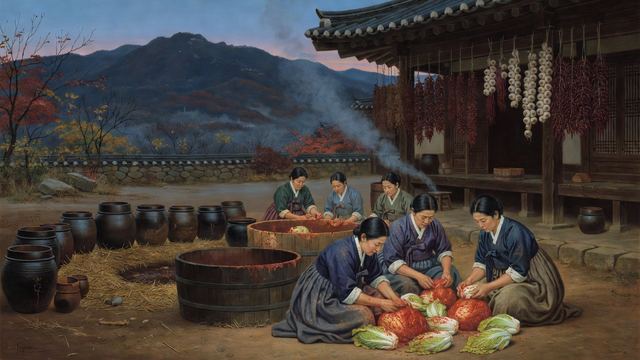
Jars Buried Before Frost
Estimate for one serving
- 280 cal
- 12g protein
- 24g carbs
- 8g fat
- 0.6g fiber
Every recipe here is free to read.
HistoricalEat the PastA Bite of HistoryStory5 Ingredients or LessAmerican
Ingredients
- Narrative chapter
Instructions
- 1By the third week after the harvest moon, the cabbage fields above the village looked stripped and pale. Women walked the rows with knives tucked in their sashes, cutting napa heads the size of sleeping infants and stacking them on wooden frames until the ox cart groaned. Frost had already rimmed the irrigation ditches at dawn. Everyone knew what that meant: kimjang could not wait another market day.
- 2Salt came first—coarse crystals carried up from the western salt flats in straw sacks that left white dust on every doorway. In the courtyard, grandmothers directed the brining as if commanding a small army. Heads of cabbage were split, rubbed, and sunk into wooden tubs of cold brine. Children were set to turning them so the leaves took the salt evenly, a chore that left fingers wrinkled and stinging. Without this step, the winter stores would rot instead of sour. Joseon households measured the year’s safety not only in rice in the granary, but in how many onggi—thick, breathing earthenware jars—stood ready along the kitchen wall.
- 3Chili had changed the color of this labor within living memory. Capsicum peppers, carried across oceans after the early encounters with the wider world, had moved from curiosity to necessity by the later Joseon decades. Dried and crushed into gochugaru, they stained palms brick-red and promised heat that cut through the dull cold of pickled vegetables alone. Beside the chili waited garlic braids, ginger knobs, green onions, and the sharp perfume of jeotgal—tiny shrimp and anchovies fermented in salt until they became a liquid savor more precious than their size suggested. Fish sauce was not a garnish here; it was protein and salt and the deep taste of the coast carried inland.
- 4On kimjang day the courtyard became a single kitchen. Neighbors who owed each other harvest help arrived with knives and bowls. A pig’s leftover bones muttered in an iron pot for a thin broth to warm the workers. Rice steamed in heavy pots; no one pickled on an empty stomach if it could be helped. The seasoning paste was worked in a trough: chili, garlic, ginger, salted seafood, a little sticky rice porridge to bind it. Younger women pulled brined cabbage from the tubs, shook off excess water, and packed the red paste leaf by leaf, working it down to the core so no pale pocket remained for spoilage to claim.
- 5An elder tested a leaf, nodded once, and the filling sped up. Talk ran to bride prices, to a son walking to the provincial exam, to whether the chili this year bit harder than last. Kimjang was foodwork and census and insurance policy in one. A household that failed to fill its jars would taste thin soup by the second snow and owe favors it might not repay. A household that shared surplus paste or an extra head of cabbage stitched itself tighter into the village web.
- 6When the sun slid behind the ridge, the onggi were lined in the kimchi pit—a shallow trench where jars could be half-buried and capped against the worst freezes. Straw and soil went over the lids. The earth itself would become the cellar. Inside, lactic fermentation would slow and deepen through the cold months, turning salted cabbage into something alive, sour, and bright enough to make plain barley rice feel like a meal. Men who had spent the day repairing thatch came down for the last packing and for the supper that followed: fresh pork from a slaughtered hog, soybean stew, and cabbage still crisp from the tubs, eaten before it vanished into the jars.
- 7Night air smelled of garlic and woodsmoke. Someone wiped a red thumbprint on a child’s cheek and laughed. In the pit, the jars settled like a second harvest underground. Come the hungry stretch of late winter, when the side dishes on the low table looked sparse and the wind found every seam in the door, a woman would brush soil from a lid, lift out a portion with clean wooden tongs, and set scarlet kimchi beside the rice. The crunch would be loud in a quiet room—proof that autumn’s hands had reached all the way into February.