PlatePilot
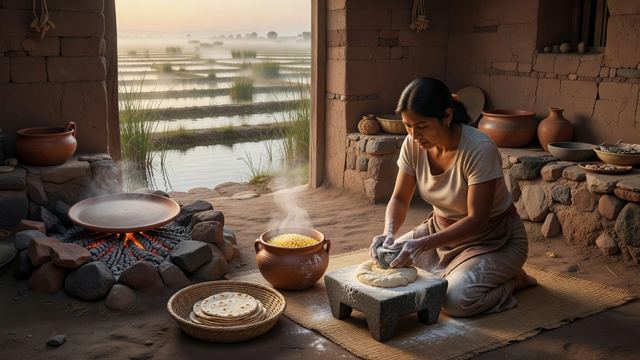
Ash-Water on the Metate
Estimate for one serving
- 280 cal
- 12g protein
- 24g carbs
- 8g fat
- 0.6g fiber
Every recipe here is free to read.
HistoricalEat the PastA Bite of HistoryStory5 Ingredients or LessAmerican
Ingredients
- Narrative chapter
Instructions
- 1An hour before the first canoe slid along the chinampa canals, Centehua fed the hearth with last night’s charcoal and a few dry stalks. The clay pot was already half full of water gone cloudy with cal—slaked lime, the alkaline gift that turned hard field maize into food a body could live on. She poured in yesterday’s dried kernels, pale and stubborn as little stones, and set them to heat until the skins loosened and the kitchen smelled faintly of wet mineral and sweet corn.
- 2This was not flavor for its own sake. Without the ash-water bath, maize kept its nutrients locked away; with it, the kernels swelled, shed their hulls under a rinse, and became nixtamal—soft enough to grind, safe enough to feed a city that floated on a lake and still fed an empire. Children learned early not to waste a grain. Tribute tallies ran on maize as surely as on cotton mantles and cacao beans, and a household’s reputation rose or fell with the evenness of its tortillas.
- 3When the pot had done its work, she drained and rubbed the kernels clean between her palms, the hulls slipping off in grayish shreds. Then came the metate: a long basalt saddle stone, rough as a riverbed, set at a slant on the packed earth floor. Kneeling, she took the mano—the heavy cylindrical grinder—and began the slow push-pull that turned nixtamal into masa. The sound was a wet scrape, rhythmic as paddles on water. Sweat pricked her temples. Fine maize paste gathered, sticky and fragrant, the color of late sunlight.
- 4Outside, mist lifted off the chinampas—those long garden islands laced with canals, where maize, beans, squash, and chiles grew in soil dredged rich from the lake bottom. A neighbor called across the water the tianguis: tomatoes coming in, turkeys dear this week, salt cakes from the lakeshore still damp. Centehua answered without breaking rhythm. The metate did not forgive pauses; uneven masa meant tortillas that cracked on the comal and shamed the cook before guests.
- 5She portioned the dough by feel, palm-patting discs thin enough to blister but thick enough to cradle beans. The comal—a flat clay griddle—waited over clean heat. First tortilla down. In moments the surface clouded, puffed, and took on freckles of toast. She flipped it with two fingers, stacked the finished rounds in a basket lined with cloth to keep the steam in, and felt the old satisfaction settle in her wrists: bread without an oven, daily and exact.
- 6By full light her brother would carry a stack and a pot of beans blackened with epazote toward the busier causeway, where porters and craftspeople bought hot tortillas wrapped whatever the morning allowed—smoked chili, a scrap of turkey, squash blossoms if the garden was kind. Elite tables in Tenochtitlan might later see the same maize transformed into tamales stuffed for festival, or atole drunk warm and spiced, or tortillas so fine they seemed like folded parchment beside sauces of ground squash seed and green chile. But the empire’s true engine was this: ash-water, stone, and skill, repeated in thousands of kitchens before the temples’ shadows shortened.
- 7Centehua set aside a small ball of masa for the afternoon’s next pressing and tasted a scrap of the first tortilla—hot, pliant, with that deep toasted-corn sweetness only lime and labor could coax. From the canal came the knock of a paddle and the cry of a vendor already hawking early chiles. Hunger moved through the city like a tide. She stacked another round on the cloth, and the basket grew heavier, ready for hands that had not yet risen.