PlatePilot
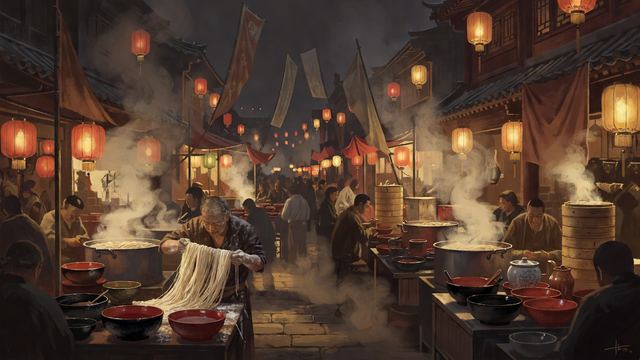
Lantern Steam Over Bianliang
Estimate for one serving
- 280 cal
- 12g protein
- 24g carbs
- 8g fat
- 0.6g fiber
Every recipe here is free to read.
HistoricalEat the PastA Bite of HistoryStory5 Ingredients or LessAsian
Ingredients
- Narrative chapter
Instructions
- 1The evening drums rolled across Bianliang like a second tide. Shop shutters banged; clerks wiped ink from their fingers; and along the Imperial Way the first lanterns bloomed, paper skins glowing apricot over brass hooks. Lin, a junior silk broker with copper cash knotted in his sleeve, stepped into the heat that still rose off the paving stones. August had not yet loosened its grip. The river smell—mud, rope, distant gardenia—mixed with something sharper: rendered mutton fat hitting iron.
- 2He was hungry in the particular way of a man who had counted bolts since dawn and tasted only weak tea and yesterday’s flatbread. In the Northern Song capital, hunger was rarely absolute if you had even a few coins; it was a matter of rank. The great restaurants near the palace gates served whole carp in sweet-sour glaze and poured warmed wine for officials. Lin’s coins bought the street.
- 3Past the bridge, stalls pressed so close their awnings overlapped. A woman lifted bamboo steamers the size of drumheads; white buns swelled inside, mottled with pork and chives, the dough fermented just enough to tear in soft layers. Beside her, a man spun wheat dough until it sheeted, then folded and cut ribbons that dropped hissing into a pot already cloudy with bone broth. Northern kitchens ran on wheat—the canals brought milled flour down from the plains—while rice remained more the south’s pride, expensive when carted this far. Lin watched the cook ladle dark soy and a spoon of fermented mianjiang into a bowl, then crown the noodles with a slick of chili oil the color of lacquer.
- 4He paid eighteen cash for a bowl and stood to eat, chopsticks clicking. The broth tasted of long-boiled pig bones and a whisper of star anise traded up from the southern ports. Vinegar cut the fat. him, night laborers hunched over similar bowls; a runner from a pharmacy hurried past with a paper twist of dried jujubes; two soldiers argued over grilled lamb skewers blackening on charcoal. Meng Yuanlao would later list these stalls as if mapping a second city—cold noodle shops for the heat, broth houses open past the third watch, vendors of fish soup, crab meats, and sugared fried dough that left grease moons on the wrapping paper.
- 5Preservation made the abundance possible. Ceramic jars of salted vegetables lined the stall backs—mustard greens and radish put down with brine and spice against lean months. Soy sauce, already a craft of specialized workshops, darkened every serious broth. Dried fish hung like stiff banners where the air could touch them; in winter, ice cut from the rivers would chill delicacies for the wealthy, but tonight the luxury was simply fresh slaughter and hot oil. A child passed selling plum drink in lacquered dippers, tart enough to wake the mouth after fat.
- 6Lin thought of his mother waiting in their rented room near the eastern wall, and bought a second package: steamed buns wrapped in lotus leaf, still breathing warmth, and a twist of honeyed walnuts from a confectioner whose sugar had come, ultimately, through the same southern trade that moved aromatics and exotic fruits. Sugar was no longer pure fantasy for a middling household, but it still felt like festival when it cracked between the teeth.
- 7Rumors moved through the market as freely as steam—frontier trouble, grain levies, a magistrate’s banquet that had stripped the best geese from three wards. Yet the lanterns held. A tea house on the corner offered seats on worn benches and bowls of steeped leaves for men who needed to sit before walking home. Lin did not sit. He carried his packages through lanes where the oil-smoke thinned and the river wind returned, the smell of noodles still on his sleeves.
- 8At the low table he unwrapped the buns. The dough tore with a sigh of pork and scallion. Outside, somewhere past the ward gate, a late vendor called the last of his broth. Bianliang ate in layers—palace, shopfront, alley pot—and tonight the alley had been enough. The meal left him already planning tomorrow’s coins: another bowl, perhaps with braised beef if the butcher’s price held, and a sweet rice cake for the old woman if the miller’s wife had steamed a fresh batch. Appetite, in this city, was a map you learned by walking.