PlatePilot
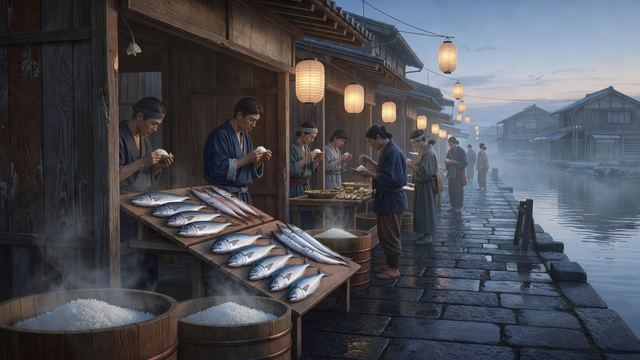
Vinegar Rice at First Light
Estimate for one serving
- 280 cal
- 12g protein
- 24g carbs
- 8g fat
- 0.6g fiber
Every recipe here is free to read.
HistoricalEat the PastA Bite of HistoryStory5 Ingredients or LessJapanese
Ingredients
- Narrative chapter
Instructions
- 1Before the temple bells finished their morning count, the stalls along the canal were already breathing steam. Rice tubs sat open to the cool air. Knives whispered over boards still wet from last night’s scrubbing. In the half-dark, a boy named Kichi fanned charcoal under a kettle while his uncle, Yohei, turned a mound of warm rice with a wooden paddle, folding in rice vinegar, salt, and a little sugar until each grain shone and held its shape.
- 2This was not feast cooking. This was speed.
- 3Edo had swollen past a million souls. Carpenters, firemen, porters, and clerks moved through the wards on schedules that did not wait for a hearth pot to simmer. Near Nihonbashi, where boats unloaded the night’s catch from Edo Bay, a new kind of meal had taken hold: a oblong of vinegared rice pressed in the palm, topped with a slice of fish, brushed with a glaze or dabbed with grated wasabi root, and handed across a plank counter to be eaten in two bites—often with the fingers, standing up.
- 4Yohei’s stall faced the market’s edge. Mackerel, sea bream, kohada, and glistening slabs of tuna belly lay on cedar, their eyes still clear. Without ice houses for every vendor, freshness was a race against the sun. Vinegar in the rice helped lightly preserve and season; the acid brightened fish that had been caught only hours earlier in the bay’s rich waters. Soy sauce, still a valued condiment rather than a free pour, sat in a small pot for dipping. Nori, when he had it, wrapped certain pieces like a dark green belt—sheet seaweed dried on frames along the shore and sold in bundles.
- 5A fireman in a thick padded jacket slapped two mon coins on the wood. “Kohada. Two.” Yohei’s hands moved without looking: rice compressed just firm enough to hold, fish laid on with a thumb-press, a streak of wasabi between them like a secret. The man ate where he stood, salt and smoke still on his clothes from the night watch, then vanished into the lane before the second bell.
- 6Kichi watched the rice cool to the right warmth—too hot and the fish would wilt; too cold and the grains turned stubborn. He had learned the city’s quiet ranks at this counter. Day laborers paid in copper and ate oily fish that filled the belly. Merchants’ clerks lingered for cleaner cuts of bream. On rare mornings a samurai’s retainer appeared, insisting on chopsticks and a cleaner board, as if etiquette could be borrowed for the length of a snack. The stall did not bow deeper for rank. The fish decided the order of service: what would spoil first went first.
- 7Behind the commerce sat older knowledge. Rice was not a free backdrop; it was taxed, measured, and central to the shogunate’s whole economy. Townsmen who could buy white rice ready-cooked already stood a step above those boiling brown millet at home. Vinegar—brewed from rice or sake lees—stretched fish a few precious hours and cut the summer’s heavy air. Wasabi, grated fresh from mountain roots when supply allowed, did more than heat the nose; its bite was part of the craft’s small armor against the sea’s softness. Nothing was wasted. Fish bones went to stock for the household pot. Trimmings became a midday bowl for the boy.
- 8By midmorning the light had climbed the warehouse roofs and the dangerous hour began. Yohei covered the remaining fish with damp cloth and shifted the menu toward omelet strips cooked over the small brazier, or simmered slices glazed with soy and mirin until they shone. The purest nigiri belonged to dawn, when the bay’s gift still tasted of tide rather than time.
- 9A porter wiped his mouth with the back of his hand and nodded at the empty board. “Tastes like the water came with it,” he said. Yohei only refilled the rice tub. Praise was fine; empty boxes were better.
- 10When the last pressed pieces went out, Kichi scraped the vinegar bowl with a crust of cold rice and ate it behind the stall—sharp, clean, still faintly warm. them Edo roared toward noon: cart wheels, gulls, the slap of gutting knives two streets over. The feast had not been grand. It had been exact. Salt, grain, acid, and the hour the fish would still answer to the hand. Tonight the bay boats would come again, and before first light the paddle would turn in the tub once more, ready for men who could not wait.