PlatePilot
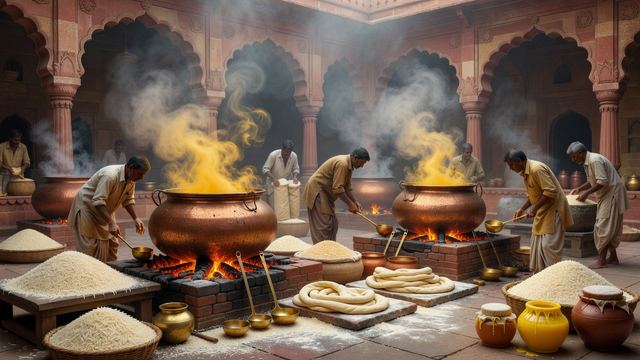
Saffron Smoke at Fatehpur
Estimate for one serving
- 280 cal
- 12g protein
- 24g carbs
- 8g fat
- 0.6g fiber
Every recipe here is free to read.
HistoricalEat the PastA Bite of HistoryStory5 Ingredients or LessSpanish
Ingredients
- Narrative chapter
Instructions
- 1An hour before the call of birds, the courtyard behind the women’s palace was already a furnace of intent. Copper degs the size of bathing tubs sat nested in low brick hearths. Boys raked last night’s ash into neat banks. A senior bawarchi—head cook by rank, not by whim—broke the clay seal on a ghee jar and sniffed. Sweet, clean, no tang of rancid goat. He nodded once. The jar had come from the imperial stores, weighed, logged, and stamped; in Akbar’s household, fat was accounted like coin.
- 2Fatehpur Sikri rose pale on its ridge, red sandstone still cool under a sky the color of watered milk. Inside the matbakh, the great kitchen compound, work moved in caste-like layers of skill. Rice washers crouched over stone troughs, turning basmati until the water ran almost clear. A man with scarred forearms browned onions in a slow storm of ghee—the foundation of qorma and pilaf, the smell that told half the city the court was awake. Above them, on a raised platform, the mir bakawal, master of the kitchen, checked a wax tablet of the day’s list. Forty dishes was no feast day excess. It was ordinary ambition for a padshah who might touch only a few mouthfuls and still expect perfection in all.
- 3History had taught the Mughals to fear the plate. Poison traveled easily in spice and gravy. So the rules, set down by Abu’l-Fazl with a clerk’s cold clarity, bound every hand. Cooks worked barefoot on swept earth. Water carriers were known men. When a deg of rice was judged done—each grain separate, pearl-bright, threaded with saffron steeped in warm milk—the pot was covered, a strip of cloth pasted across lid and rim, and sealed with the kitchen’s mark. Only then did it travel toward the tasters. No seal, no service.
- 4A young apprentice named Yusuf—composite of the hundreds who lived on kitchen wages and scrap—turned a spit of mutton rubbed with crushed garlic, black pepper, and the expensive breath of cloves brought north along caravan routes from the Malabar coast and beyond. Pepper still meant wealth; a small sack could pay a soldier’s month. He watched the fat drop and flare. Too much flame and the meat would char bitter; too little and the court would taste boiled poverty. His master cuffed his shoulder without malice. “The emperor eats with his nose first.”
- 5Beyond the hearths, bread makers slapped dough onto the inner walls of tandoors. The loaves blistered and ballooned—naan and thick wheat rounds to scoop gravy, because a Mughal meal was as much hand-work as spectacle. Yogurt hung in cloth to thicken for raita and marinades. Spinach wilted down with ginger for saag. Chickpeas, the reliable pulse of armies and cities alike, simmered with cumin and a souring of dried mango. Not everything on the list was luxury. Empire ran on grain, ghee, and legumes; the jewel-toned biryanis and silver-leafed sweets were the theater that justified the ledgers.
- 6Trade underwrote the aroma. Saffron from Kashmir, or costlier still from farther west, stained rice the color of sunset. Cardamom pods cracked under pestle. Sugar, increasingly refined, waited for the halwa makers who would later pull translucent strands or slow-milk kheer until it clung to the spoon like soft silk. The Ain-i-Akbari priced and portioned such things with bureaucratic tenderness—so much meat per man, so much rice, who might claim sherbet, who ate plain. Hierarchy lived in the ladle.
- 7When the first sealed degs left the courtyard, the mir bakawal walked beside them as far as the gate. He did not smile. A single wrong taste—ash, raw onion, a grain of grit—could mean disgrace, stripes, or worse. Yusuf wiped his hands on his cloth and allowed himself one breath of the saffron steam before the lid went down. Somewhere beyond the sandstone screens, Akbar would sit to a meal arranged like a map of his domains: highland mutton, river fish on appointed days, rice that had traveled as carefully as a treaty.
- 8By full light the kitchen would cook again for clerks, guards, and the endless minor tables of a capital. But for a few minutes the compound quieted the departing procession of pots. Fat shone on iron and copper. Bread puffed in the tandoor’s roar. The apprentices ate what the seals rejected and the masters allowed—yesterday’s rice fried with onion, a scrape of qorma, tea thick with milk if they were lucky.
- 9Yusuf tore warm bread, swept it through a thin gravy freckled with pepper, and chewed like a man storing the memory of spice against a plainer afternoon. Above him, smoke from ghee and saffron climbed into the Sikri sky—proof that an empire, before it ruled with swords and surveys, had to rule breakfast.