 PlatePilot
Copper Until the Apples Break
HistoricalAmericanEat the PastA Bite of HistoryStory5 Ingredients or Less
Ingredients
- Narrative chapter
Instructions
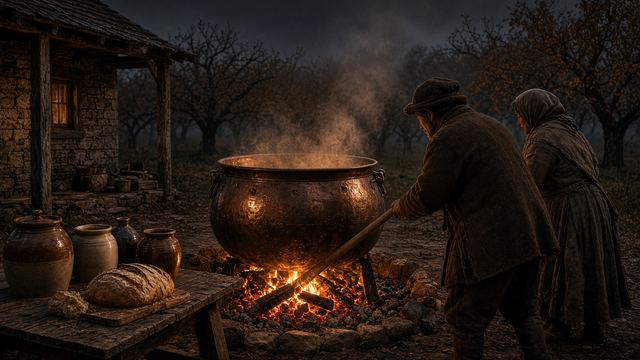
- 1By late afternoon the orchard smelled like bruised sugar and wet leaves. October had already thinned the light; the last drops of the earlier pressing still clung to the wooden troughs at the cider mill, sticky enough to catch gnats and the sleeves of anyone careless. What had not gone into barrels for drink was destined for the kettle—the wide copper basin the size of a washtub, dark from years of sugar and smoke, swung now over a steady outdoor fire behind the summer kitchen.
- 2Anna kept the first watch because she was sixteen and her arms still remembered how to make a long circle without complaint. The paddle was a flat board on a pole, worn smooth where other hands had gripped it. If you stopped turning, the bottom scorch would ruin a whole night’s work and no one would forgive the waste. Apples had already been quartered and cored at the trestle tables: mostly tart keepers from the north slope, a few sweeter ones thrown in when the children got hungry enough to argue. Some farms added only cider as the liquid; others poured in a measure of the new sweet cider and a little of last year’s sharper stuff so the fruit would collapse faster. Sugar, when the household could spare it, went in late. Spices—cinnamon bark, a whisper of clove—were wealth measured in pinches, not handfuls, bought in town when egg money allowed.
- 3The fire had to be even. Too fierce and the copper telegraphed a bitter line across the thickening pulp; too meek and midnight would find them still staring into pink foam. Neighbors came because a boiling was never only one family’s labor. A man from the next ridge brought a second paddle. A widow arrived with her own crock and a claim on two jars for the help of her boys at the mill. Children ran apple peels in long curls and dared each other to taste the raw acid. Someone set a pot of coffee on a smaller grate. Bread from the morning bake waited under a cloth, because the first test of doneness was always the same: a spoonful on a heel of crust, blown cool, judged by whether it sat without weeping.
- 4Pennsylvania German households treated apple butter as more than spread. It was concentrated orchard—fruit cooked down until water left and sugars darkened—meant to live in crocks in the springhouse or cool cellar when fresh apples were only a memory under snow. Before reliable canning lids became common later in the century, dense sweetness and careful covering did the preserving work. A skin might be floated on top, or a circle of paper dipped in brandy laid under the lid. In lean months it went onto rye bread, into pots with dumplings, beside cold meat, or stirred into morning mush when molasses seemed too dear.
- 5As dusk settled, the mass in the kettle changed color the way a bruise deepens. Pale gold became amber; amber leaned toward mahogany. Steam smelled less of raw cider and more of caramel and woodsmoke. Anna’s shoulders burned. Her father took the paddle without ceremony, then her uncle, then the neighbor again—an unbroken orbit, talk rising and falling hog prices, a cracked wagon tire, whether the early frost would hold off the late cabbage. No one spoke of the work as quaint. Surplus fruit that rotted was lost cash and lost calories. The copper was a tool against scarcity.
- 6Near ten o’clock the paddle began to leave a clean wake. A dollop on a cold plate no longer leaked a ring of juice. The widow nodded once. Jars and crocks lined the bench, scalded earlier in the wash boiler. They filled while the stuff was still dangerous, cloths wrapped hands, funnels knocked against rims. A little went into a cracked cup for the children to taste with the last of the bread—the reward that made the smoke in their eyes worth it.
- 7By the time the fire was buried in ash, the yard smelled like a bake shop built out of trees. In the morning there would be stained paddles to scrub and copper to polish with salt and vinegar until it remembered the sun. But tonight the crocks cooled under their covers, dark, glossy, waiting for winter toast and the knife’s slow drag. The orchard had been reduced to something that would keep. Hunger, for a few months longer, had been answered with patience, fire, and a circle that never quite stopped.