 PlatePilot
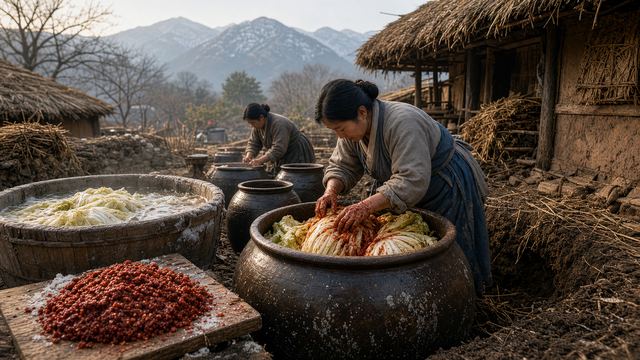
Red Hands, Buried Jars
HistoricalAmericanEat the PastA Bite of HistoryStory5 Ingredients or Less
Ingredients
- Narrative chapter
Instructions
- 1The first hard frost had not yet come, but the mountains above the village already wore a thin white edge. In the courtyard, napa cabbages lay in pale ranks like sleeping soldiers, outer leaves rasping whenever someone brushed past. By custom, no household salted alone. Kimjang was too large a labor and too necessary a mercy: one family’s winter banchan could not be trusted to one pair of hands.
- 2Sun-ok rose before the crow of the farthest rooster and checked the brine tubs. Yesterday the women had packed the cabbages in coarse sea salt, rubbing crystals into the thick white ribs until the leaves went limp and glossy. Overnight the salt had pulled water from the cores; the brine now smelled clean and mineral, like a tidal flat. She plunged an arm in to the elbow, lifted a head, and watched a slow drip. Too stiff and the paste would not cling. Too soft and the cabbage would sour before the cold deepened. The village judged such things by touch more than by any written measure.
- 3Chili had not always stained the work red. Elders still spoke of older white kimchis—radish, cabbage, and pure salt—before New World peppers traveled the long sea routes and took root in Korean soil in the century after the wars. By Sun-ok’s time, dried red peppers were pounded or flaked into gochugaru, a heat that warmed the chest in January when the ondol floor could not. Heat was not luxury here; it was another kind of preserve.
- 4By midmorning the yard was a workshop. Girls shredded Korean radish into matchsticks. Boys hauled water from the well until their shoulders burned. An auntie mashed salted shrimp into a paste that smelled of deep ferment and ocean shelves; another poured anchovy sauce in a thin brown stream. Garlic cloves were crushed by the basket. Ginger was grated until the air bit the nose. Green onions fell in bright rounds. The mixture became a thick scarlet mud, oil rising in little beads where the chili met the fish sauce.
- 5They worked on scrubbed boards, sleeves rolled, hands raw. Salt cracked the skin at the knuckles; chili found every crack and lit it. No one truly complained. Complaint wasted daylight, and daylight in late autumn was a narrowing door. A neighbor’s infant slept strapped to a back while the mother threaded seasoned paste between every leaf, layer by layer, as if tucking a child under blankets. Too little paste and the middle would taste of plain water by the second month. Too much and the jar would run loose and spoil.
- 6The men had already dug the pits along the sheltered side of the house, where wind broke against the wall. Onggi—high-fired earthenware with small pores that let a vessel breathe without leaking—waited like dark eggs. A good jar could hold the temper of a season: cold enough to slow the ferment, open enough to keep the cabbage alive rather than rotting in its own wetness. Straw would pack the gaps. Soil would mound over the shoulders of the jars until only the lids remembered the sky.
- 7When the sun slid toward the ridge, the first filled onggi were lowered with rope and muttered counting. Someone laughed when a young husband nearly lost his grip; someone else hushed him for tempting the cold. Sun-ok pressed a final cabbage into her family’s jar and tasted a scrap from the board—salt first, then garlic’s burn, then the slow bloom of chili and the deeper bass of salted seafood. It was not yet kimchi as winter would know it. Ferment still had weeks of quiet work to do under the yard. But the promise was there: rice would not go to the table naked.
- 8Evening smoke rose from kitchen hearths. Pots of stewed soybeans and clear radish soups waited for people whose arms trembled from a day of lifting. Bowls of hot grain steamed beside small dishes already set—the last of last year’s kimchi, stretched thin, sharp as a remembered argument. Tomorrow more cabbage. Tomorrow more paste. For now the jars cooled in their earth beds, and the village smelled of pepper, salt, and turned soil.
- 9Sun-ok scrubbed her hands until the water ran only faintly pink. Behind her, under a crust of straw and dirt, winter had been bargained with and, for another year, made edible.