 PlatePilot
Ash Water on the Maize
HistoricalAmericanEat the PastA Bite of HistoryStory5 Ingredients or Less
Ingredients
- Narrative chapter
Instructions
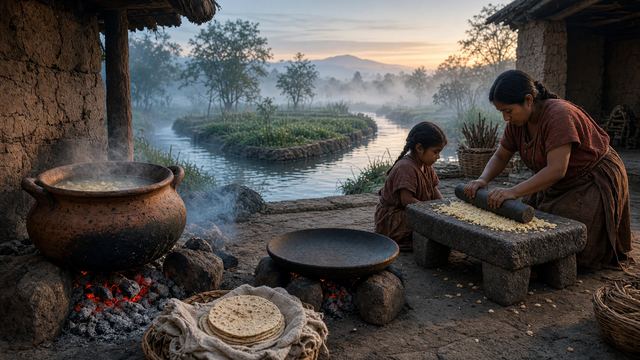
- 1Long before the temple drums carried across the lake, the hearth was already awake. In a courtyard house on the edge of Tenochtitlan’s chinampa farms, Itzel lifted the lid of the clay pot she had set the night before. Steam rose sharp and clean. Whole kernels of dried maize had swelled in water made alkaline with wood ash—sometimes lime burned from limestone when ash was scarce—until their skins loosened like wet paper.
- 2This was not mere soaking. Everyone in the basin knew, even if they did not yet name the chemistry, that untreated maize left bodies weak if eaten as daily bread. The alkali changed the grain. It freed bound niacin, softened the hulls so they could be rubbed away, and turned hard seed into dough that would hold on a hot stone. Without that night pot, the city’s thousands of tortillas would have been impossible—and so would the tribute maize stacked in palace storehouses, the market measures, the traveler’s pouch.
- 3Itzel’s daughter knelt at the metate, the three-legged grinding stone worn smooth by generations of women’s knees and forearms. They rinsed the swollen kernels, slipping the translucent skins free between thumb and finger, then set the clean nixtamal on the stone. The girl pushed the mano back and forth. Coarse meal became fine masa, damp and fragrant, smelling faintly of the ash that had unlocked it. A little water, salt if the household had traded well, and the dough gathered under the palms like soft clay.
- 4Outside, canoes already cut the canals. Vendors would soon cry chile, squash blossoms, and small fish from the lake. But first came heat. Itzel laid the flat comal over the fire—an earthenware griddle seasoned by a thousand mornings—and waited until a sprinkle of water danced. She pinched masa, patted it thin between skilled hands (the wooden press would come centuries later under other rulers), and laid each round on the stone. One side blistered; she flipped; the tortilla inflated with a soft breath, then settled. Stacked in a cloth, they stayed warm like living things.
- 5Food here moved through rank as clearly as through hunger. Common households ate maize at every meal—tortillas folded beans, greens, roasted insects, or chile-thickened sauces. Palace kitchens dressed the same grain with turkey, amaranth, and cacao frothed with water and chili for nobles who measured wealth in feathers, jade, and cacao beans. Travelers carried pinole, toasted ground maize mixed with spice, shaken with water on the road. Nothing was wasted: leftover tortillas dried hard and returned to stew; husks wrapped tamales steamed in deep pots for feast days and ordinary labor alike.
- 6Scarcity still ruled the calendar. A poor harvest on the raised fields meant thinner stacks and sharper bargaining at the tianguis market, where copper axes, cotton mantles, and salt from the lakeshore changed hands beside baskets of grain. Maize was life counted in volume—fanegas for tribute, handfuls for the child, a careful eye on mold in the damp season. Preservation began with drying the ears hard on the cob, then shelling and storing kernels against the wet months; the alkali pot was the daily key that turned that store into something bodies could thrive on.
- 7By the time sunlight struck the volcanoes, Itzel’s stack was high enough for her husband’s work shift, her mother-in-law’s portion, and the girl’s school of household duty. She smeared a tortilla with mashed avocado and a scrape of smoked chile, folded it, and ate standing, tasting ash-sweet corn and fat together. The comal ticked as it cooled. In the pot, tomorrow’s maize already waited for nightfall and the quiet chemistry of water and fire-born alkali—the oldest kitchen technology in the basin, older than the empire’s causeways, still feeding whoever woke early enough to tend it.
- 8On the low table, the cloth-wrapped tortillas held the day’s center. Everything else—beans simmered with epazote, squash, a scrap of fish, a frothed chocolate for a guest—would lean toward that warm stack. Appetite followed the grain that had steeped while the city slept.