 PlatePilot
Molasses for the Silent Sabbath
HistoricalAmericanEat the PastA Bite of HistoryStory5 Ingredients or Less
Ingredients
- Narrative chapter
Instructions
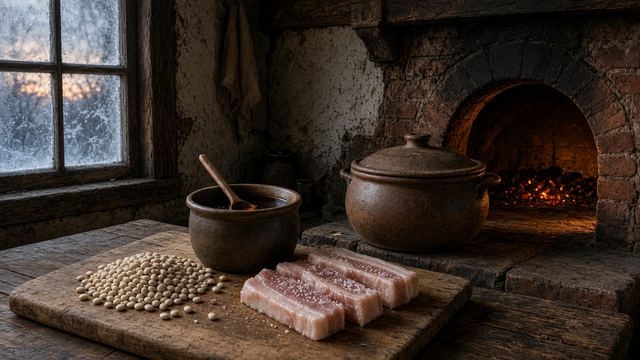
- 1By late Saturday afternoon the light over the harbor had gone the color of weak tea. In the lean-to kitchen behind the main house, the brick oven still held the banked heat of the morning bake—bread pulled hours earlier, the sweep of ashes done with a wet rag on a stick. What remained was a long, even warmth, exactly what a pot of beans needed if it was to feed a household that would light no new cooking fire until Monday’s dawn.
- 2Sabbath law was not a metaphor here. From sundown Saturday to sundown Sunday, the pious town expected quiet streets, closed shops, and cold hearths for ordinary work. Travelers noted the hush. Families planned it the way sailors planned tide. The beans were the plan you could taste.
- 3Dried white beans—navy or pea beans grown in short northern summers or traded inland—had soaked since Friday night in a crock of well water. In the morning they were parboiled until the skins loosened and a breath could blow one apart, a cook’s test older than any printed receipt. Into the heavy earthen pot went a piece of salt pork scored to the rind, a chopped onion if the root cellar still held one, a spoon of mustard seed or prepared mustard when the pantry allowed, and the dark glue of molasses.
- 4Molasses was not a quaint sweetener. It was the sticky remainder of Caribbean sugar boiling, shipped north in casks as part of a ruthless Atlantic commerce that also moved timber, fish, rum, and enslaved labor. In a New England kitchen it meant portable energy and a browning heat the local maple could not always match in quantity. A thrifty hand measured it carefully; too little and the beans tasted of plain salt and smoke, too much and you had wasted a week’s luxury on one pot.
- 5The pot was covered, sometimes with a lid, sometimes with a slab of brown bread dough set to steam above the beans in a later fashion, and shoved deep into the oven. Some households still used a bean hole outdoors—embers in a pit, the pot buried under soil and sod overnight—but town brick and freestanding beehive ovens did the same work with less digging. Heat had to last. If the oven ran too hot early, the pork toughened and the molasses scorched to bitterness. If it faded too soon, the beans stayed chalky at the center, a failure you would eat cold on the Lord’s Day with no remedy but patience and water.
- 6Children learned the sound of a proper pot: a slow occasional tick of liquid against clay, not a furious boil. Outside, the last carts rattled home before dusk. Inside, the family laid out Sunday’s cold plates—cheese, leftover loaf, perhaps a jar of pickles—and banked the main hearth to coals. When the sun dropped, the kitchen’s only comfort was that buried warmth still working on legumes and fat.
- 7Sunday morning arrived in frost or fog depending on the month. No frying pan hissed. No kettle was swung fully into flame for a lavish cook. What came to the table was the bean pot itself, drawn from the oven with padded hands, the pork half melted into the liquor, the top bronzed where sugar had caramelized against the rim. Each person received a ladle of beans glossy with molasses and pork essence, the kind of quiet feast that made scarcity feel intentional. In fishing towns and farming villages alike, the dish stitched together Native cultivation of beans, English pot-cookery, and West Indian sweetness into something so ordinary it became tradition.
- 8By afternoon the pot had cooled enough to slice. Men might walk to meeting again; women minded the youngest under the rule of rest. The beans remained the day’s center of gravity—reheated only gently if at all, eaten with brown bread dense from rye and cornmeal, the molasses still whispering of distant cane fields and long sea miles. When Monday’s fire was finally built high, the empty pot was scraped, rinsed, and set to dry. Another week of work waited. Another Saturday would demand the same reckoning of heat, time, salt, and sugar.
- 9Appetite, in that world, was a kind of clock. The oven’s lingering breath, the sticky rim of the crock, the soft resistance of a bean cooked through the forbidden hours—those were how a household tasted its way across a law written in silence.