 PlatePilot
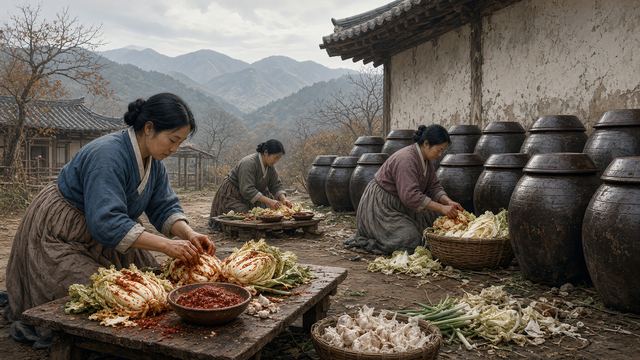
Leaves Weighted for Winter
HistoricalAmericanEat the PastA Bite of HistoryStory5 Ingredients or Less
Ingredients
- Narrative chapter
Instructions
- 1Frost had not yet whitened the thatch, but the wind off the ridges already smelled of iron and empty fields. In the women’s courtyard the napa cabbages lay in pale rows, heads tight as fists, still wet from the last market cart. Salt waited in woven bags. Stones waited beside the troughs. Winter, everyone knew, would not bargain.
- 2Aejung rolled her sleeves past the elbow and plunged the first head into the brine. The water bit her wrists; coarse sea salt from the western flats rasped against thick ribs of leaf. She turned the cabbage, pressed, lifted, and stacked it under a board weighted with river stones. her, cousins and neighbors worked the same rhythm—salt, press, wait—because a household that lagged in kimjang risked thin soups when the ground locked hard and the kitchen garden offered nothing but tough greens and memory.
- 3By midday the leaves had gone limp and glossy. The real work began at the long low table: garlic smashed until the air stung, ginger grated to threads, green onions knifed into bright coins. Earthen bowls held salted shrimp that smelled of the tide and anchovy sauce the color of old amber. Into this base went the scarlet—gochugaru, dried chili crushed fine. The peppers themselves were no ancient mountain plant. They had crossed oceans after the first contact with the wider world, riding trade and war until Joseon cooks claimed them, turning older white and watery ferments into the deep red heat that now marked a proper winter store. Aejung’s grandmother still muttered that white kimchi had dignity; her mother answered that dignity did not warm a January throat the way chili did.
- 4They mixed until forearms burned and the paste clung like wet clay. Then came the stuffing: every leaf peeled back, the crimson mixture smeared into the pale ribs, folded, patted, set aside in glazed bowls. Children fetched water. Men hauled onggi—the breathable earthenware jars with their tight lids—from the storage lean-to and settled them in the shaded lee of the wall where summer sun would not spoil the slow work of microbes. Aejung packed cabbage upright, pressed out air pockets, left a finger’s breadth for the brew to rise. A clean stone went on top. The lid sealed with a cloth twist.
- 5Conversation ran with the work. Whose soy sauce had clouded. Which market shorted the shrimp. How last year’s batch turned too soft when the thaw came early. Kimjang was not a festival of speeches; it was insurance written in salt and time. A well-made jar could feed stews, side dishes, and morning rice through the months when ox carts stuck in mud and dried pollock was the other reliable protein hanging from the rafters. Families shared surplus with kin who had fewer hands. To refuse help at kimjang season was to forget how hunger kept score.
- 6Toward dusk the courtyard smelled of garlic, chili dust, and the clean mineral tang of brine. Aejung wiped her hands and tasted a scrap of leaf still sharp with raw heat. In weeks the burn would round, the cabbage would sour gently, and the jars buried to their shoulders in the cool earth by the house would tick softly as fermentation lived its quiet life. She thought of January mornings: rice steaming, a spoonful of red kimchi cutting through the fat of a little pork or the plainness of soybean stew, the crunch that proved autumn’s labor had held.
- 7The last onggi lid settled. Lanterns pricked on. Somewhere a neighbor called that the millet gruel was ready—simple, hot, enough to stop the shaking in tired arms. Aejung looked at the rank of jars, dark bellies against the plaster wall, and felt the season turn. Fields would empty. Snow would find the ridges. But under stone and clay the leaves would keep their fire, waiting for the bowl, the rice, the moment hunger met something bright and alive.